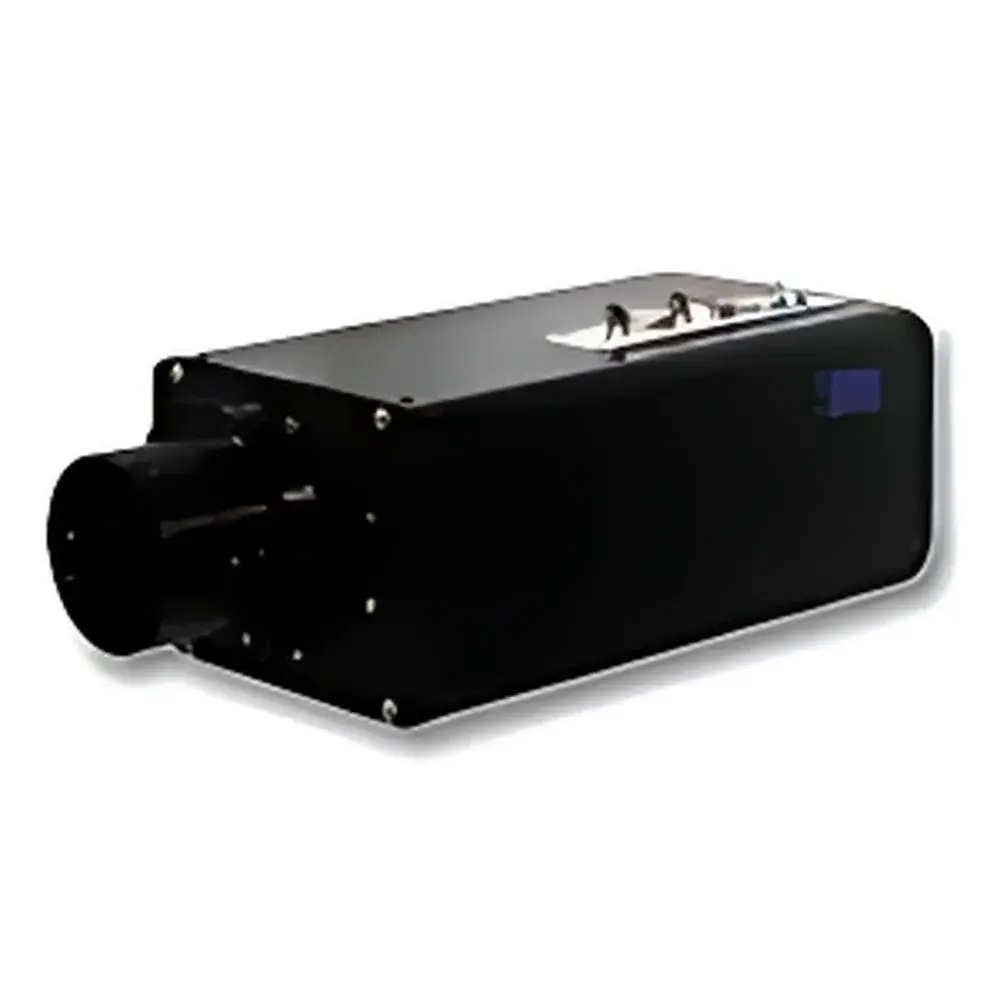
SVT Associates AccuFlux In-Situ Beam Flux Monitor for MBE and MOCVD Systems
| Brand | SVT Associates |
|---|---|
| Origin | USA |
| Model | AccuFlux |
| Application | Real-time, non-invasive atomic beam flux monitoring in molecular beam epitaxy (MBE) and metalorganic chemical vapor deposition (MOCVD) systems |
| Simultaneous Channels | 4 elements |
| Minimum Detectable Growth Rate | <0.002 nm/s |
| Light Source Type | Element-specific hollow-cathode lamps |
| Optical Architecture | Self-referencing, self-aligning optical path |
| Source Compatibility | Solid-source effusion cells and gas-phase precursors |
| Environmental Robustness | Operable under high partial pressure conditions (e.g., As₂, PH₃, O₂) |
| Control Interface | Optional remote I/O module with real-time shutter and source feedback for closed-loop process control |
| Regulatory Alignment | Designed to support GLP-compliant data integrity and ASTM F1526-22 compliant thin-film process validation |
Overview
The SVT Associates AccuFlux is a high-precision, non-invasive in-situ beam flux monitor engineered specifically for ultra-high-vacuum (UHV) and low-pressure chemical vapor environments used in molecular beam epitaxy (MBE) and metalorganic chemical vapor deposition (MOCVD) processes. It operates on the principle of atomic absorption spectroscopy (AAS), leveraging element-specific hollow-cathode lamps to generate narrow-linewidth spectral emissions that match the resonant absorption lines of target species (e.g., Ga, As, In, P, Al, Sb, O, Se). As atomic or molecular beams traverse the optical path between lamp and detector, attenuation of the characteristic wavelength is quantified in real time—enabling direct, absolute measurement of incident flux density (atoms/cm²·s) and derived growth rate (nm/s). Unlike quartz crystal microbalances (QCMs) or pyrometry-based methods, AccuFlux provides species-selective, pressure-independent quantification without physical contact or thermal perturbation to the substrate or effusion cell. Its optical design eliminates reliance on mechanical alignment stability, making it suitable for long-duration, production-grade epitaxial runs where chamber vibration, thermal drift, or maintenance interventions may occur.
Key Features
- Four-channel simultaneous monitoring capability, each with dedicated hollow-cathode lamp and photomultiplier tube (PMT) detection path
- Sub-0.002 nm/s growth rate resolution, validated across GaAs, InP, GaN, CIGS, and complex oxide systems (e.g., SrTiO₃, LaAlO₃)
- Self-referencing optical architecture: continuous internal reference beam compensates for lamp intensity drift, window contamination, and detector aging
- Self-aligning kinematic mount ensures optical path integrity even after minor instrument displacement or chamber reconfiguration
- Compatible with both linear and confocal effusion cell geometries—no hardware modification required for integration into existing MBE or MOCVD platforms
- Gas-phase precursor compatibility: calibrated response to metalorganics (e.g., TMGa, TMAI) and reactive gases (e.g., AsH₃, PH₃, O₂) via secondary dissociation modeling and cross-section libraries
Sample Compatibility & Compliance
AccuFlux supports quantitative flux measurement for over 25 elemental species commonly deployed in compound semiconductor and oxide epitaxy—including Group III (Al, Ga, In), Group V (As, P, Sb, N), chalcogens (S, Se, Te), and alkaline earth metals (Sr, Ba). It meets the optical stability requirements defined in ASTM F1526-22 (“Standard Practice for Characterization of Molecular Beam Epitaxy Systems”) and enables traceable calibration per ISO/IEC 17025–accredited laboratory protocols. The system’s vacuum feedthroughs comply with ConFlat® (CF) 63 and CF100 standards, and its electronics are rated for operation in Class 100 cleanroom environments. All firmware and configuration files maintain audit trails compatible with FDA 21 CFR Part 11 requirements when integrated with validated host SCADA systems.
Software & Data Management
The AccuFlux Control Suite (v4.x) provides real-time spectral acquisition, multi-element flux overlay visualization, and automated shutter synchronization. Data logging occurs at 10 Hz with timestamped metadata (source temperature, chamber pressure, shutter state), stored in HDF5 format for interoperability with Python-based analysis pipelines (e.g., NumPy, SciPy, Matplotlib). Optional OPC UA server enables seamless integration into factory-level MES platforms. The software supports user-defined alarm thresholds, automatic calibration recall, and export of rate-integrated thickness values conforming to SEMI E142-0212 (Data Collection Standard for Epitaxial Growth Tools).
Applications
- Real-time stoichiometry control during ternary and quaternary alloy growth (e.g., InGaAsP, AlGaInP)
- In-situ optimization of dopant incorporation (e.g., Si, Be, Mg) via flux ratio tuning
- Quantitative assessment of cracking efficiency for metalorganic precursors in MOCVD
- Validation of cell effusion uniformity and source depletion kinetics over multi-hour runs
- Process transfer and reproducibility studies across tool-to-tool and fab-to-fab installations
- Development of closed-loop growth recipes using optional remote I/O interface for shutter and heater control
FAQ
How does AccuFlux achieve sub-0.002 nm/s resolution without QCM drift?
It employs lock-in amplified AAS detection with active background subtraction and dual-beam referencing—eliminating thermal noise and baseline drift inherent in piezoelectric sensors.
Can AccuFlux be retrofitted into an existing MBE system with limited viewport access?
Yes—its compact optical head (120 mm × 80 mm × 65 mm) mounts externally via standard CF40 or CF63 flanges; only two line-of-sight viewports (lamp input and detector output) are required.
Is calibration required before each growth run?
No—factory-calibrated lamp/detector pairs provide traceable absolute flux units; periodic verification (every 6 months) against certified reference cells is recommended per ISO/IEC 17025 guidelines.
Does AccuFlux support integration with commercial MBE control systems (e.g., Riber, Veeco, SPECS)?
Yes—native drivers for LabVIEW, EPICS, and Modbus TCP are included; custom API wrappers available for proprietary PLC environments.
What maintenance is required for long-term operation in arsenic-rich environments?
Quartz optical windows are coated with anti-arsenic adhesion layers; lamp lifetime exceeds 5,000 hours; PMT gain stabilization is performed automatically every 24 h during idle periods.