
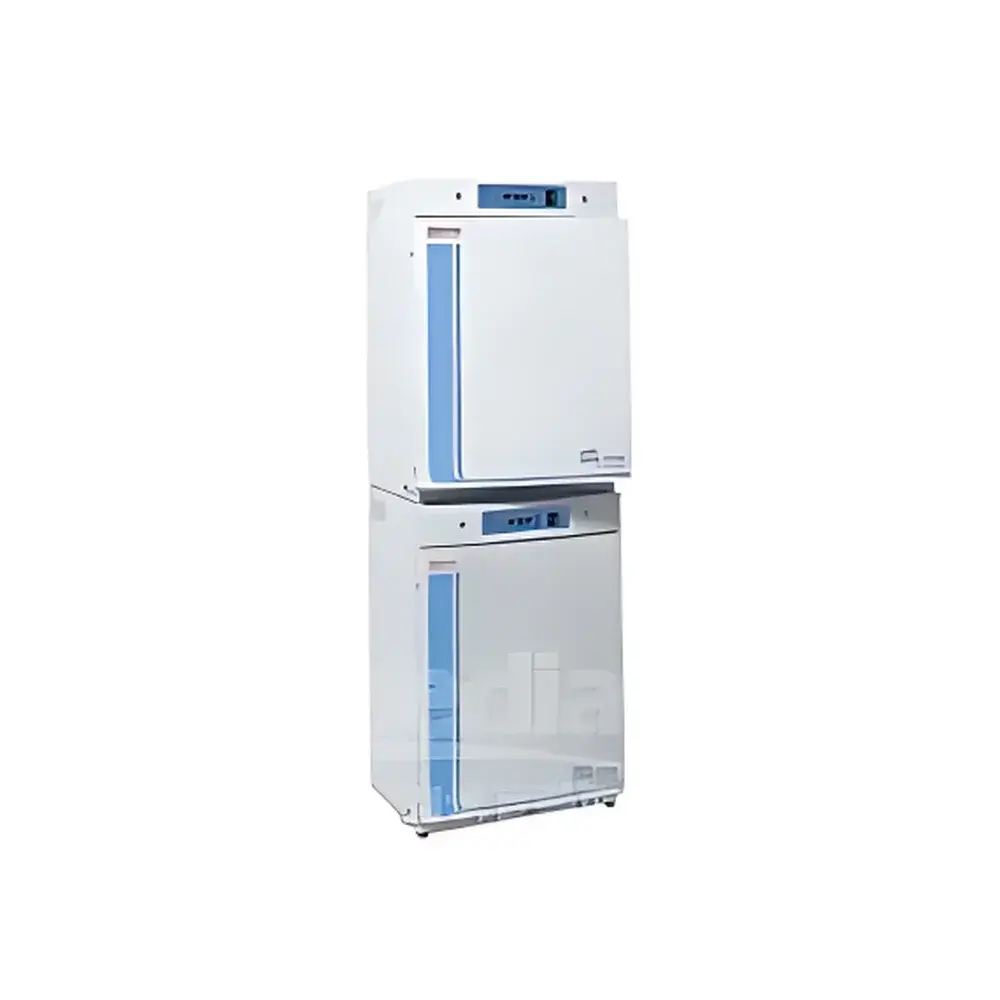
Thermo Scientific™ 370 Series Steri-cycle™ High-Temperature Dry-Heat Sterilizable CO₂ Incubator
| Brand | Thermo Fisher Scientific |
|---|---|
| Origin | USA |
| Manufacturer | Thermo Fisher Scientific |
| Product Category | Imported Instrument |
| Model | 371 |
| Temperature Control Range & Accuracy | 5–50 °C (±0.1 °C typical setpoint stability) |
| Temperature Uniformity | ±0.3 °C at 37 °C (at working volume, per ISO 13845:2017 Annex B) |
| Humidity Control Range & Accuracy | 5–50 % RH (±2 % RH, non-condensing, with optional humidification system) |
| Chamber Capacity | 184.1 L |
| Sterilization Method | Dry-heat cycle (180 °C for ≥3 h), validated per ISO 14937 and EN 556-1 |
Overview
The Thermo Scientific™ 370 Series Steri-cycle™ is a Class II, direct-heating, high-temperature dry-heat sterilizable CO₂ incubator engineered for demanding cell culture applications where sterility assurance, reproducibility, and regulatory compliance are non-negotiable. Unlike conventional CO₂ incubators relying solely on UV or periodic chemical decontamination, the Steri-cycle™ integrates a fully validated, in-chamber dry-heat sterilization cycle capable of achieving a ≥6-log reduction of bacterial endospores—including Bacillus atrophaeus and Geobacillus stearothermophilus—in accordance with ISO 14937:2009 and EN 556-1:2015. The system utilizes a proprietary T/C CO₂ sensor housed behind a 0.2 µm HEPA filter, ensuring continuous real-time gas monitoring without compromising sterility integrity. Chamber temperature is maintained via a microprocessor-controlled, PID-regulated direct-heating system with independent air-jacketed walls and forced-air convection, delivering exceptional thermal stability and spatial uniformity across the full 184.1 L working volume.
Key Features
- Validated high-temperature dry-heat sterilization cycle (180 °C for ≥3 hours), fully automated and programmable via touchscreen interface
- Continuous HEPA filtration (Class 100 / ISO 5 air quality) with ≥60 air exchanges per hour, maintaining sterile internal atmosphere during routine operation
- Direct-heating architecture with triple-wall insulation and independent chamber wall heating elements to minimize thermal gradients
- CO₂ concentration control via infrared (IR) sensor with automatic compensation for temperature and pressure drift; accuracy ±0.1% CO₂ (0–20%)
- Integrated humidity management system with stainless-steel water reservoir and ultrasonic humidifier (optional), supporting stable RH control between 5–50% RH
- Full audit trail capability compliant with FDA 21 CFR Part 11 requirements, including user access logs, parameter change history, and sterilization cycle reports
- Fail-safe interlocks: automatic power cutoff and audible/visual alarm upon door opening during sterilization; external cabinet surface remains ≤40 °C during cycle
Sample Compatibility & Compliance
The Steri-cycle™ 371 supports long-term cultivation of sensitive mammalian cell lines (e.g., stem cells, primary neurons, hybridomas), microbial cultures requiring stringent contamination control, and bioprocess development workflows under GLP/GMP conditions. All internal surfaces are electropolished 316L stainless steel with welded seams and radiused corners to eliminate harborage points for biofilm formation. The system complies with IEC 61010-1 (Safety Requirements for Laboratory Equipment), ISO 13845:2017 (Good Manufacturing Practice for In Vitro Diagnostic Medical Devices), and meets essential requirements for CE marking under the EU IVDR framework. Optional IQ/OQ/PQ documentation packages are available to support qualification under ISO/IEC 17025-accredited laboratories.
Software & Data Management
The embedded Thermo Fisher Connect™ incubator software provides intuitive touchscreen navigation, multi-level password protection, and configurable event logging. Real-time data—including chamber temperature, CO₂ concentration, relative humidity, door status, and sterilization cycle phase—is timestamped and exportable in CSV or PDF format. Remote monitoring and alerting are supported via Ethernet or Wi-Fi (optional), enabling integration into centralized lab information management systems (LIMS) or enterprise asset tracking platforms. All data modifications are recorded with user ID, timestamp, and reason-for-change fields, satisfying ALCOA+ principles (Attributable, Legible, Contemporaneous, Original, Accurate, Complete, Consistent, Enduring, Available).
Applications
- Regulated biologics manufacturing environments requiring routine chamber sterilization between batches
- Stem cell banking and regenerative medicine labs adhering to AABB or FACT-Cell Therapy Standards
- Academic core facilities supporting high-throughput screening where cross-contamination risk must be minimized
- Vaccine development workflows involving low-passage primary human cells or pathogen-associated cultures
- Contract research organizations (CROs) performing GLP-compliant toxicology or pharmacokinetic studies
- Quality control laboratories validating sterility assurance levels for medical device packaging processes
FAQ
What sterilization standards does the Steri-cycle™ 371 validate against?
It meets ISO 14937:2009 for sterilization agent validation and EN 556-1:2015 for sterility assurance level (SAL) verification using biological indicators.
Can the incubator operate while the sterilization cycle is scheduled?
Yes—sterilization cycles can be programmed to run autonomously during off-hours without interrupting normal incubation functions.
Is the humidification system standard or optional?
Humidification is optional; the base configuration includes passive humidity retention, while the active ultrasonic humidifier requires separate ordering.
How is temperature uniformity verified across the chamber?
Uniformity is measured per ISO 13845 Annex B using nine calibrated thermocouples placed at defined positions within the working volume at 37 °C.
Does the system support third-party calibration services?
Yes—Thermo Fisher-certified field service engineers perform annual calibration and performance verification aligned with ISO/IEC 17025 requirements.
Related Products



