
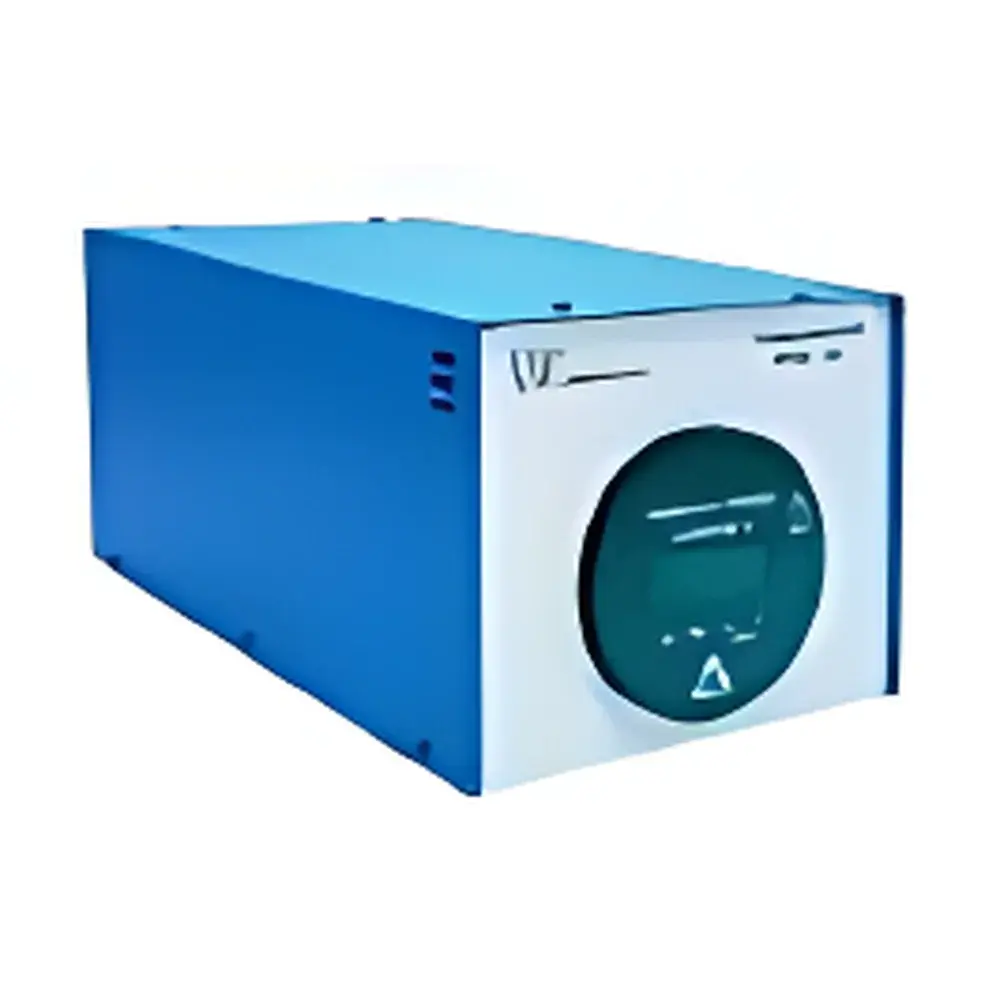
VICI Model 150 Dynamic Mercury Vapor Permeation Calibrator
| Brand | VICI |
|---|---|
| Origin | USA |
| Manufacturer Type | Authorized Distributor |
| Origin Category | Imported |
| Model | Model 150 |
| Pricing | Available Upon Request |
Overview
The VICI Model 150 Dynamic Mercury Vapor Permeation Calibrator is a precision-engineered trace gas generation system designed for the stable, accurate, and traceable delivery of mercury vapor standards in the parts-per-trillion (ppt) to parts-per-million (ppm) concentration range. It operates on the fundamental principle of permeation—where elemental mercury diffuses at a thermally controlled, constant rate through the wall of a temperature-stabilized quartz or Teflon-lined permeation tube. This physical process yields a gravimetrically traceable output flow, eliminating reliance on compressed gas cylinders and their inherent pressure- and adsorption-related concentration drifts. The instrument is widely deployed in environmental monitoring laboratories, regulatory compliance facilities, EPA Method 29 and ASTM D6784-22 validation workflows, and research applications requiring NIST-traceable Hg calibration across continuous emission monitoring systems (CEMS), cold vapor atomic absorption spectrometry (CVAAS), and mercury-specific gas chromatography–atomic fluorescence detection (GC-AFS) platforms.
Key Features
- Thermally stabilized permeation chamber with NIST-traceable temperature control (±0.01 °C) over a range of +5 °C above ambient to 110 °C
- Digital PID temperature controller with real-time monitoring and programmable setpoint retention
- Permeation tube holder compatible with standard VICI mercury permeation tubes (e.g., Hg-PT-100, Hg-PT-1000)
- Integrated mass flow controller (MFC) for carrier gas (N₂, Ar, or synthetic air), enabling precise dilution and concentration tuning from sub-ppb to ppm levels
- Chemically inert internal surfaces treated via silanization to minimize mercury adsorption/desorption hysteresis
- Modular design supporting multi-analyte calibration by swapping permeation tubes—no hardware modification required
- No high-pressure components; eliminates cylinder handling, certification, transport logistics, and hydrostatic testing overhead
Sample Compatibility & Compliance
The Model 150 is compatible with all mercury-species analyzers requiring dynamic calibration, including but not limited to Tekran® 2537/2600 series, Lumex RA-915M, and Thermo Scientific Mercury Analyzers. It supports full compliance with U.S. EPA Performance Specification 12A (PS-12A), ASTM D6784-22 (Standard Test Method for Determination of Mercury in Coal and Coal Combustion Residues), and ISO 6974-6:2020 (Natural gas — Determination of mercury — Part 6: Method using atomic absorption spectroscopy). Temperature calibration is directly traceable to NIST Standard Reference Materials (SRMs) via accredited third-party verification. The system architecture conforms to GLP data integrity requirements when paired with compliant data acquisition software, including audit trail functionality and electronic signature support per FDA 21 CFR Part 11.
Software & Data Management
While the Model 150 operates as a standalone analog-calibration source, it integrates seamlessly with industry-standard laboratory data systems via optional RS-232 or 4–20 mA analog outputs. Temperature setpoints, carrier gas flow rates, and elapsed permeation time can be logged externally for full calibration record retention. When used in conjunction with VICI’s CalLab™ configuration utility (v3.2+), users generate compliant calibration reports containing NIST-traceable uncertainty budgets, permeation rate certificates, and temperature stability validation logs—all formatted for inclusion in QA/QC documentation packages required under ISO/IEC 17025 accreditation.
Applications
- Primary calibration of mercury CEMS and portable Hg analyzers in power plant stack testing
- Method validation and ongoing performance checks per EPA Method 29 and Ontario Hydro Method
- Generation of certified reference mixtures for inter-laboratory comparison studies
- Dynamic spiking in ambient air monitoring networks requiring long-term stability (e.g., GMOS, GEMS)
- Research into mercury speciation kinetics using calibrated Hg⁰ vapor as a reactive tracer
- Verification of gold amalgamation trap efficiency and breakthrough behavior in sorbent-based sampling systems
FAQ
How is mercury vapor concentration calculated and verified?
Concentration is derived from the certified permeation rate (ng/min) of the installed tube, carrier gas flow rate (sccm), and operating temperature—calculated per ASTM E260-20 Annex A1. Each tube includes a NIST-traceable certificate with gravimetric calibration data and uncertainty budget.
Can the Model 150 generate oxidized mercury species (e.g., HgCl₂)?
No—it generates elemental mercury (Hg⁰) vapor only. For oxidized species, users must integrate an external oxidation reactor (e.g., thermal or UV-based) downstream of the calibrator.
What carrier gases are recommended?
Ultra-high-purity nitrogen (99.999%), argon, or synthetic air—free of reactive impurities (O₂ < 10 ppb, H₂O < 0.1 ppm) to prevent tube degradation or surface adsorption artifacts.
Is routine maintenance required?
Yes: quarterly verification of temperature sensor accuracy against a NIST-traceable reference thermometer and annual recalibration of the MFC per ISO 17025-accredited service provider.
Does the system support automated sequence calibration?
Not natively—but programmable logic controllers (PLCs) or LabVIEW-based DAQ systems can orchestrate multi-point calibrations via analog I/O and digital triggers.







