
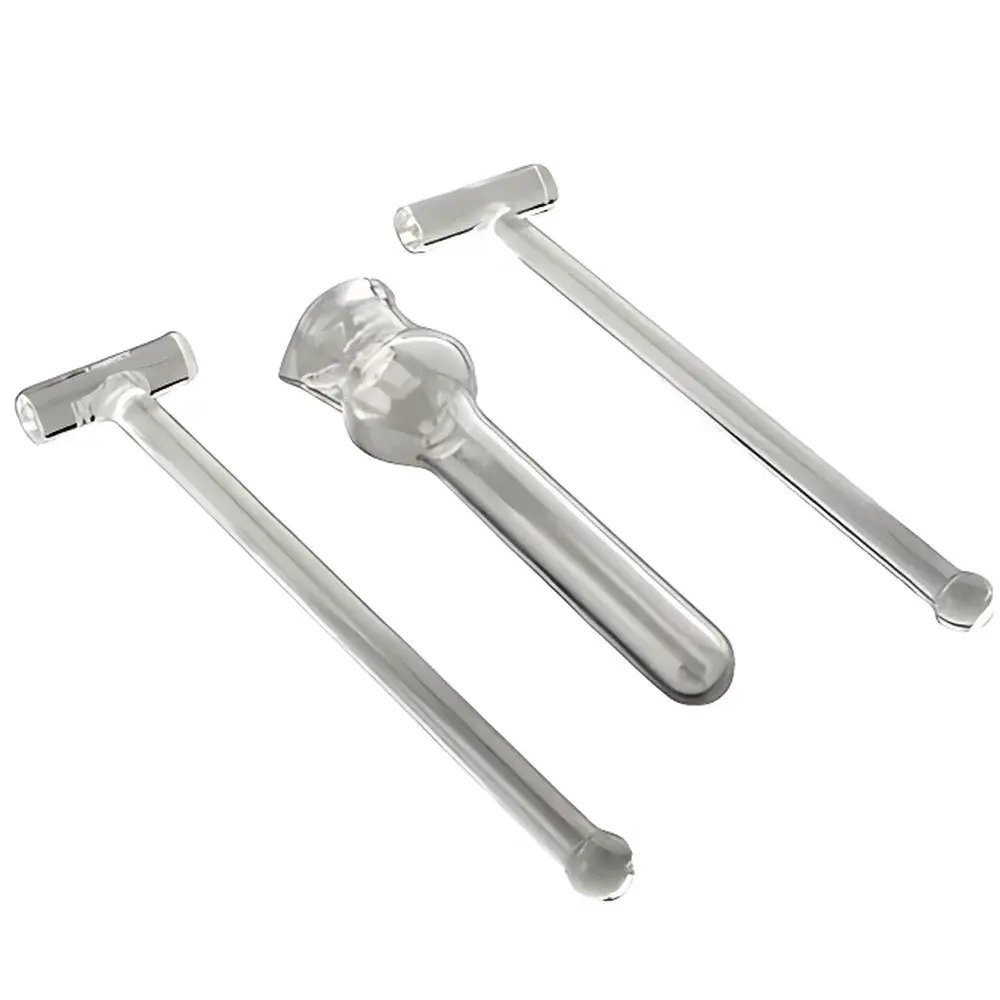
WHEATON Dounce-Type Tissue Homogenizer
| Brand | WHEATON |
|---|---|
| Origin | USA |
| Manufacturer Type | Authorized Distributor |
| Import Status | Imported |
| Model | WHEATON Dounce |
| Volume Range | 0.1–55 mL |
| Pestle Clearance (Loose) | 0.089–0.14 mm |
| Pestle Clearance (Tight) | 0.025–0.076 mm |
| Material | USP Type I / ASTM E438 Class A Low-Extractable Borosilicate Glass 33 |
| Sterilization | Autoclavable (121°C, 20 min) |
| Packaging | 2 units per pack |
Overview
The WHEATON Dounce-Type Tissue Homogenizer is a precision-engineered manual homogenization system designed for gentle yet effective mechanical disruption of soft biological tissues under controlled, low-shear conditions. Based on the classical Dounce principle—utilizing a tightly fitted glass pestle within a cylindrical glass vessel—it operates via controlled vertical piston motion to achieve reproducible cellular lysis while preserving subcellular integrity. Unlike high-energy methods (e.g., sonication or rotor-stator homogenization), the Dounce technique minimizes heat generation and protein denaturation, making it the method of choice for isolating intact nuclei, mitochondria, and functional macromolecular complexes from delicate tissues such as brain, liver, thymus, and cultured cells. Its design adheres to fundamental fluid dynamics principles governing laminar shear in confined annular gaps, ensuring consistent clearance-dependent homogenization efficiency across defined volume ranges.
Key Features
- Two-tier pestle configuration: A loose-fitting pestle (clearance 0.089–0.14 mm) enables initial tissue fragmentation with minimal shear; followed by a tight-fitting pestle (clearance 0.025–0.076 mm) for final nuclear release and cytoplasmic homogenization.
- Manufactured from Corning® 33 low-extractable borosilicate glass—compliant with USP Class A and ASTM E438 Type I specifications—ensuring chemical inertness, thermal stability, and negligible leachables in sensitive downstream applications (e.g., RNA-seq, ChIP, enzymatic assays).
- Fully autoclavable (121 °C, 20 min, saturated steam) without dimensional drift or surface degradation—validated for repeated sterilization cycles in GLP-compliant laboratories.
- Modular interchangeability: All components—including pestles, vessels, and caps—are sold separately and engineered to ISO-toleranced dimensions, enabling cross-model compatibility and long-term serviceability.
- Optimized geometry across four standard volume classes (1 mL, 7 mL, 15 mL, 40 mL), each calibrated to maintain consistent shear rate profiles independent of scale—critical for protocol transfer between pilot and production-scale extractions.
Sample Compatibility & Compliance
The WHEATON Dounce homogenizer demonstrates validated performance across a broad spectrum of primary and cultured specimens: murine brain cortex, porcine liver lobules, human PBMC pellets, and plant meristematic tissue. Its low-heat, low-foaming operation preserves labile epitopes and native protein conformations—supporting immunoprecipitation-grade lysates. All glass components meet ISO 10993-5 cytotoxicity requirements and are certified non-pyrogenic per USP General Chapter 85. The system supports compliance with FDA 21 CFR Part 11 when integrated into electronic lab notebook (ELN) workflows documenting homogenization parameters (pestle type, stroke count, dwell time) as critical process variables.
Software & Data Management
While the Dounce homogenizer is a manual, non-electronic instrument, its operational parameters are fully documentable within regulated environments. Standardized stroke-count protocols (e.g., 10–15 strokes with loose pestle; 20–30 strokes with tight pestle) are embedded in SOPs compliant with ISO/IEC 17025 and GLP Annex 4. Digital logbooks (e.g., LabArchives, Benchling) support structured entry of lot-specific glassware IDs, autoclave cycle logs, and operator signatures—enabling full traceability from tissue harvest to lysate aliquot. Optional integration with WHEATON’s digital catalog API allows automated reagent and consumable replenishment alerts based on usage frequency.
Applications
- Nuclear isolation for chromatin immunoprecipitation (ChIP) and ATAC-seq
- Cytoplasmic fractionation prior to Western blotting or ELISA
- Preparation of transcriptionally active nuclear extracts
- RNA extraction from RNase-rich tissues (e.g., pancreas, spleen) with minimal degradation
- Proteomic sample prep requiring native complex preservation (e.g., co-IP, size-exclusion chromatography)
- Standardized homogenization in pharmacokinetic tissue distribution studies (ICH S3A)
FAQ
Can the WHEATON Dounce homogenizer be used for bacterial or yeast cell lysis?
No—its design targets mammalian and plant cells with fragile plasma membranes. Bacterial and yeast cells require higher shear forces (e.g., bead-beating or enzymatic lysis) due to rigid peptidoglycan or chitin walls.
Is the glass material compatible with organic solvents such as chloroform or phenol?
Yes—Corning 33 borosilicate glass exhibits excellent resistance to chloroform, phenol, ethanol, and acetone; however, prolonged exposure to concentrated HF or hot alkaline solutions must be avoided.
How should pestle-to-vessel clearance be verified after repeated autoclaving?
Use calibrated optical micrometers or laser interferometry; WHEATON provides NIST-traceable reference gauges (P/N 357599) for routine clearance validation per ISO 9001 internal audit requirements.
Are replacement pestles available in different clearances for custom optimization?
Yes—WHEATON offers loose (0.125 mm nominal), medium (0.050 mm), and tight (0.035 mm) pestles as configurable accessories, enabling method development for specialized tissue types or lysis stringency requirements.



