
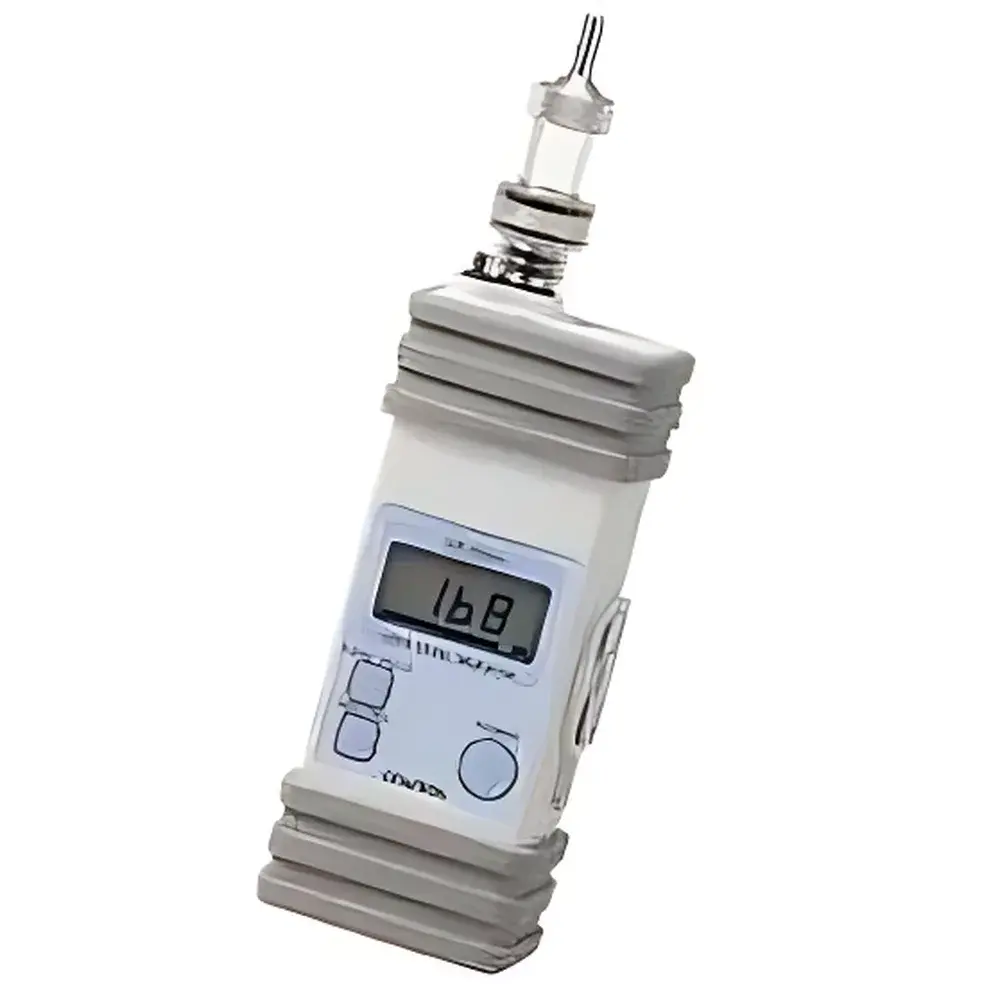
XP-329m Odor Detection Meter (Volatile Organic Odorants & Malodorous Compounds)
| Origin | Japan |
|---|---|
| Manufacturer Type | Authorized Distributor |
| Origin Category | Imported |
| Model | XP-329m |
| Pricing | Available Upon Request |
Overview
The XP-329m Odor Detection Meter is a portable, field-deployable instrument engineered for rapid, on-site assessment of volatile organic odorants and malodorous compounds in ambient air. It operates on the principle of high-sensitivity tin oxide (SnO₂) hot-wire sintered semiconductor sensing—optimized to selectively respond to odor-active molecules while exhibiting minimal cross-sensitivity to inert or non-odoriferous gases such as nitrogen, oxygen, or carbon dioxide. This selectivity is achieved through proprietary sensor surface chemistry and thermal modulation, enabling reliable detection of complex odor mixtures—including floral, fruity, sulfurous, amine-based, and short-chain fatty acid emissions—without requiring gas chromatographic separation. Designed for environmental compliance screening, odor impact assessments near wastewater treatment plants, composting facilities, food processing units, and landfill perimeter monitoring, the XP-329m delivers real-time semi-quantitative odor intensity indexing aligned with standardized olfactometric frameworks (e.g., EN 13725:2022 reference odorant calibration compatibility).
Key Features
- Compact, handheld architecture: Dimensions 60 × 140 × 40 mm (W × H × D), weight ≈ 300 g including three AA alkaline batteries—optimized for extended field surveys and personal exposure monitoring.
- Energy-efficient operation: Powered by three standard AA alkaline cells (no rechargeable battery required); continuous runtime up to 10 hours at 25°C / 50% RH—2 hours longer than predecessor models due to optimized power management circuitry.
- Integrated auto-aspiration sampling: Built-in micro-pump delivers consistent airflow at 350 ± 100 mL/min, ensuring representative sample draw without operator-dependent manual pumping.
- Real-time peak-hold functionality: Captures and displays maximum detected value during measurement interval—critical for identifying transient odor plumes or fugitive emissions.
- Dual-mode display: 7-segment LCD with 3-digit resolution showing real-time reading, battery status, data storage indicator, and operational mode (e.g., “CAL”, “PEAK”, “MEM”)
- Calibration simplicity: Single-point zero adjustment using clean ambient air or certified zero gas—no multi-point calibration routine required for routine field use.
Sample Compatibility & Compliance
The XP-329m is validated for detection of broad-spectrum volatile organic compounds associated with odor perception, including but not limited to hydrogen sulfide, methyl mercaptan, dimethyl sulfide, trimethylamine, acetaldehyde, isovaleric acid, and skatole. While it does not provide compound-specific identification, its response profile correlates empirically with human olfactory detection thresholds under controlled conditions. The device complies with JIS B 7952:2018 (Japanese Industrial Standard for odor measuring instruments) and supports documentation requirements for ISO 16000-28:2012 (Indoor air — Part 28: Odor assessment methodology). Its analog output (0–0.999 V DC, linearly scaled to 000–999 display units) enables integration into SCADA systems or third-party data loggers for continuous emission monitoring (CEM) applications.
Software & Data Management
Raw measurement data—up to 18,000 records—are stored internally with timestamp and sequence index. Data retrieval is performed via optional dedicated PC software (sold separately), which connects via USB-to-serial interface (RS-232C compatible). The software supports CSV export, time-series graphing, statistical summary (min/max/avg), and batch annotation for audit-ready reporting. All data files include embedded metadata: device ID, firmware version, battery voltage at time of recording, and sampling mode flag—facilitating GLP-compliant traceability. No cloud synchronization or remote firmware updates are supported; data integrity is maintained via local, non-volatile memory with write-cycle protection.
Applications
- Regulatory odor nuisance investigations per local municipal ordinances and national environmental protection agency guidelines
- Pre- and post-mitigation odor control verification at industrial sites subject to odor emission permits
- Odor source identification and dispersion modeling input at wastewater treatment plants and anaerobic digesters
- Quality assurance in fragrance manufacturing and flavor development labs for batch consistency screening
- Educational demonstrations of sensory threshold concepts in environmental science and analytical chemistry curricula
- Occupational hygiene assessments in confined spaces where malodorous VOCs may indicate process upsets or microbial activity
FAQ
What odor compounds does the XP-329m specifically detect?
It responds broadly to volatile sulfur compounds (VSCs), nitrogenous bases, short-chain carboxylic acids, and aldehydes—but does not identify individual analytes. Response magnitude reflects overall odor intensity relative to calibrated reference standards.
Can the XP-329m be used for regulatory compliance reporting?
Yes—when operated within specified environmental limits (0–40°C, ≤80% RH non-condensing) and calibrated per manufacturer protocol, its readings support evidentiary documentation under EN 13725-aligned odor impact assessments.
Is the sensor replaceable or field-serviceable?
The SnO₂ semiconductor sensor module is factory-installed and sealed; replacement requires authorized service center recalibration and firmware validation to maintain measurement traceability.
Does the device meet FDA 21 CFR Part 11 requirements?
No—this instrument is not designed for pharmaceutical GMP environments. It lacks electronic signature capability, audit trail logging, or role-based access control required under Part 11.
What is the recommended calibration frequency?
Zero calibration before each daily use is advised; full span calibration using certified odor reference gas (e.g., n-butanol in air) is recommended every 30 days or after exposure to high-concentration samples.
Related Products







