
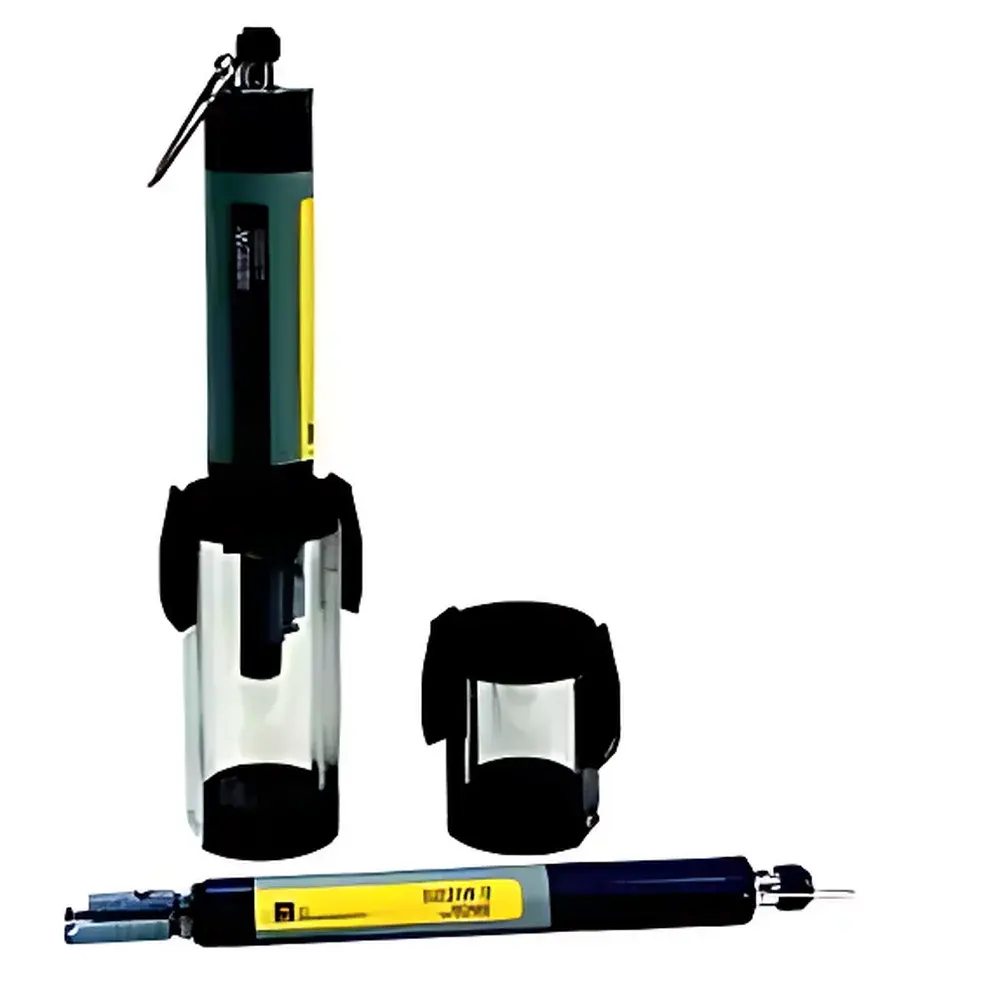
YSI 6920DW/600DW Drinking Water Multi-Parameter Safety Monitor
| Brand | YSI |
|---|---|
| Origin | USA |
| Model | YSI 6920DW / 600DW |
| Residual Chlorine | 0–3 mg/L (±15% of reading or ±0.05 mg/L, whichever is greater |
| resolution | 0.01 mg/L) |
| Conductivity | 0–100 mS/cm (±0.5% of reading + 0.001 mS/cm |
| resolution | 0.001–0.1 mS/cm, range-dependent) |
| Temperature | −5 to +70 °C (±0.15 °C |
| resolution | 0.01 °C) |
| pH | 0–14 (±0.2 |
| resolution | 0.01) |
| ORP | −999 to +999 mV (±20 mV |
| resolution | 0.1 mV) |
| Turbidity | 0–1000 NTU (±2% of reading or ±0.3 NTU, whichever is greater |
| resolution | 0.1 NTU) |
| Data Storage | Up to 150,000 readings |
| Power Options | Rechargeable battery or AC adapter |
| Compliance | US EPA verified (residual chlorine sensor), USGS & DoD validated, ETVP-certified (Environmental Technology Verification Program) |
Overview
The YSI 6920DW and 600DW Drinking Water Multi-Parameter Safety Monitors are engineered for continuous, real-time assessment of critical water quality parameters at strategic points across municipal drinking water distribution systems. Designed in accordance with the operational demands of utility infrastructure—spanning thousands of kilometers of aging and heterogeneous piping—the instruments implement a field-proven, multi-sensor architecture grounded in electrochemical, optical, and thermometric measurement principles. The system simultaneously quantifies residual chlorine (via amperometric membrane-based detection), conductivity (four-electrode conductivity cell), temperature (Pt1000 RTD), pH (glass electrode with integrated reference), oxidation-reduction potential (ORP, platinum sensing element), and turbidity (nephelometric 90° scatter detection per ISO 7027). This integrated approach enables utilities to verify disinfectant residual maintenance, detect intrusion events, identify stagnation zones, and validate compliance with national primary drinking water regulations—including U.S. EPA Stage 2 Disinfectants and Disinfection Byproducts Rule (DBPR) and Total Coliform Rule (TCR) indicators.
Key Features
- Field-deployable, ruggedized housing rated IP68 for permanent submersion or wet-well installation
- US EPA-verified residual chlorine sensor—validated under Protocol 3.0 for low-concentration accuracy and fouling resistance in chlorinated distribution networks
- ETVP-certified sensors for pH, conductivity, ORP, and turbidity—documented performance against independent third-party verification criteria
- Multi-mode operation: standalone logging (150,000-point internal memory), USB tethering for live telemetry, or integration with YSI 6500 Process Monitor for SCADA-ready 4–20 mA/analog outputs
- Low-maintenance design: reagent-free operation across all parameters; no consumables required for routine monitoring
- Dual power flexibility: extended-life rechargeable Li-ion battery (up to 90 days at 15-min logging interval) or continuous AC operation via optional power supply
- Self-diagnostic firmware with sensor health reporting, drift compensation algorithms, and automated calibration status flags
Sample Compatibility & Compliance
The YSI 6920DW/600DW is optimized for potable water matrices meeting ANSI/AWWA C651 and NSF/ANSI 61 standards. It operates reliably across variable pressure regimes (0–10 bar), flow velocities (0.05–3 m/s), and suspended solids concentrations (<100 mg/L). All sensor modules comply with ISO 5667-22 (water quality sampling) and ASTM D3370 (sampling of water from distribution systems). The residual chlorine sensor meets U.S. EPA Method 334.0 requirements for on-line amperometric determination. Full audit trail functionality supports GLP/GMP-aligned data integrity protocols, including user access control, electronic signature capability, and time-stamped event logs traceable to NIST-traceable references. Instrument firmware adheres to FDA 21 CFR Part 11 requirements when deployed in regulated utility environments requiring electronic record retention.
Software & Data Management
YSI’s EcoWatch™ Desktop Software (v5.2+) provides configuration, visualization, and export capabilities compliant with common utility IT frameworks. Raw sensor outputs are stored in IEEE 754-compliant floating-point format with embedded metadata (GPS coordinates, operator ID, sensor serial numbers, calibration dates). Data exports support CSV, XML, and MODBUS TCP formats for seamless ingestion into SCADA, CMMS, or enterprise GIS platforms. Automated alarm thresholds can be configured per parameter—e.g., residual chlorine 30 min triggers email/SMS alert via integrated cellular modem option (6920DW only). Calibration history, sensor diagnostics, and QA/QC flagging (e.g., “turbidity out-of-range due to air bubble”) are retained in encrypted local databases for regulatory review cycles.
Applications
- Real-time validation of disinfectant residual decay profiles across transmission mains and neighborhood loops
- Early warning detection of cross-connections, backflow events, or biofilm sloughing via correlated pH/ORP/turbidity anomalies
- Establishment of baseline water quality fingerprints for seasonal trend analysis and hydraulic model calibration
- Support for Water Safety Plan (WSP) implementation per WHO Guidelines for Drinking-water Quality (4th ed.)
- Compliance monitoring for state primacy agencies conducting unannounced distribution system audits
- Post-event response tracking following main breaks, power outages, or source water contamination incidents
FAQ
What regulatory standards does the residual chlorine sensor meet?
The amperometric residual chlorine sensor is verified under U.S. EPA Environmental Technology Verification Program (ETVP) Protocol 3.0 and conforms to Method 334.0 for online measurement in distribution systems.
Can the instrument operate continuously in pressurized pipes?
Yes—the 6920DW variant includes a threaded NPT port and pressure-rated wet-end housing suitable for direct insertion into pressurized distribution lines up to 10 bar.
Is remote data access supported without on-site PC connection?
The 6920DW model supports optional LTE-M or NB-IoT cellular telemetry; the 600DW requires wired or local wireless (Wi-Fi/Bluetooth) connectivity for remote access.
How often must sensors be calibrated?
Field calibration intervals are determined by utility QA protocols; typical practice is quarterly for pH/ORP, semi-annual for conductivity/turbidity, and annual for residual chlorine—supported by YSI’s documented calibration procedures traceable to NIST SRMs.
Does the system support integration with existing SCADA platforms?
Yes—via Modbus RTU (RS-485), Modbus TCP/IP, or analog 4–20 mA outputs (with YSI 6500 Process Monitor), enabling native integration with Siemens Desigo, Honeywell Experion, or Schneider EcoStruxure platforms.
Related Products







