
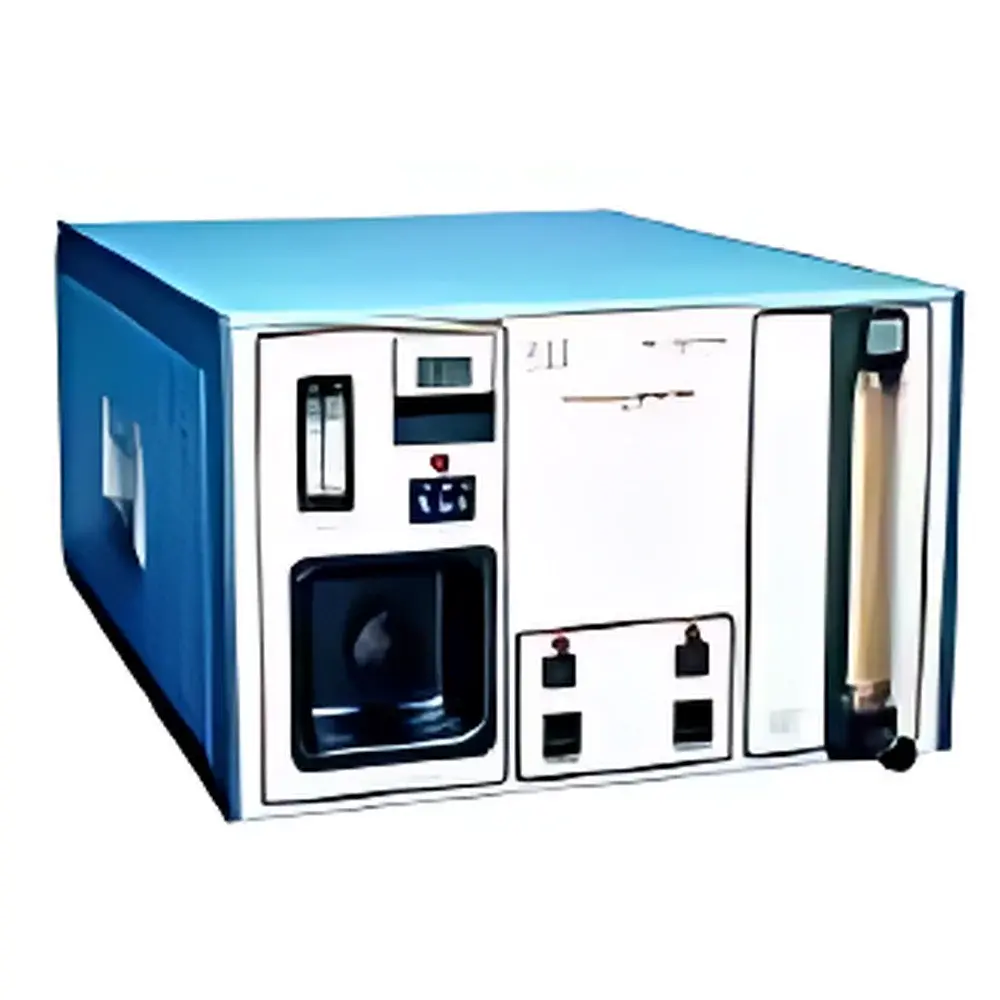
VICI Model 230 Dynamic Gas Calibrator
| Brand | VICI |
|---|---|
| Origin | USA |
| Model | Model 230 |
| Temperature Control Range | Up to 100°C |
| Flow Stability | Constant flow through permeation tube chamber |
| Dilution Flow Range | Wide, enabling linear calibration across multiple concentration levels |
| Configuration | Benchtop dynamic gas calibration system with integrated mass flow controllers and temperature-regulated permeation module |
| Compliance Context | Designed for traceable calibration per EPA Method TO-15, ASTM D6196, ISO 16017, and USP <1231> for VOC analyzers |
Overview
The VICI Model 230 Dynamic Gas Calibrator is an engineered solution for generating precise, stable, and traceable calibration standards of volatile organic compounds (VOCs) and other gaseous analytes in ambient air, stack emissions, and laboratory reference applications. It operates on the principle of dynamic dilution—combining controlled vapor generation from temperature-stabilized permeation tubes with high-accuracy mass flow control to produce certified gas mixtures at concentrations spanning parts-per-trillion (ppt) to parts-per-million (ppm) levels. Unlike static cylinder-based standards, the Model 230 enables real-time, on-demand generation of calibration gases with programmable concentration gradients, supporting linearity verification, multi-point calibration, and zero/span validation for GC-FID, GC-MS, PID, and FTIR analyzers. Its architecture integrates dual-stage thermal regulation, laminar flow design, and inert wetted-path materials (e.g., electropolished stainless steel and PFA) to minimize adsorption, memory effects, and thermal drift—critical for regulatory-grade environmental monitoring.
Key Features
- Stable, closed-loop flow control: Dual independent mass flow controllers (MFCs) maintain constant carrier gas flow through the permeation tube chamber and precisely meter dilution gas, ensuring reproducible output concentrations within ±1.5% RSD over 8-hour operation.
- Temperature-regulated permeation module: Heated chamber (ambient to 100°C, ±0.1°C stability) accommodates standard ¼-inch OD permeation tubes; optional dual-zone configuration supports simultaneous generation of two independent standards.
- Dynamic dilution capability: Dilution ratio adjustable from 1:10 to 1:10,000, enabling calibration gas generation from sub-ppb to mid-ppm levels without cylinder replacement or manual blending.
- Benchtop modular design: Compact footprint (30 × 40 × 25 cm) with front-panel tactile interface and RS-232/Ethernet connectivity for integration into automated QA/QC workflows.
- Inert fluidic path: All gas-contact surfaces constructed from passivated 316 stainless steel, PFA tubing, and Kalrez® seals to prevent analyte interaction, especially critical for reactive VOCs (e.g., aldehydes, terpenes, sulfur compounds).
Sample Compatibility & Compliance
The Model 230 is validated for use with a broad spectrum of VOCs—including BTEX, chlorinated solvents, oxygenates (e.g., MTBE, ethanol), carbonyls, and semi-volatile PAH precursors—when paired with NIST-traceable permeation tubes. It meets functional requirements outlined in U.S. EPA Methods TO-14A, TO-15, and IP-1B for ambient air analysis; ASTM D6196 for indoor air quality assessment; and ISO 16017-1 for odorant and VOC emission testing. The system supports GLP-compliant operation via audit-trail-enabled software (see Software & Data Management), and its flow/temperature stability conforms to IEC 61241-0 for use in non-hazardous laboratory environments. Calibration certificates for individual permeation tubes are supplied with NIST-traceable gravimetric rates and uncertainty budgets (<5% k=2).
Software & Data Management
The VICI Model 230 interfaces with CaliSoft™ v4.2 (included), a Windows-based application supporting method-driven calibration sequence programming, real-time parameter logging (flow, temperature, elapsed time), and export of CSV/Excel-compatible reports compliant with 21 CFR Part 11 Annex 11 requirements. Audit trails record user login, method changes, calibration events, and instrument faults with timestamped digital signatures. Remote operation is enabled via TCP/IP commands, allowing integration into LIMS platforms or centralized environmental monitoring networks. All calibration data can be archived with metadata including permeation tube lot number, expiration date, and certified emission rate—ensuring full traceability from generation to analyzer response.
Applications
- Field and laboratory calibration of portable and fixed VOC analyzers (PID, FID, photoacoustic, electrochemical sensors)
- Verification of linearity and detection limits for GC-based methods per EPA SW-846 Method 8260/8270
- Zero-gas verification and span-gas generation for continuous emission monitoring systems (CEMS) and ambient air quality stations
- Method validation and instrument qualification under ISO/IEC 17025-accredited laboratories
- Development and testing of new sensor technologies requiring repeatable, low-concentration challenge gases
FAQ
Can the Model 230 generate calibration gases without permeation tubes?
No. It is designed exclusively for dynamic vapor generation using certified permeation tubes; it does not support liquid injection, gas cylinders, or catalytic converters.
What is the typical lifetime of a permeation tube in the Model 230?
Permeation tube lifespan depends on compound volatility and operating temperature; most tubes remain stable for 6–12 months when used within specified temperature and flow conditions, with gravimetric rate drift monitored via scheduled re-certification.
Is the Model 230 compatible with ozone or NOx calibration?
Not natively—permeation tubes for ozone and nitrogen oxides are not commercially available due to instability; alternative calibration approaches (e.g., UV photolysis or dynamic mixing of certified cylinders) are recommended for these species.
Does the system require annual factory recalibration?
While not mandatory, VICI recommends biannual verification of MFC accuracy and thermal sensor calibration using NIST-traceable references; full system performance validation is advised before each critical regulatory campaign.
Can multiple Model 230 units be synchronized for multi-analyte calibration?
Yes—via CaliSoft™ network mode or external PLC control, up to four units can be coordinated to deliver sequential or parallel calibration challenges to multi-channel analyzers or multi-sensor arrays.
Related Products







