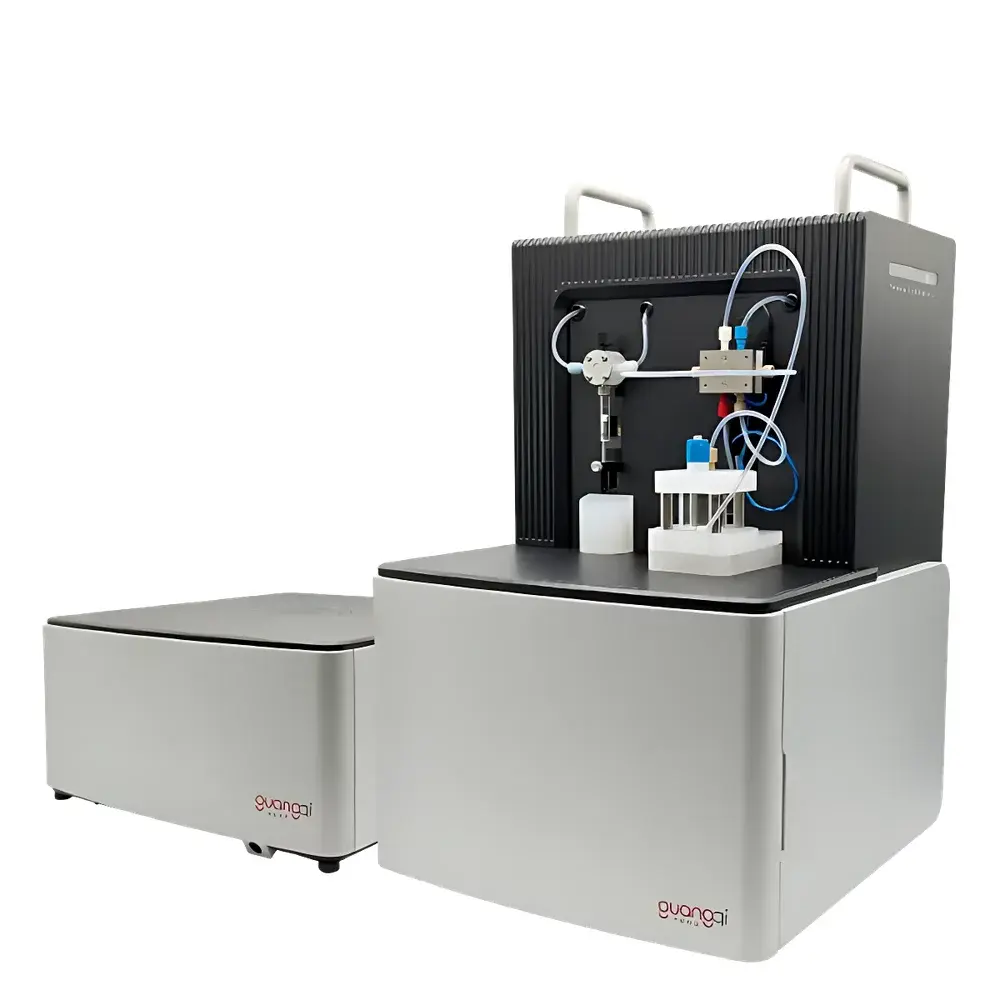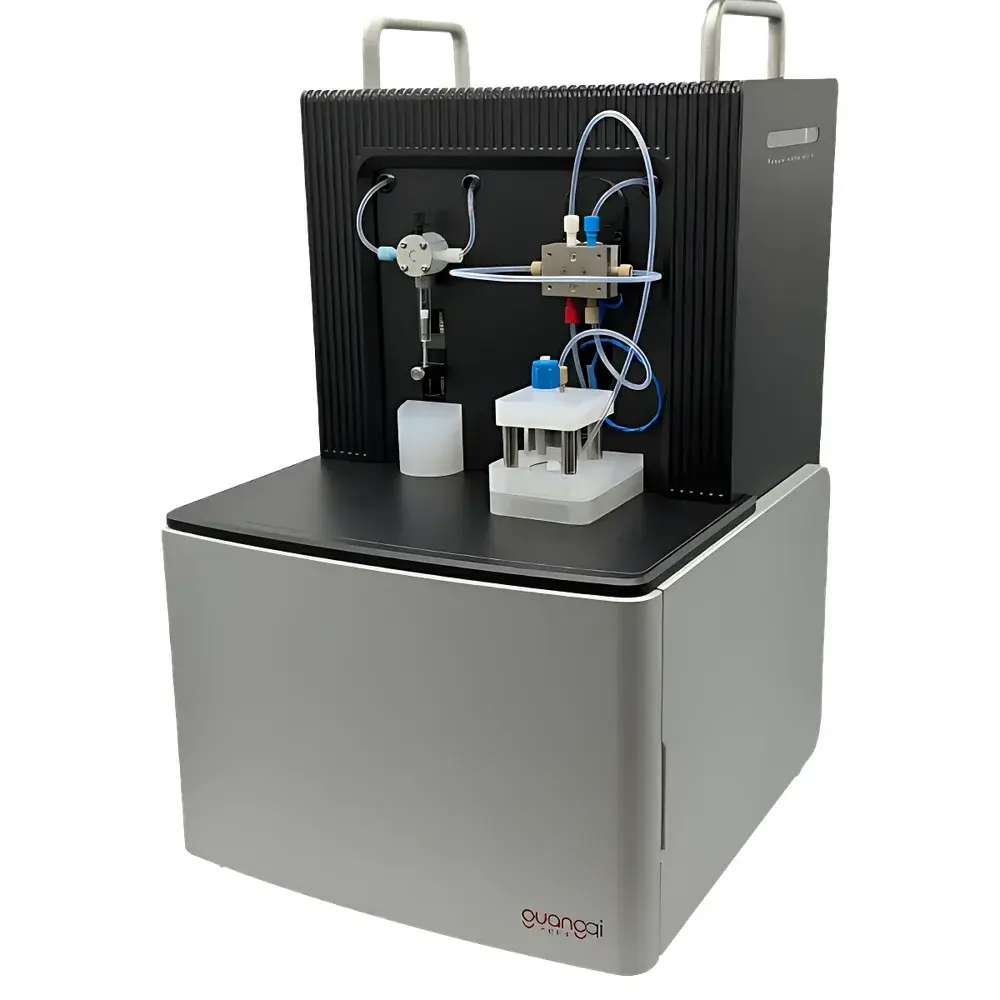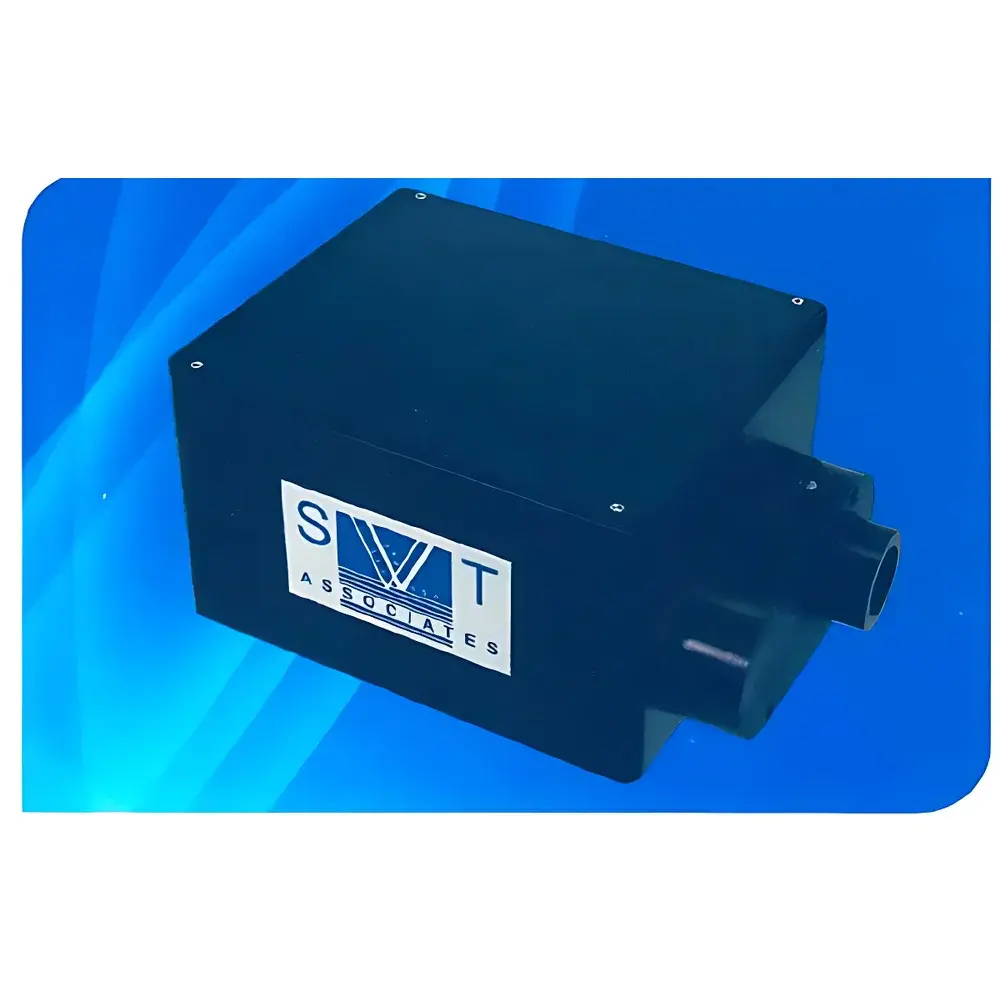
SVT Associates AccuTemp IS4000/IS6000 In-Situ Substrate Temperature and Growth Rate Monitor
| Brand | SVT Associates |
|---|---|
| Origin | USA |
| Model | IS4000 / IS6000 |
| Temperature Range (Pyrometer) | 450 °C – 1,300 °C |
| Temperature Range (Bandgap Module) | Room Temperature – 700 °C |
| Spectral Bands (Pyrometer) | 950 nm & 850 nm |
| Spectral Bands (Reflectometer) | 950 nm & 470 nm |
| NETD (Pyrometer) | < 0.5 °C |
| NETD (Thickness) | < 1 nm @ film > 100 nm |
| Spot Size | Ø2.75″ CF flange (optional Ø4.5″ CF with edge mount) |
| Dimensions | 100 × 140 × 130 mm |
| Minimum Target Distance | > 7 mm |
| Substrate Compatibility | Si, GaAs, InP, Sapphire, STO, GaSb, MCT, ZnO, GaN, ZnTe, SiC, CIGS |
| Interface | RS-232 serial |
| OS Requirement | Windows XP or later |
| Compliance | Designed for GLP/GMP-aligned process environments |
Overview
The SVT Associates AccuTemp IS4000 and IS6000 are in-situ, multi-parameter process monitoring systems engineered for real-time, non-contact measurement of substrate temperature, thin-film thickness, and growth rate during epitaxial deposition. Deployed at the viewport of molecular beam epitaxy (MBE), metal–organic chemical vapor deposition (MOCVD), and chalcogenide (e.g., CIGS) growth reactors, the AccuTemp operates on a dual-principle architecture: two-color infrared pyrometry combined with broadband optical reflectometry. Its core design eliminates reliance on emissivity assumptions by integrating a dedicated radiometer for dynamic emissivity compensation and a bandgap-based module for low-temperature calibration—enabling traceable thermal metrology across a continuous range from ambient to 1,300 °C. Unlike single-wavelength pyrometers, the dual-wavelength configuration mitigates errors induced by window fouling, oxide buildup, or spectral transmission drift, ensuring long-term stability in high-vacuum or reactive process environments.
Key Features
- Simultaneous, real-time measurement of substrate temperature, film thickness, growth rate, and refractive index—using a single viewport interface.
- Dual-wavelength infrared pyrometry (850 nm and 950 nm) with automatic transparency compensation for coated or degraded viewports.
- Integrated radiometer for real-time emissivity correction, delivering true thermodynamic temperature independent of surface condition or material phase transitions.
- Optional Bandgap Calibration Module enabling accurate temperature determination down to room temperature for semiconductors including GaAs, GaSb, and Si—extending effective measurement below conventional pyrometer limits.
- Two independent reflectometric channels (470 nm and 950 nm) supporting interference-based thickness analysis with 100 nm.
- Closed-loop compatibility via analog/digital I/O and serial interface, enabling integration with reactor PLCs or custom process controllers for automated growth termination or parameter adjustment.
Sample Compatibility & Compliance
The AccuTemp is validated for use with technologically critical substrates including silicon (Si), gallium arsenide (GaAs), indium phosphide (InP), sapphire, strontium titanate (STO), gallium antimonide (GaSb), mercury cadmium telluride (MCT), zinc oxide (ZnO), gallium nitride (GaN), zinc telluride (ZnTe), silicon carbide (SiC), and copper indium gallium selenide (CIGS). Its optical architecture accommodates standard UHV-compatible viewports (2.75″ CF, optionally 4.5″ CF with edge-mount configuration) and maintains measurement integrity under vacuum conditions ≤10⁻⁹ Torr. The system adheres to engineering practices aligned with ISO/IEC 17025 traceability frameworks and supports data integrity requirements under FDA 21 CFR Part 11 when deployed with compliant software environments. It is routinely specified in facilities operating under GLP and GMP protocols for compound semiconductor R&D and pilot-line manufacturing.
Software & Data Management
AccuTemp systems ship with SVT’s proprietary AccuView™ acquisition and control software, running on Windows XP or later (32-bit compatible). The application provides synchronized time-stamped logging of all measured parameters—including raw pyrometer voltages, reflectance ratios, calculated temperatures, and derived growth rates—with configurable sampling intervals down to 100 ms. Data export is supported in CSV and binary formats for post-processing in MATLAB, Python, or JMP. For regulated environments, third-party SCADA or MES integration is achievable via RS-232 serial protocol or optional analog output modules (0–10 V / 4–20 mA). Audit trail functionality—including user login, parameter change history, and data modification logs—is available when paired with validated enterprise data management platforms.
Applications
The AccuTemp is deployed globally in academic cleanrooms, national laboratories (e.g., NREL, IMEC, RIKEN), and semiconductor fabrication facilities for process development and transfer. Typical use cases include: optimization of AlGaN/GaN heterostructure growth for power electronics; endpoint detection in GaAs-based HBT and HEMT layer stacks; real-time stoichiometry feedback during CIGS co-evaporation; low-temperature calibration of SiGe strain relaxation kinetics; and reproducibility validation of STO-based oxide heteroepitaxy. Its ability to decouple thermal and optical contributions enables quantitative correlation between growth thermodynamics and structural evolution—making it indispensable for DOE-driven process qualification and failure root-cause analysis.
FAQ
Can the AccuTemp operate through a heavily coated viewport?
Yes—the dual-wavelength pyrometer compensates for spectral transmission loss due to thin-film deposits on the viewport, maintaining measurement accuracy without manual recalibration.
Is emissivity input required for temperature measurement?
No—emissivity is dynamically determined in real time using the integrated radiometer, eliminating setup dependency on prior material property knowledge.
What is the minimum measurable film thickness?
For films >100 nm, the noise-equivalent thickness resolution is 500 nm) with optimized signal averaging.
Does the Bandgap Module require separate alignment or calibration?
No—it shares the same optical path and mechanical mounting as the main unit; calibration is performed automatically during system initialization using known bandgap references.
Can the AccuTemp interface with LabVIEW or Python-based control systems?
Yes—RS-232 command protocol documentation is provided, and SVT offers example drivers for LabVIEW, Python (pySerial), and MATLAB for custom automation integration.