
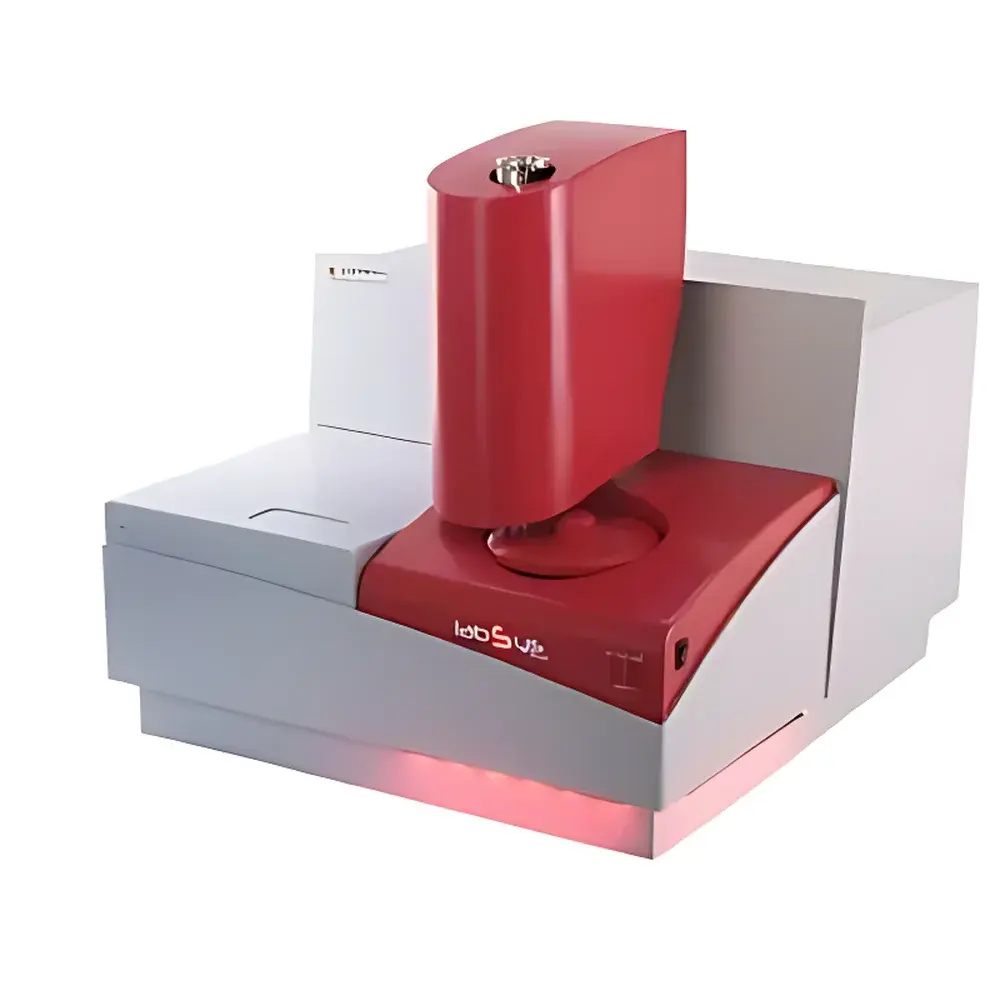
SETARAM Labsys Evo Cp Specific Heat Capacity Analyzer
| Brand | SETARAM |
|---|---|
| Origin | France |
| Model | Labsys Evo Cp |
| Temperature Range | Ambient to 1600 °C (single furnace) |
| Heating/Cooling Rate | 0.01–100 K/min |
| Balance Max Load | 20 g |
| Balance Range | ±1000 mg |
| Balance Resolution | 0.02 µg |
| DSC Sensitivity | 0.4 µW (sensor-dependent) |
| Cp Measurement Uncertainty | <2% |
| Atmosphere Options | Inert, Oxidizing, Reducing, Static, Dynamic, Vacuum |
| Gas Control | 3 Mass-Flow-Controlled Carrier Gases + 1 Auxiliary/Reaction Gas |
| Optional Autosampler (ASC) | Up to 25 Positions |
| EGA Compatibility | Direct Coupling to MS, FT-IR, GC |
Overview
The SETARAM Labsys Evo Cp Specific Heat Capacity Analyzer is a high-precision, modular simultaneous thermal analyzer engineered for quantitative thermophysical property characterization under controlled atmospheres. Based on the Calvet-type 3D microcalorimetric principle, it measures heat flow via radial symmetric thermopile arrays surrounding the sample and reference crucibles—enabling true absolute Cp determination without calibration standards. Unlike conventional DSC-based Cp methods relying on comparative analysis with sapphire references, the Labsys Evo Cp delivers direct, traceable specific heat capacity values across wide temperature ranges (ambient to 1600 °C), with intrinsic accuracy validated against NIST-traceable reference materials. Its integrated thermobalance provides concurrent mass change detection (TG), allowing decoupling of enthalpic effects from mass-loss events during Cp measurement—a critical capability for ceramics, metals, battery cathodes, and refractory composites undergoing phase transitions or decomposition.
Key Features
- Calvet 3D Cp sensor architecture: 98% measurement accuracy certified per ISO 11357-4 and ASTM E1269; eliminates baseline drift and thermal lag artifacts inherent in heat-flux DSC systems.
- Single-zone high-stability metal furnace: Uniform temperature distribution (±0.5 K over 25 mm zone) supports reproducible Cp scans at ramp rates from 0.01 to 100 K/min—essential for kinetic modeling and glass transition analysis.
- Integrated ultra-microbalance: 0.02 µg resolution, no external water cooling required; optimized for low-noise operation during slow-heating Cp protocols and long-term isothermal stabilization.
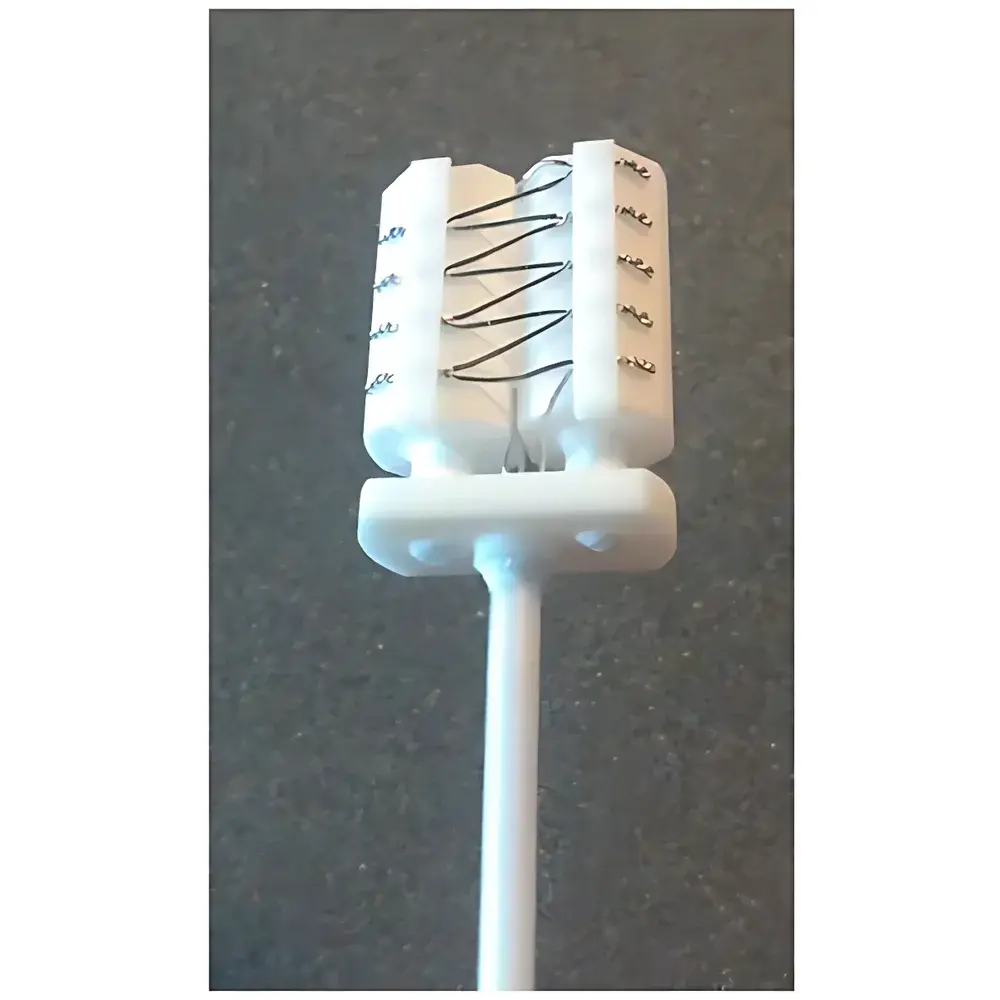
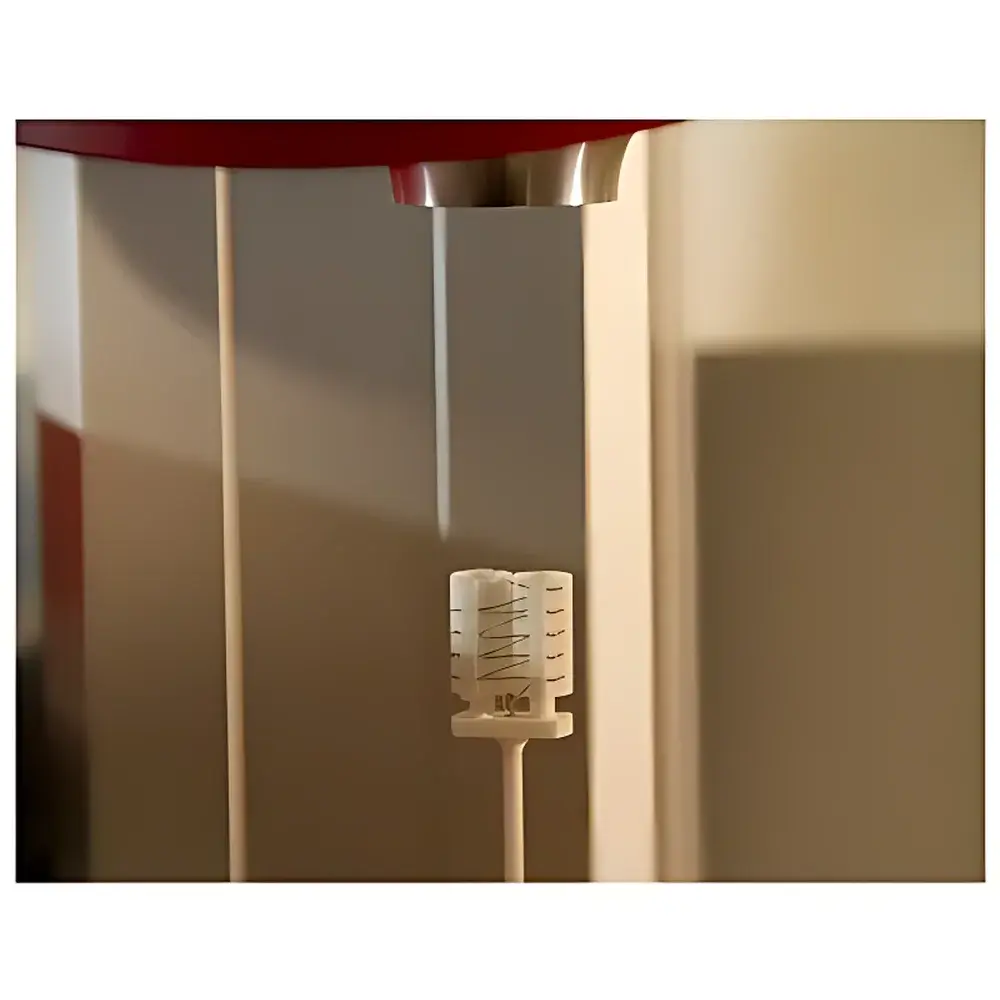
- Modular sensor exchange system: Field-swappable TG, TG-DSC, and TG-DTA rods enable rapid reconfiguration without recalibration—minimizing instrument downtime between material classes.
- Advanced gas management: Four independent MFC-controlled lines (3 carriers + 1 reactive gas) support precise gas mixing (0–100% v/v), dynamic purge sequences, and programmed atmosphere switching synchronized with thermal events.
- EGA-ready interface: Standard heated transfer line (up to 300 °C) with pressure-regulated outlet for seamless hyphenation to quadrupole MS, FT-IR spectrometers, or GC systems—enabling real-time correlation of Cp anomalies with evolved species.
Sample Compatibility & Compliance
The Labsys Evo Cp accommodates solid powders, bulk metals, thin films, and pressed pellets (diameter ≤ 5 mm, height ≤ 3 mm) in alumina, platinum, or graphite crucibles. It complies with ISO 11357-4 (Plastics—Differential Scanning Calorimetry), ASTM E1269 (Standard Test Method for Determining Specific Heat Capacity by Differential Scanning Calorimetry), and EN 61000-4-30 (for electromagnetic compatibility). All firmware and data acquisition modules meet FDA 21 CFR Part 11 requirements for electronic records and signatures when configured with audit trail and user access control. Instrument qualification documentation (IQ/OQ/PQ) templates are provided for GLP and GMP environments.
Software & Data Management
SETARAM’s CARYO™ software provides full control of thermal programs, real-time Cp calculation using both differential and step-heating methods, and automated baseline correction per ISO guidelines. Raw heat flow and mass signals are stored in vendor-neutral ASCII format with embedded metadata (timestamp, gas composition, furnace history). The software includes built-in Cp uncertainty propagation tools based on balance noise, temperature gradient, and sensor calibration coefficients. Data export supports ASTM E1445-compliant CSV and HDF5 formats for integration into LIMS or MATLAB-based thermal modeling workflows. Optional 21 CFR Part 11 module enables role-based permissions, electronic signatures, and immutable audit trails for regulated laboratories.
Applications
- High-temperature Cp characterization of Ni-based superalloys and TiAl intermetallics for turbine blade design validation.
- Specific heat mapping of LiNiMnCoO₂ (NMC) cathodes across charge/discharge cycles to quantify structural entropy changes.
- Thermodynamic modeling of nuclear fuel candidates (e.g., UO₂–PuO₂ solid solutions) using Cp data integrated into CALPHAD databases.
- Quality control of ceramic matrix composites (CMCs) where Cp deviation >1.5% signals microcracking or interfacial degradation.
- Validation of computational thermodynamics predictions (e.g., density functional theory-derived phonon spectra) via experimental Cp curves from 300–1400 K.
FAQ
What calibration standards are required for Cp measurement?
No routine calibration standards are needed—the Calvet 3D sensor provides absolute Cp values traceable to electrical power input. NIST SRM 720 (sapphire) may be used for verification only.
Can Cp be measured during phase transitions such as melting?
Yes—simultaneous TG-DSC mode allows separation of latent heat contributions from sensible heat capacity, enabling accurate Cp determination in two-phase regions.
Is vacuum-compatible Cp measurement supported?
Yes—vacuum operation down to 10⁻⁵ mbar is fully supported; optional cold trap prevents condensable vapor interference with sensor performance.
How is the 2% Cp uncertainty achieved across the full temperature range?
Through combined optimization of thermal symmetry (furnace design), signal-to-noise ratio (3D thermopile geometry), and real-time mass compensation (TG-coupled baseline correction).
Does the autosampler affect Cp measurement precision?
No—the ASC maintains thermal equilibrium between samples via pre-heating zones; Cp repeatability remains within ±0.8% RSD (n=10) across 25-position sequences.



