
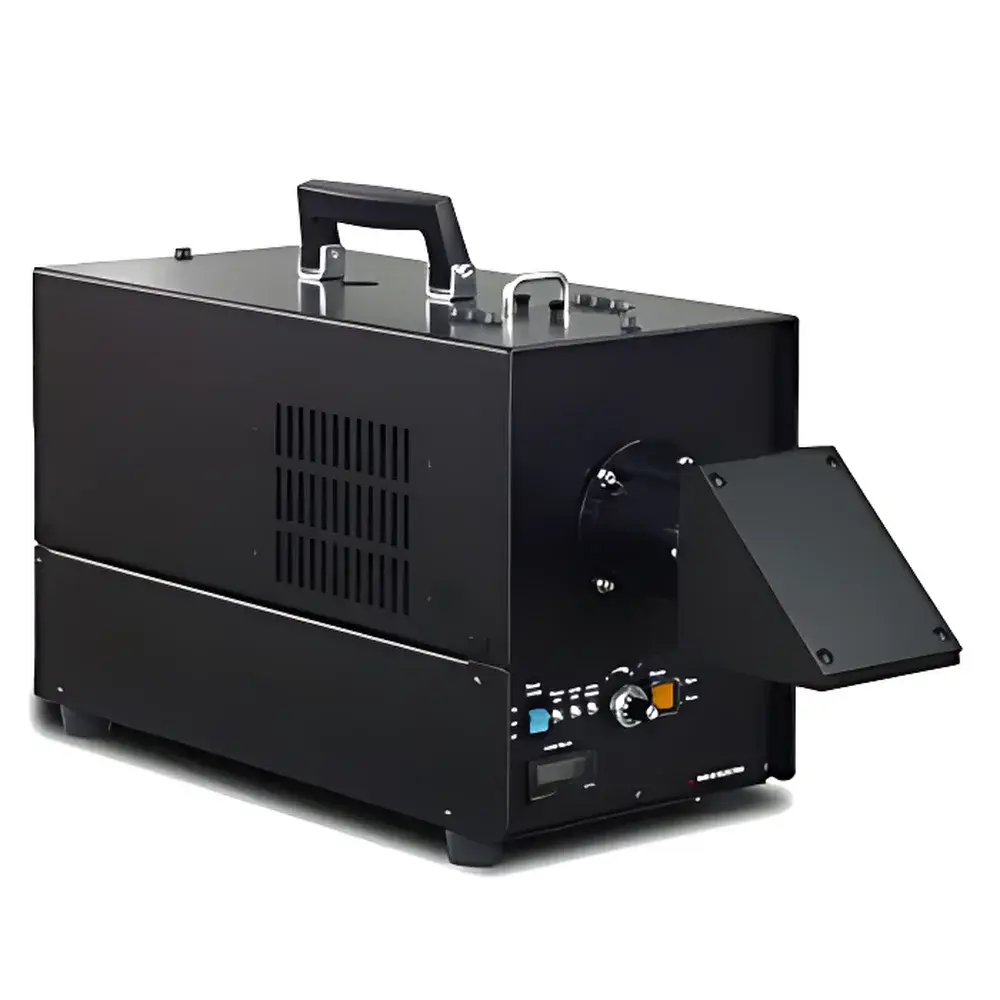
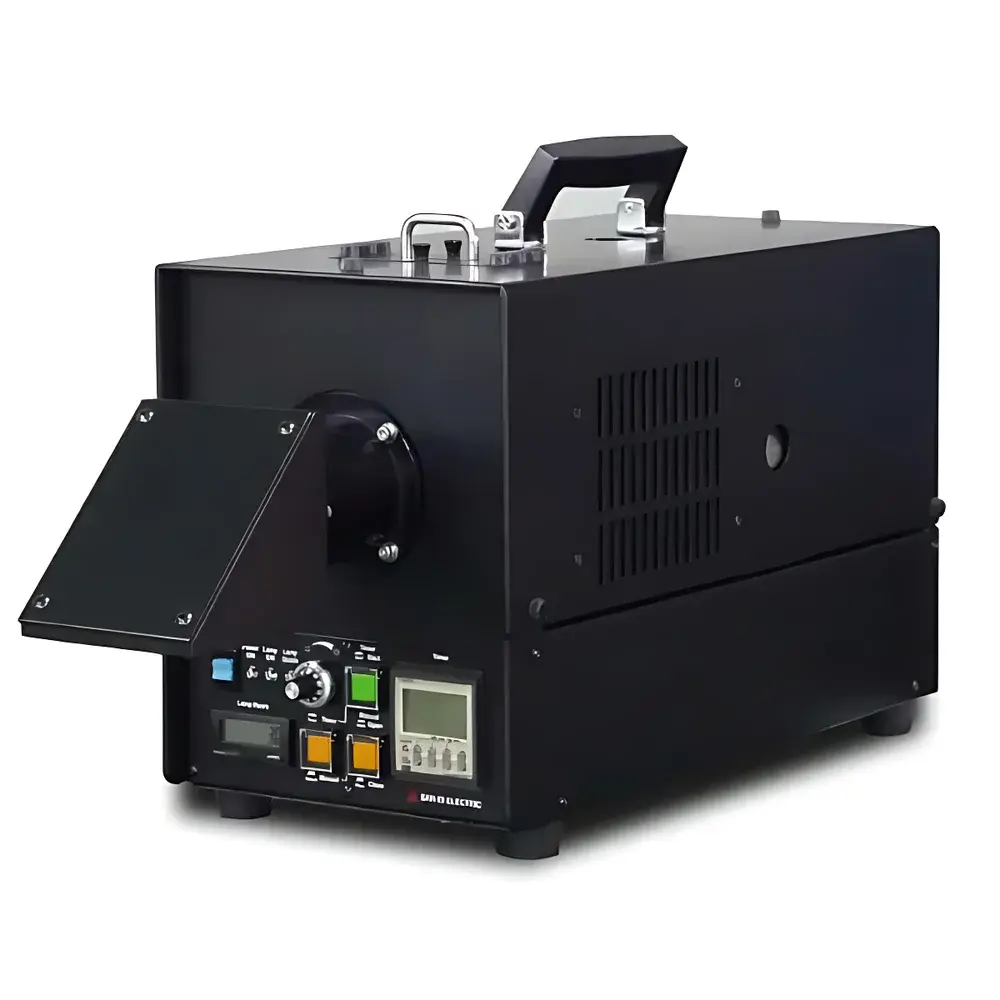
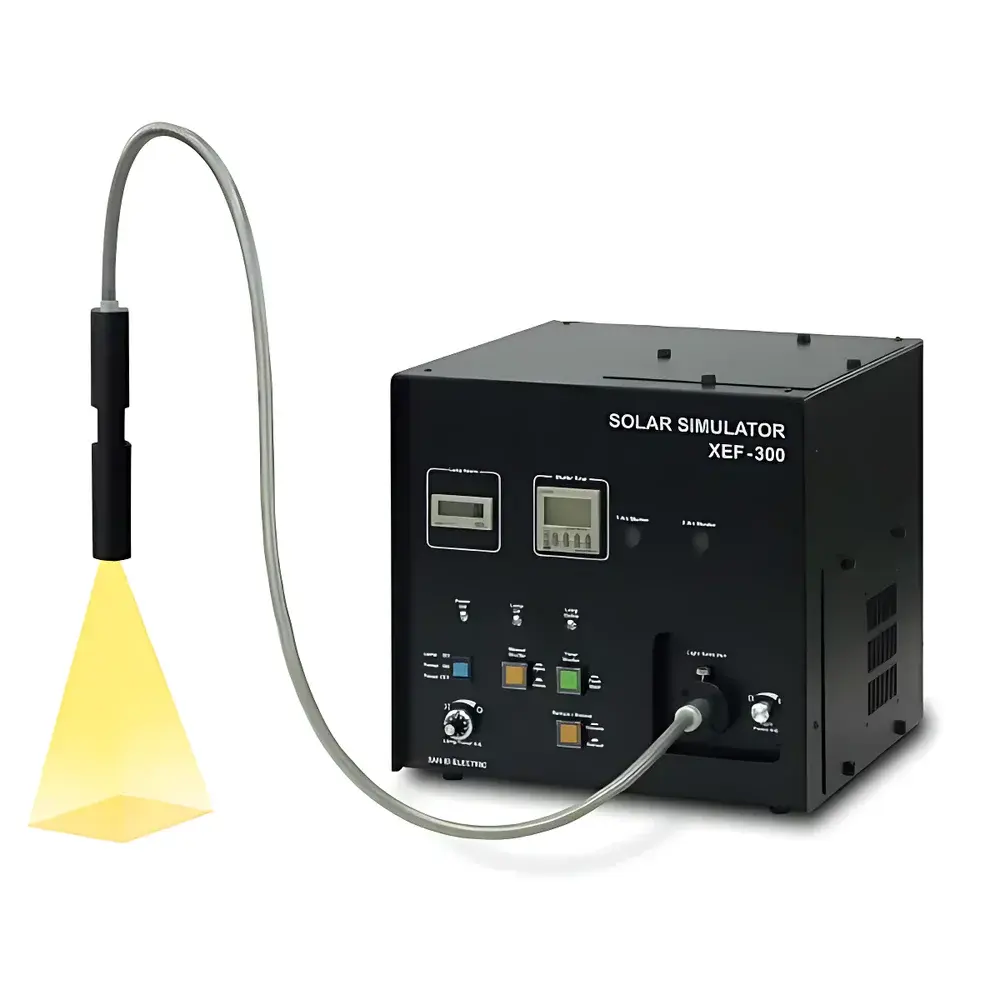
SAN-EI XES-40S3 A+A+A-Class Photocatalytic Solar Simulator
| Brand | SAN-EI (San-Ei Electric Mfg. Co., Ltd.) |
|---|---|
| Origin | Japan |
| Model | XES-40S3 |
| Illumination Area | 40 mm × 40 mm to 300 mm × 300 mm |
| Spectral Match (AM1.5G) | Class A+ |
| Irradiance Instability | <1% (Class A+) |
| Spatial Uniformity | <2% (Class A) |
| Initial Output | 1.0 sun |
| Beam Direction Options | Vertical down / vertical up / horizontal left / horizontal right |
| Compliance | JIS C 8912, ASTM E927-05, IEC 60904-9:2007 Ed2 |
| Safety Features | Integrated lamp overheat protection & lamp usage hour counter |
| Control Mode | Steady-state operation |
| Optional Functions | Spectral bandpass filtering, neutral density attenuation |
Overview
The SAN-EI XES-40S3 is a high-precision, A+A+A-class solar simulator engineered specifically for photocatalytic research and photofunctional material evaluation under standardized terrestrial sunlight conditions. It operates on the principle of broadband spectral irradiation calibrated to the AM1.5G reference spectrum (100 mW/cm²), enabling quantitative, reproducible photochemical and photophysical characterization. Unlike general-purpose light sources, the XES-40S3 integrates optical, thermal, and electronic design elements that meet the most stringent international performance criteria for spectral match, spatial uniformity, and temporal stability—making it suitable not only for catalytic reaction kinetics but also for device-level testing in perovskite photovoltaics, organic photovoltaics (OPV), and photobiological assays where photon flux fidelity is critical.
Key Features
- A+A+A classification verified per JIS C 8912, ASTM E927-05, and IEC 60904-9:2007 Ed2—ensuring simultaneous compliance with Class A+ for spectral match, Class A+ for irradiance instability (<1%), and Class A for spatial uniformity (<2%)
- Adjustable illumination area from 40 mm × 40 mm up to 300 mm × 300 mm, accommodating both micro-scale catalyst screening and macro-scale device validation
- Dual shutter timer system for precise exposure control, supporting time-resolved quantum yield measurements and transient photocurrent analysis
- Four configurable beam output orientations—vertical downward, vertical upward, horizontal left, and horizontal right—enabling integration into custom reactor geometries, glovebox-mounted setups, or inverted optical configurations
- Integrated lamp usage hour counter and thermal cut-off circuitry, ensuring operational safety and facilitating preventive maintenance scheduling in GLP-compliant laboratories
- Modular optical interface supports optional neutral density filters and bandpass interference filters for spectral tuning—e.g., UV-selective (280–400 nm), visible-range (400–780 nm), or NIR-limited irradiation protocols
Sample Compatibility & Compliance
The XES-40S3 is routinely deployed in heterogeneous photocatalysis studies involving TiO₂, g-C₃N₄, MOFs, and covalent organic frameworks (COFs), as well as in thin-film optoelectronic characterization of perovskite solar cells, dye-sensitized solar cells (DSSCs), and organic photodetectors. Its AAA-grade performance meets the minimum instrumentation requirements specified in ISO 15387 (photocatalytic air purification), ASTM D7273 (photocatalytic water treatment), and USP (photostability testing of pharmaceuticals). The system’s traceable calibration documentation supports audit readiness for ISO/IEC 17025-accredited testing laboratories and FDA 21 CFR Part 11–aligned data integrity workflows when paired with compliant software.
Software & Data Management
While the XES-40S3 operates primarily in standalone steady-state mode, its analog/digital I/O ports enable synchronization with external DAQ systems (e.g., Keithley source meters, potentiostats, gas chromatographs) for automated irradiation-triggered acquisition. SAN-EI provides optional LabVIEW-compatible drivers and SCPI command sets for integration into custom test sequences. All irradiance calibration certificates are NIST-traceable and include spectral irradiance data tables (300–1100 nm, 1 nm resolution), enabling post-acquisition correction of sample-specific action spectra. Audit trails—including lamp runtime logs, shutter activation timestamps, and operator ID entries—are retained locally and exportable in CSV format for regulatory review.
Applications
- Quantitative evaluation of photocatalytic hydrogen evolution rate (HER) and CO₂ reduction selectivity under simulated sunlight
- Stability assessment of perovskite thin films via ISOS-L-1 accelerated illumination protocols
- Photoelectrochemical impedance spectroscopy (PEIS) of semiconductor-electrolyte interfaces under controlled photon flux
- Phototoxicity screening of nanomaterials in aquatic model organisms (e.g., Daphnia magna) per OECD TG 201
- Accelerated aging of encapsulation materials for bifacial PV modules using directional irradiation modes
- Calibration reference source for spectroradiometers and quantum sensors used in outdoor PV field monitoring
FAQ
What does “A+A+A” classification mean for this solar simulator?
It denotes independent verification of three distinct performance parameters: spectral match (AM1.5G) rated Class A+, irradiance temporal stability rated Class A+, and spatial uniformity rated Class A—each tested per IEC 60904-9:2007 Ed2 Annex A.
Can the XES-40S3 be used inside a nitrogen-filled glovebox?
Yes—its compact footprint, horizontal beam output option, and absence of forced-air cooling allow safe integration into inert-atmosphere enclosures; optional quartz viewport adapters are available for vacuum-compatible mounting.
Is spectral recalibration required after lamp replacement?
Yes—SAN-EI recommends full spectral recalibration by an accredited third-party lab following each xenon arc lamp change, as spectral drift exceeds Class A+ tolerances beyond 500 operating hours.
Does the system support pulsed illumination modes?
No—the XES-40S3 is designed exclusively for steady-state operation; users requiring ms- or µs-scale pulse generation should consider the SAN-EI XES-60S series with integrated chopper and driver module.
How is irradiance uniformity validated across the full 300 mm × 300 mm field?
Using a motorized XY scanning stage and calibrated silicon photodiode array (traceable to NMIJ), with measurement grid spacing ≤10 mm and RMS deviation reported in the factory certificate.





