

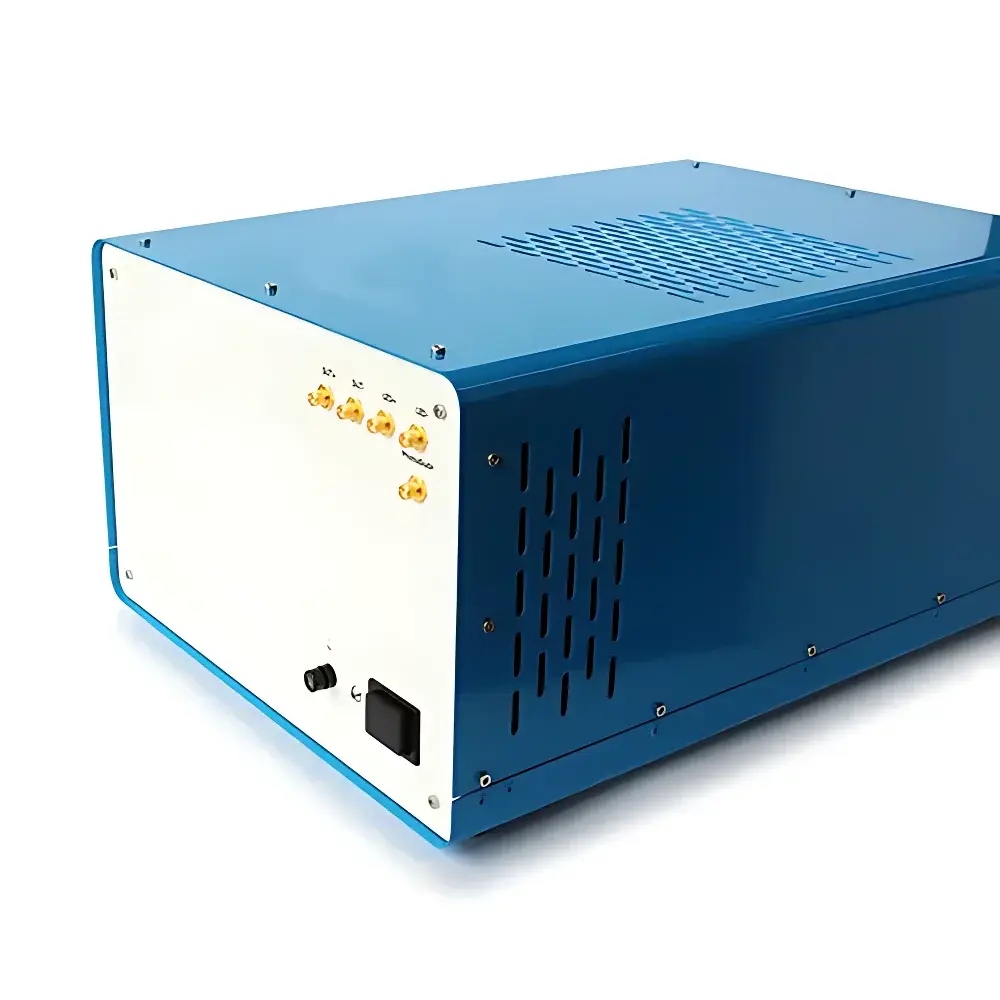
Fluxim OPV/PSC Carrier Dynamics Analysis System
| Brand | Fluxim |
|---|---|
| Origin | Switzerland |
| Model | OPV/PSC |
| Sampling Rate | 60 MS/s |
| Time Resolution | 16 ns |
| Frequency Range | 10 mHz – 10 MHz |
| Current Resolution | < 100 pA |
| LED Rise Time | 100 ns |
| Current Range | ±100 mA |
| Voltage Range | ±12 V |
| Optional Modules | Multi-LED Source (360–1100 nm), Cryogenic Stage (−120 °C to +150 °C), Spectrometer Integration, SMU Extension (±60 V, 1 pA resolution) |
Overview
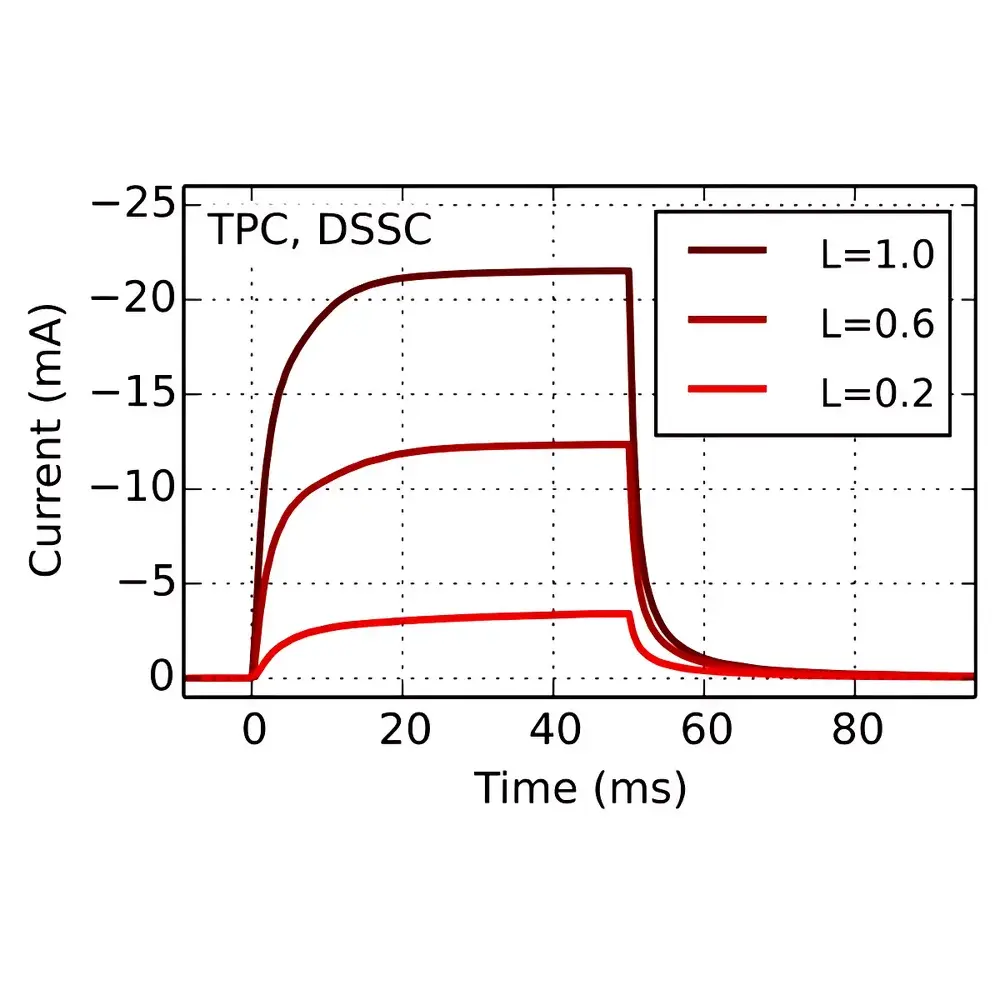
The Fluxim OPV/PSC Carrier Dynamics Analysis System is a modular, high-fidelity transient characterization platform engineered for quantitative, time-resolved investigation of charge carrier behavior in optoelectronic thin-film devices. It operates on fundamental physical principles including transient photocurrent (TPC) and photovoltage (TPV) generation under controlled optical excitation, capacitance-voltage (C-V) and capacitance-frequency (C-f) profiling, impedance spectroscopy (IS), and intensity-modulated techniques (IMPS/IMVS). The system enables extraction of intrinsic semiconductor parameters—such as carrier mobility, recombination lifetime, trap density and depth, built-in potential, doping concentration, geometric capacitance, and series resistance—without requiring device disassembly or destructive processing. Its architecture supports both steady-state and dynamic measurements under variable illumination intensity, bias voltage, temperature, and spectral excitation, making it suitable for structure–property–performance correlation studies in next-generation photovoltaics and light-emitting devices.
Key Features
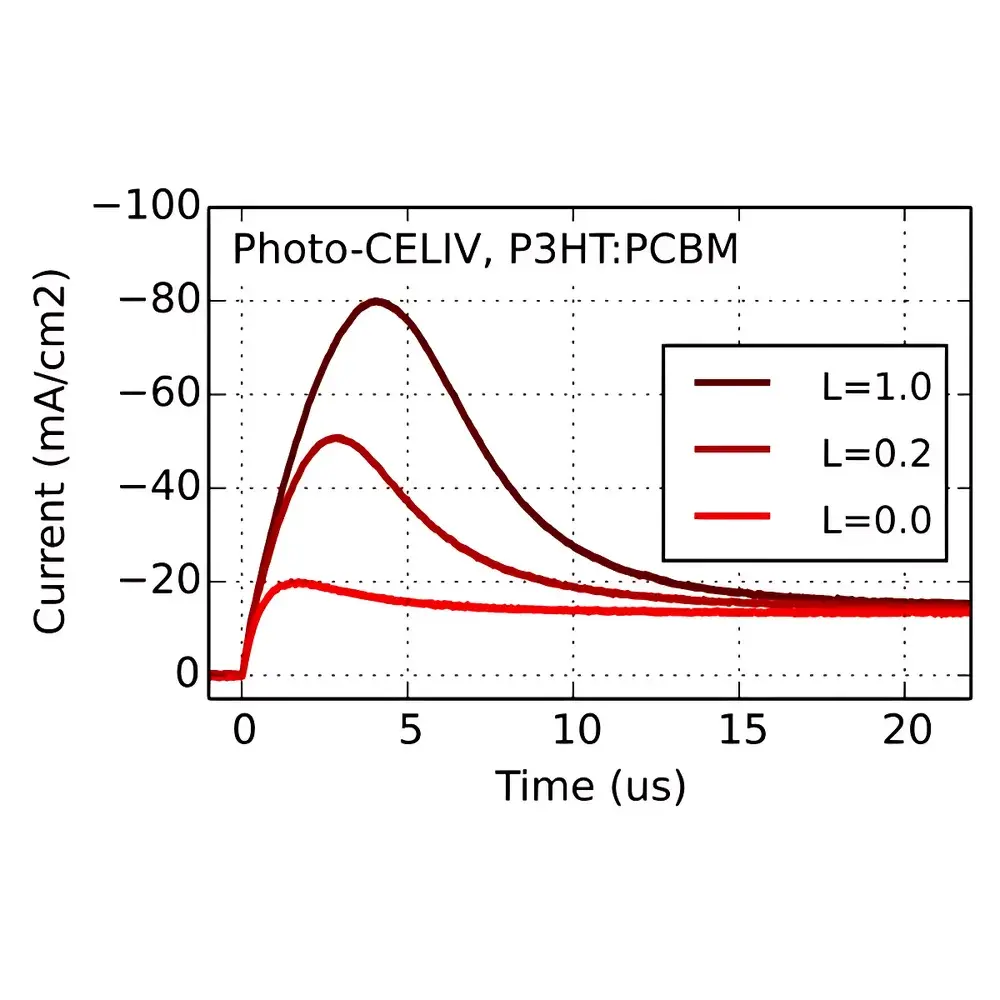
- Multi-technique integration: Simultaneous or sequential execution of TPC, TPV, IMPS, IMVS, Dark-CELIV, Photo-CELIV, Delaytime-CELIV, Injection-CELIV, MIS-CELIV, SCLC, DLTS, C-V, C-f, IS, and transient electroluminescence (TEL).
- Ultra-high temporal fidelity: 16 ns time resolution with 60 MS/s sampling rate ensures accurate capture of sub-microsecond carrier dynamics—including injection, transport, trapping, detrapping, and bimolecular recombination.
- Broad spectral flexibility: Integrated multi-LED source (360–1100 nm) enables wavelength-dependent carrier dynamics mapping; optional spectrometer module supports EQE and EL spectral analysis.
- Environmental control compatibility: Designed for seamless integration with cryogenic stages (−120 °C to +150 °C) and inert-atmosphere gloveboxes to isolate thermal and ambient effects on carrier kinetics.
- Modular hardware architecture: Supports field-upgradable SMU extension (±60 V, 1 pA current resolution), high-voltage pulsing, and multi-channel synchronization for complex multi-stimulus experiments.
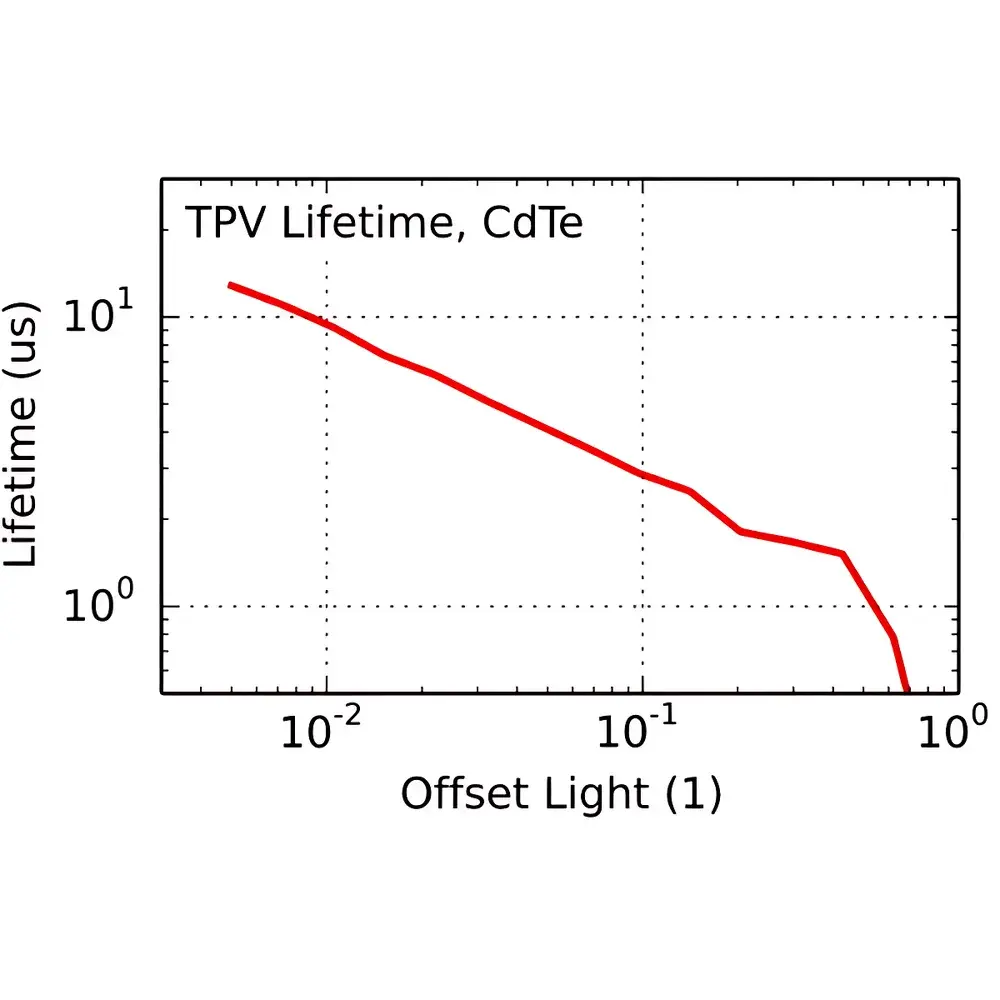
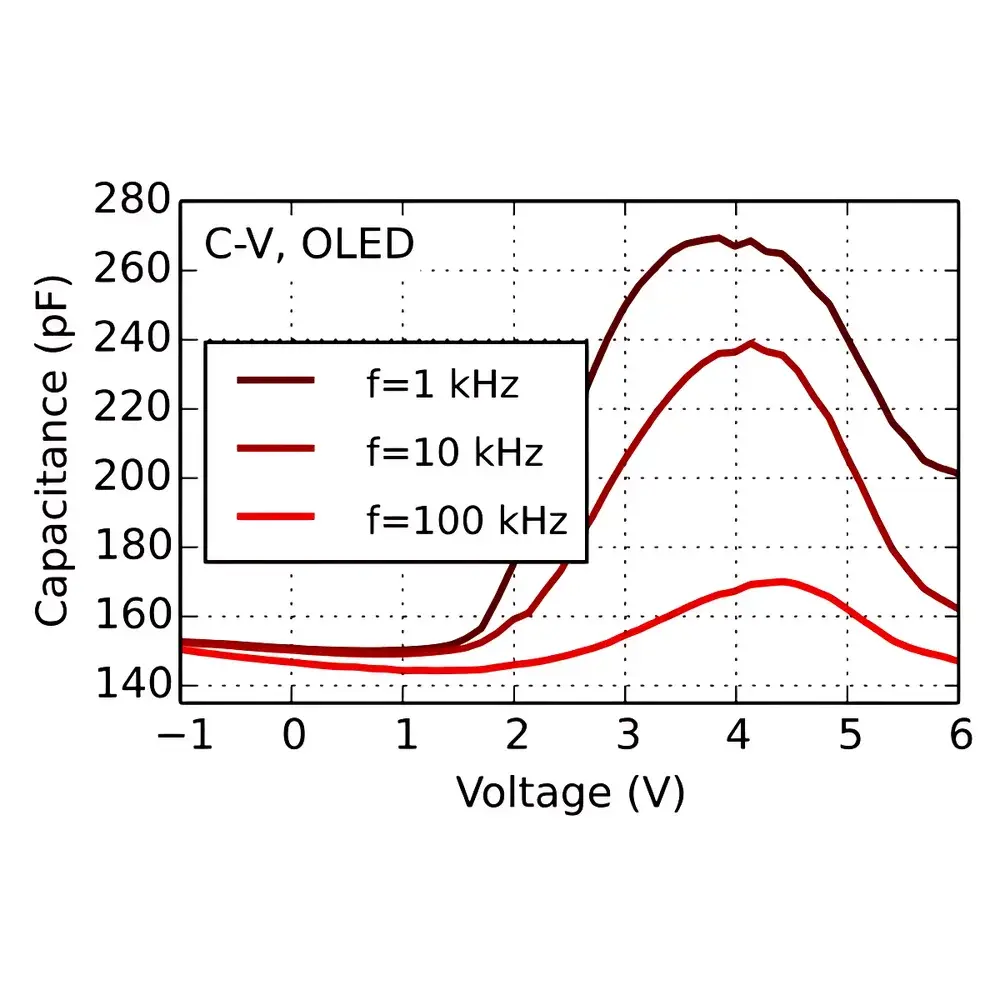
- Comprehensive parameter extraction: Direct quantification of mobility (via SCLC, CELIV, TEL), lifetime (TPV, IMVS), trap distribution (DLTS, C-f), recombination order (Delaytime-CELIV), built-in field (C-V), and dielectric permittivity (Dark-CELIV, MIS-CELIV).
Sample Compatibility & Compliance
The system accommodates standard device architectures across organic, perovskite, quantum dot, dye-sensitized, and chalcogenide photovoltaics (e.g., PSCs, OPVs, DSSCs, CIGS, CdTe), as well as emissive devices including OLEDs, PeLEDs, QD-LEDs, LECs, and MIS capacitors. All measurement protocols adhere to internationally recognized standards for semiconductor device characterization—including ASTM F2891 (photovoltaic transient response), IEC 61215-1-4 (capacitance-based doping analysis), and ISO/IEC 17025 traceability requirements for calibration of current/voltage transients. Data acquisition and post-processing workflows support GLP/GMP-aligned audit trails, electronic signatures, and metadata tagging compliant with FDA 21 CFR Part 11 when configured with validated software modules.
Software & Data Management
The native Fluxim Analysis Suite provides unified control, real-time visualization, and physics-based modeling of all supported techniques. It includes built-in fitting engines for drift-diffusion modeling, equivalent circuit analysis (e.g., Randles, Gerischer, transmission line models), and numerical solutions of continuity equations under transient boundary conditions. Raw data are stored in HDF5 format with embedded experimental metadata (bias history, illumination profile, temperature log, instrument configuration). Batch processing, scriptable automation (Python API), and export to MATLAB, Origin, or CSV ensure interoperability with institutional data repositories and publication-grade figure generation. Software validation reports and IQ/OQ documentation packages are available upon request for regulated laboratory environments.
Applications
- Quantifying carrier mobility anisotropy and field-dependence in layered perovskite heterostructures using SCLC and Photo-CELIV.
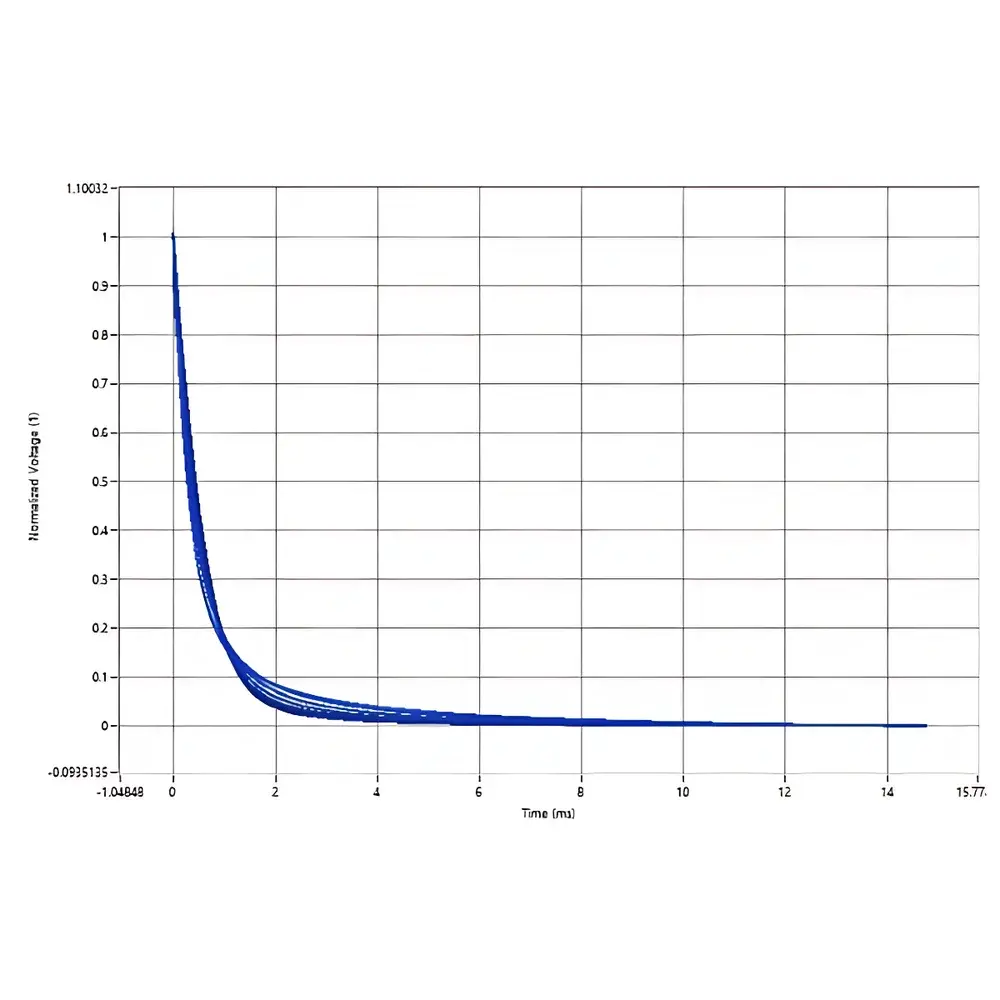
- Distinguishing monomolecular (trap-assisted) from bimolecular (Langevin) recombination via TPV decay kinetics and Delaytime-CELIV amplitude scaling.
- Mapping energy-resolved trap distributions in mixed-halide perovskites using DLTS combined with temperature-dependent C-V sweeps.
- Correlating interfacial defect density at ETL/perovskite interfaces with open-circuit voltage loss through IMVS-derived recombination resistance.
- Evaluating charge injection barriers in tandem solar cells via dark C-V profiling and built-in potential extraction.
- Characterizing exciton dissociation efficiency and polaron formation kinetics in non-fullerene acceptor systems using dual-pulse TPC.
- Assessing operational stability by tracking time-evolution of trap density and carrier lifetime under continuous illumination stress (ISOS-L-1 protocols).
FAQ
What device structures can be tested with this system?
Standard planar and inverted OPV/PSC architectures, single-carrier diodes (electron- or hole-only), MIS capacitors, OLEDs, PeLEDs, QD-LEDs, and hybrid heterojunctions—with active areas from 0.01 cm² to >1 cm².
Is the system compatible with glovebox integration?
Yes—fully compatible with N₂- or Ar-purged gloveboxes; all electrical feedthroughs and optical windows meet standard KF40/KF50 specifications.
Can I extract mobility values without fabricating space-charge-limited devices?
Yes—Photo-CELIV and Injection-CELIV enable mobility extraction from standard p-i-n or n-i-p solar cell stacks under illumination, eliminating the need for dedicated SCLC test structures.
Does the software include physics-based modeling tools?
Yes—the Analysis Suite includes forward-modeling modules for drift-diffusion simulations, trap-assisted recombination kinetics, and impedance response prediction based on user-defined device parameters.
Are calibration certificates and traceability documentation provided?
Each system ships with factory calibration reports traceable to NIST standards; full IQ/OQ documentation and 21 CFR Part 11 compliance packages are available as optional deliverables.



