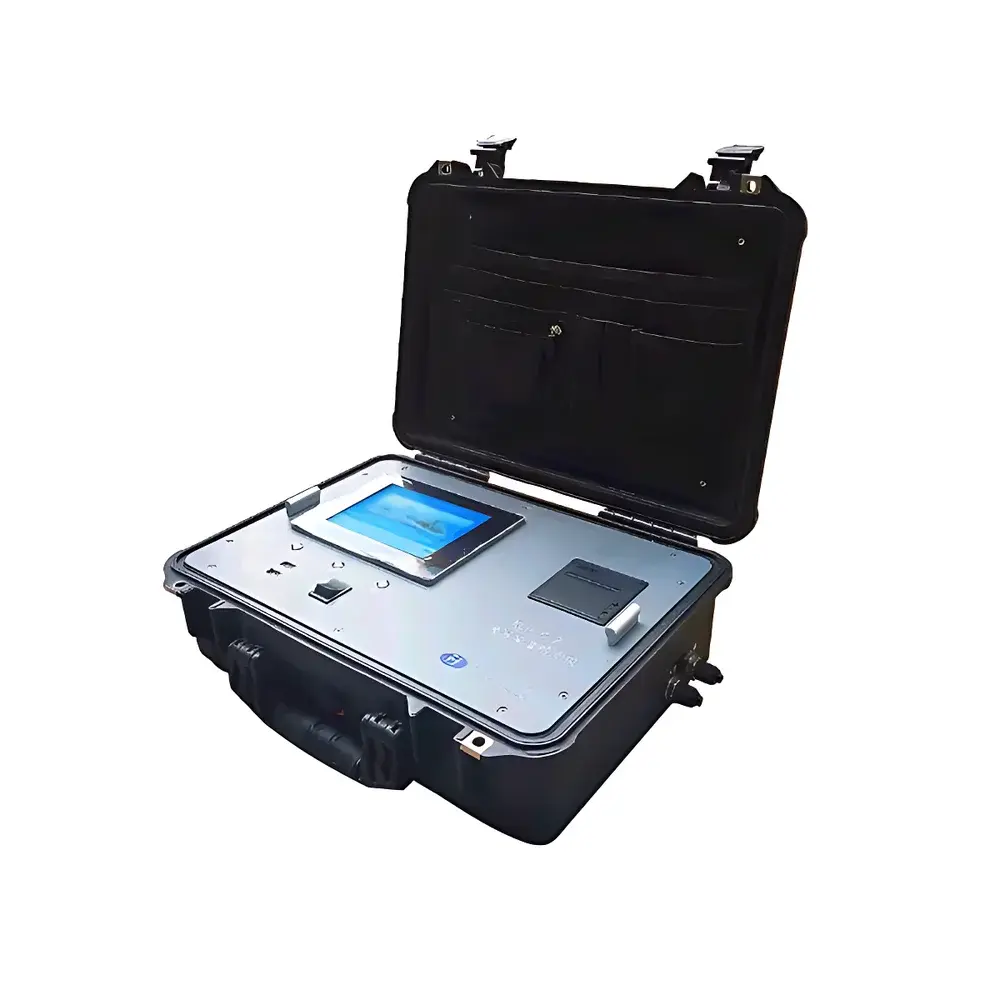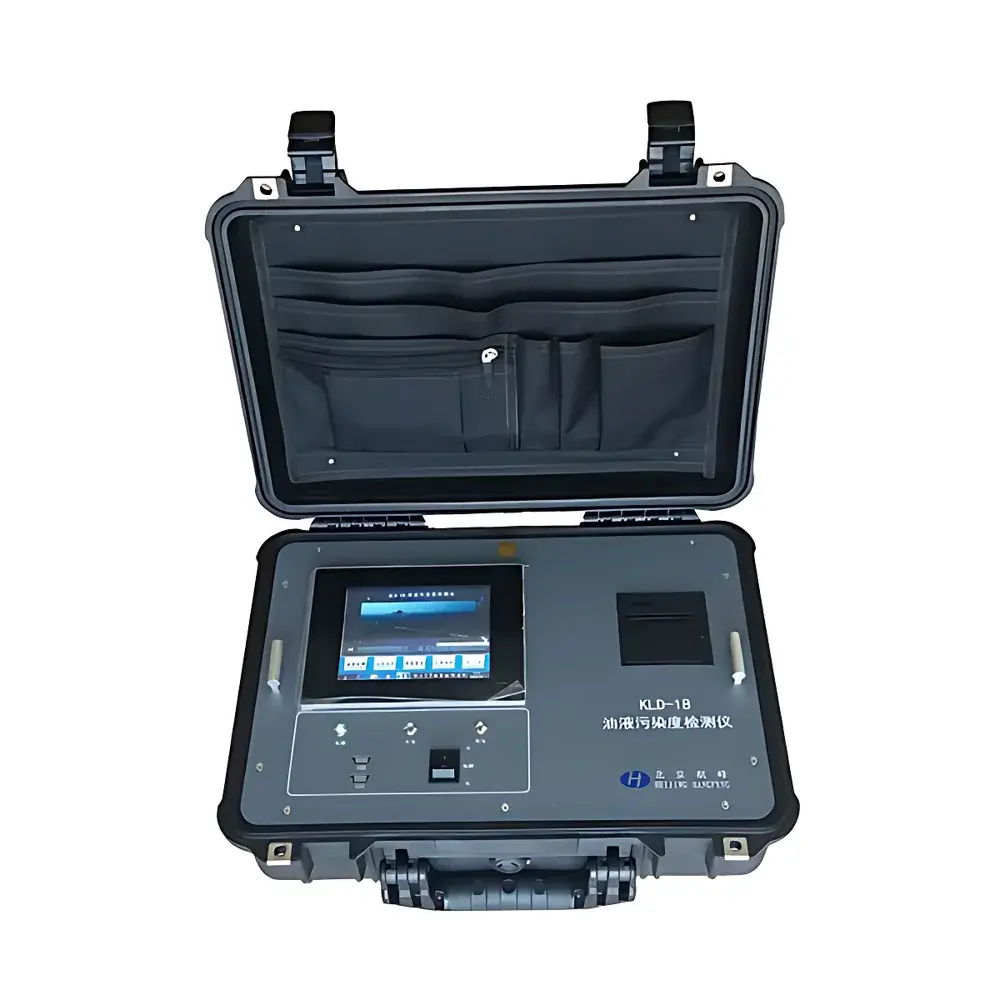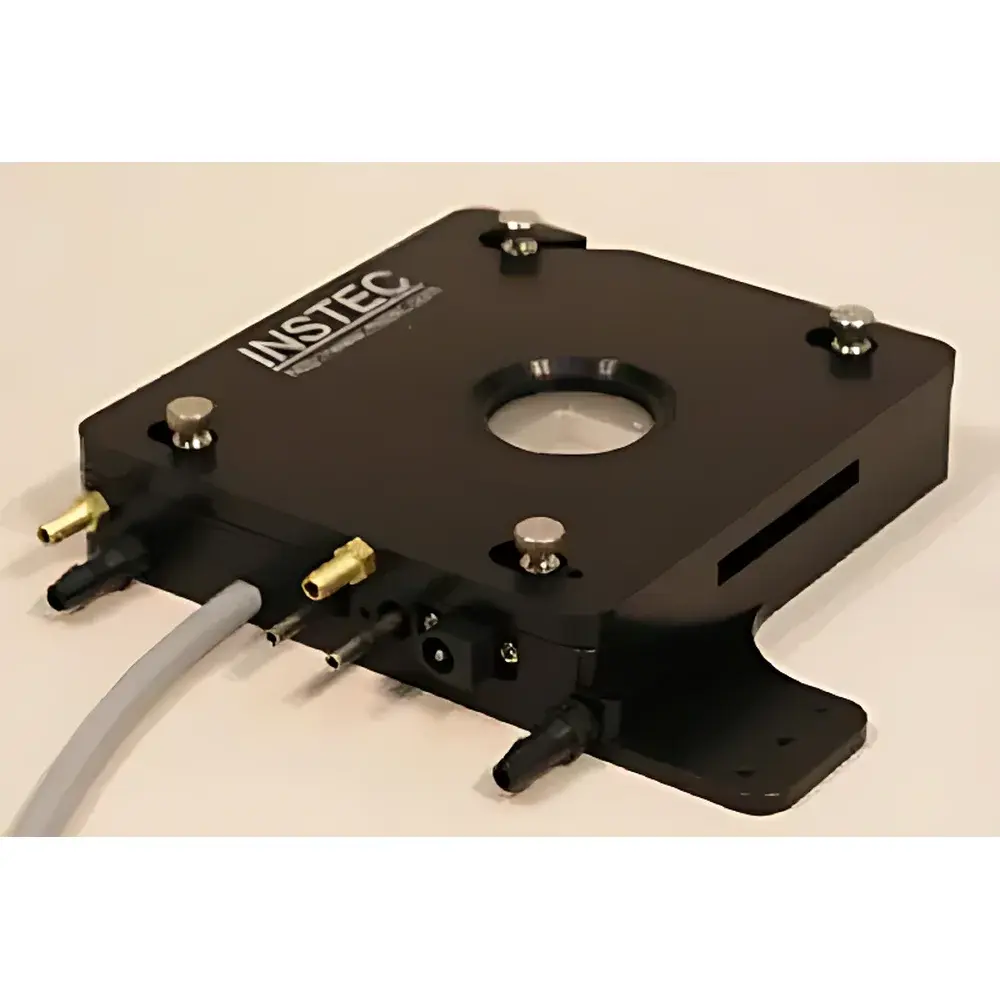
INSTEC HCD301 Precision Programmable Heating-Cooling Stage for Inverted Microscopy
| Brand | Instec |
|---|---|
| Origin | USA |
| Model | HCD301 |
| Temperature Range | −80 °C to +250 °C |
| Temperature Resolution | 0.01 °C |
| Temperature Stability | ±0.1 °C at 100 °C |
| Min. Heating/Cooling Rate | ±0.01 °C/h |
| Max. Heating Rate | +100 °C/min at 100 °C |
| Max. Cooling Rate | −50 °C/min at 100 °C |
| Control Method | Switching PID (LVDC PID optional) |
| Sensor | 100 Ω Platinum RTD |
| Working Distance | 6.2 mm (min. 3.5 mm with outer window removed) |
| Condenser Distance | 11.6 mm |
| Sample Area | 22 mm × 25 mm |
| Chamber Height | 5.0 mm (up to 12.5 mm with spacers) |
| Viewing Aperture Options | 2, 5, 8, and 10 mm |
| Optional X-Y Micropositioner | 10 µm resolution |
Overview
The INSTEC HCD301 is a high-precision, programmable heating-cooling stage engineered specifically for integration with inverted optical microscopes. It enables real-time in situ thermal analysis of microscopic samples under tightly controlled temperature conditions—from cryogenic −80 °C to high-temperature +250 °C—while maintaining optical access and mechanical compatibility with standard microscope objectives and condensers. The stage operates on the principle of resistive Joule heating combined with thermoelectric (Peltier) and/or liquid nitrogen-assisted cooling, delivering rapid thermal transients and exceptional steady-state stability. Its design prioritizes minimal thermal drift, low vibration transmission, and consistent thermal uniformity across the sample area—critical parameters for quantitative microscopy techniques such as phase transition observation, crystal nucleation studies, polymer melt behavior, and live-cell thermobiology.
Key Features
- Wide operational temperature range: −80 °C to +250 °C; sub-ambient operation requires optional LN₂ or recirculating chiller integration
- High-resolution temperature control: 0.01 °C setpoint resolution with ±0.1 °C stability at 100 °C (measured via embedded 100 Ω platinum RTD)
- Dual-mode control architecture: default switching PID with optional Linear Variable DC (LVDC) PID for enhanced linearity and reduced overshoot during ramp-and-soak protocols
- Optimized optical geometry: 6.2 mm working distance compatible with 40×–100× long-working-distance objectives; reduces to 3.5 mm when outer quartz window is removed
- Modular chamber configuration: 5.0 mm standard height, expandable to 12.5 mm using certified stainless-steel spacers—enabling variable sample thickness and environmental sealing options
- Four interchangeable viewing apertures (2, 5, 8, and 10 mm diameter) to match objective field-of-view and maximize light throughput while minimizing peripheral thermal leakage
- Optional motorized X-Y micropositioner with 10 µm step resolution for precise sample repositioning without stage removal
Sample Compatibility & Compliance
The HCD301 accommodates standard microscope slides (e.g., 25 mm × 75 mm), coverslips (up to 22 mm × 25 mm active area), and custom substrates including silicon wafers, ITO-coated glass, and MEMS devices. Its sealed chamber design supports inert gas purging (N₂, Ar) and optional vacuum compatibility (<10⁻² mbar) for oxidation-sensitive or volatile-sample applications. The stage conforms to ISO/IEC 17025-relevant calibration traceability requirements when used with NIST-traceable RTD verification tools. While not intrinsically rated for hazardous environments, its electrical isolation and grounding architecture meet UL 61010-1 and IEC 61010-1 safety standards for laboratory instrumentation. All firmware and hardware interfaces are designed to support GLP/GMP-aligned workflows, including audit-trail-capable temperature logging when paired with INSTEC’s TC-1200 controller.
Software & Data Management
The HCD301 is fully supported by INSTEC’s TC-1200 temperature control software (Windows-based), which provides graphical ramp/soak programming, real-time temperature vs. time plotting, and synchronized data export in CSV and HDF5 formats. The software implements configurable alarm thresholds, event-triggered image capture (via TTL output to microscope cameras), and password-protected user profiles for multi-operator labs. For regulated environments, optional FDA 21 CFR Part 11 compliance packages include electronic signature capability, immutable audit trails, and role-based access control. Raw sensor data—including RTD resistance values and heater/cooler duty cycles—is logged at up to 10 Hz, enabling post-acquisition thermal gradient reconstruction and correlation with time-lapse imaging metadata.
Applications
- In situ observation of solid-solid and solid-liquid phase transitions in metallurgical alloys, pharmaceutical polymorphs, and liquid crystals
- Thermal expansion coefficient measurement via DIC (Digital Image Correlation) or interferometric displacement tracking
- Temperature-dependent fluorescence lifetime imaging (FLIM) and FRET efficiency mapping in biological specimens
- Controlled dehydration/rehydration kinetics of hydrogels and biomimetic membranes
- Accelerated thermal aging studies of encapsulated OLED materials and perovskite thin films
- Calibration validation of infrared thermal imaging systems using reference blackbody sources mounted on the stage
FAQ
Does the HCD301 require external cooling for operation below ambient temperature?
Yes. Sub-ambient operation down to −80 °C necessitates an external cooling source—either a liquid nitrogen dewar with flow regulator or a closed-loop recirculating chiller rated for ≤−85 °C outlet temperature.
Can the stage be used under vacuum or in controlled atmospheres?
The base HCD301 model supports inert gas purging. Vacuum-compatible variants (HCD301-VAC) are available with metal-sealed feedthroughs and bake-out rated components for pressures down to 10⁻² mbar.
Is the temperature sensor calibrated and traceable to NIST standards?
The integrated 100 Ω Pt RTD is factory-calibrated to ITS-90; full calibration certificates with NIST-traceable uncertainty statements are available upon request.
What microscope brands and models is the HCD301 mechanically compatible with?
It is validated for Nikon Ti-series, Olympus IX-series, Zeiss Axio Observer, and Leica DMi8 inverted platforms; custom mounting adapters are available for non-standard nosepiece configurations.
How is thermal uniformity characterized across the 22 mm × 25 mm sample area?
Typical spatial uniformity is ±0.3 °C over the central 15 mm × 15 mm region at steady state (100 °C), verified by micro-thermocouple mapping per ASTM E220-19 Annex A3 protocols.