
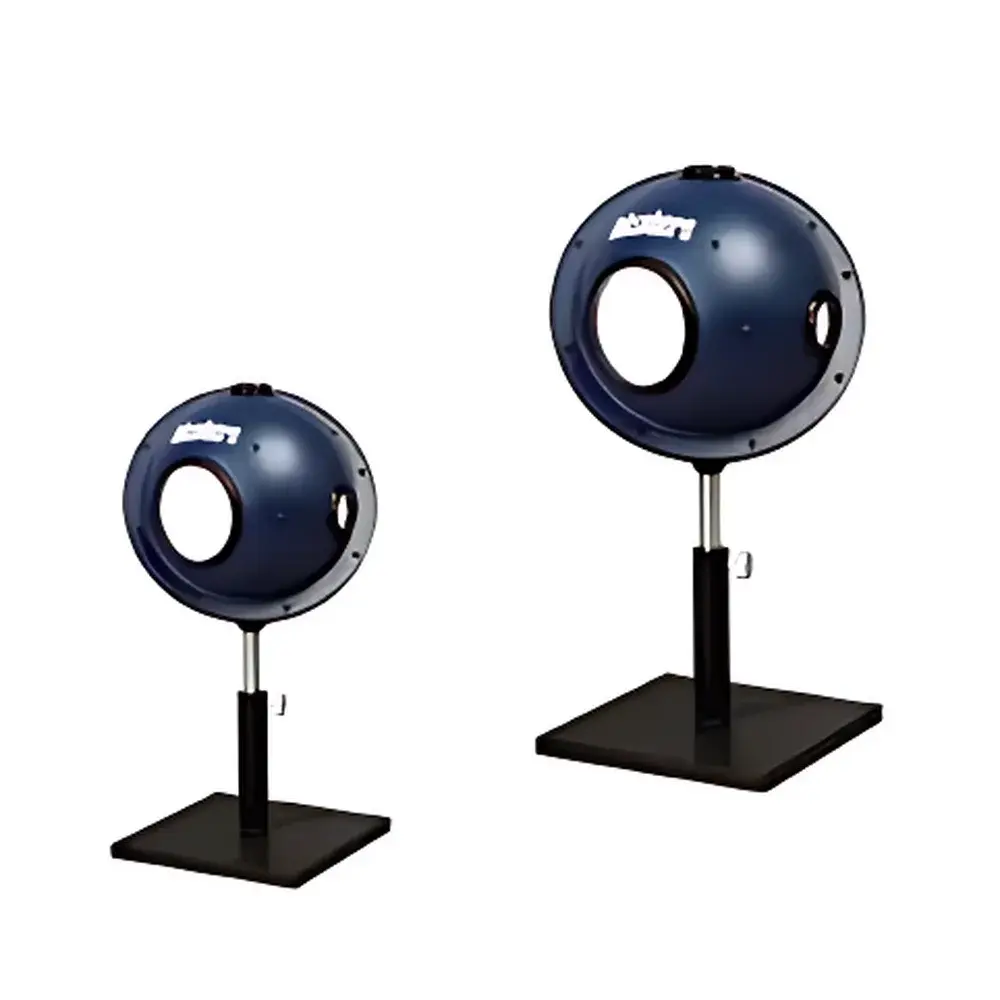
Labsphere GPS Series Universal Integrating Sphere
| Brand | Labsphere |
|---|---|
| Origin | USA |
| Manufacturer Type | Authorized Distributor |
| Origin Category | Imported |
| Model | GPS |
| Pricing | Upon Request |
Overview
The Labsphere GPS Series Universal Integrating Sphere is a precision-engineered optical platform designed for high-fidelity radiometric, photometric, and spectral measurements across diverse illumination and detection configurations. Based on the fundamental principle of multiple diffuse reflections within a highly uniform spherical cavity, the GPS sphere achieves near-perfect spatial and angular homogenization of incident light—enabling accurate measurement of total luminous flux (lumens), radiant flux (watts), spectral power distribution (SPD), and reflectance/transmittance characteristics. Its modular architecture supports both source-mode (e.g., as a uniform area light source) and receiver-mode (e.g., as a collecting detector) operation, making it suitable for calibration-grade applications in LED lighting, automotive headlamp testing, display backlight characterization, architectural lighting validation, and solid-state lighting (SSL) R&D. All GPS spheres are manufactured under ISO 9001-certified quality management systems, with optical performance traceable to NIST standards via Labsphere’s A2LA-accredited calibration laboratory.
Key Features
- Modular, user-configurable geometry: Selectable sphere diameters (commonly 2″, 4″, 6″, 10″, 20″, and 30″ internal diameter), customizable port locations (top, side, bottom, or axial), and variable port sizes to match application-specific beam geometry and signal-to-noise requirements.
- Interchangeable high-performance diffuse coatings: Spectraflect® (broadband 350–2500 nm, >98% reflectance), Spectralon® (ultra-high stability, 250–2500 nm, >99% reflectance, low angular dependence), or Infragold® (optimized for IR, 750–20,000 nm, >95% reflectance).
- Rapid-attachment interface system: Precision-machined flanges and alignment pins enable repeatable, tool-free mounting and swapping of accessories—including light sources, detectors, baffles, port reducers, diffusers, and collimators—without compromising sphere integrity or calibration stability.
- One-click recalibration capability: When configuration changes occur (e.g., port size adjustment or coating replacement), the integrated software interface allows users to initiate a full system recalibration using pre-loaded NIST-traceable reference data and standardized procedures compliant with CIE 84:2019 and IES LM-79-19 guidelines.
- Structural robustness: Spheres are fabricated from aerospace-grade aluminum alloy with thermally stable anodized interior surfaces; optional stainless-steel construction available for ultra-high vacuum or cleanroom environments.
Sample Compatibility & Compliance
The GPS universal integrating sphere accommodates samples ranging from miniature micro-LED chips (1 m²), provided appropriate port sizing and baffle configuration are selected. It supports compliance-driven test workflows aligned with ASTM E308 (computing tristimulus values), ISO/CIE 11664 (colorimetry), IES LM-79 (electrical and photometric measurements of SSL products), and USP (analytical instrument qualification for pharmaceutical photometric systems). For regulated environments, optional 21 CFR Part 11-compliant audit trail logging and electronic signature support are available through the accompanying SpectraSuite™ or LabSphere Control Suite software.
Software & Data Management
Control and data acquisition are managed via Labsphere’s proprietary software suite, which provides real-time spectral visualization, automated calibration sequence execution, multi-channel synchronization (for simultaneous irradiance/radiance/fluence measurements), and export-ready reporting in CSV, XML, and PDF formats. Raw data files retain full metadata—including coating type, port configuration, integration time, detector gain, and NIST reference certificate ID—ensuring full traceability. The software architecture supports API-based integration with third-party platforms (e.g., LabVIEW, Python via PyVISA), enabling automated QA/QC routines in production line environments or GLP/GMP-compliant laboratories.
Applications
- Calibration of spectroradiometers, photometers, and imaging colorimeters using certified reference lamps or LED standards.
- Measurement of total luminous flux and efficacy (lm/W) for LED packages, modules, and luminaires per IES LM-79 and EN 13032-4.
- Characterization of spatial uniformity and chromaticity shift in large-area OLED and mini-LED backlights.
- Reflectance and transmittance analysis of optical filters, diffusers, and anti-reflective coatings using dual-beam or single-beam configurations.
- Development and validation of automotive exterior lighting systems (headlamps, DRLs, tail lamps) per SAE J1383 and ECE R149 requirements.
- Validation of daylight harvesting sensors and ambient light monitoring systems in smart building control networks.
FAQ
What coating should I select for UV–VIS–NIR broadband measurements?
Spectralon® is recommended for highest accuracy and long-term stability across 250–2500 nm; Spectraflect® offers cost-effective performance from 350–2500 nm with excellent uniformity.
Can the GPS sphere be used for laser power measurement?
Yes—when configured with appropriate attenuating baffles, calibrated thermal detectors, and IR-optimized Infragold® coating, it meets ANSI Z136.1 requirements for diffuse laser power measurement.
Is factory recalibration required after changing ports or accessories?
No—provided the sphere remains within its specified environmental operating range (20–25°C, <50% RH), the one-click software recalibration maintains NIST-traceable accuracy without returning the unit to the lab.
Does Labsphere provide application-specific system integration support?
Yes—Labsphere’s Applications Engineering team collaborates directly with customers during specification, configuration, and validation phases to ensure full alignment with end-use metrology requirements and regulatory expectations.





