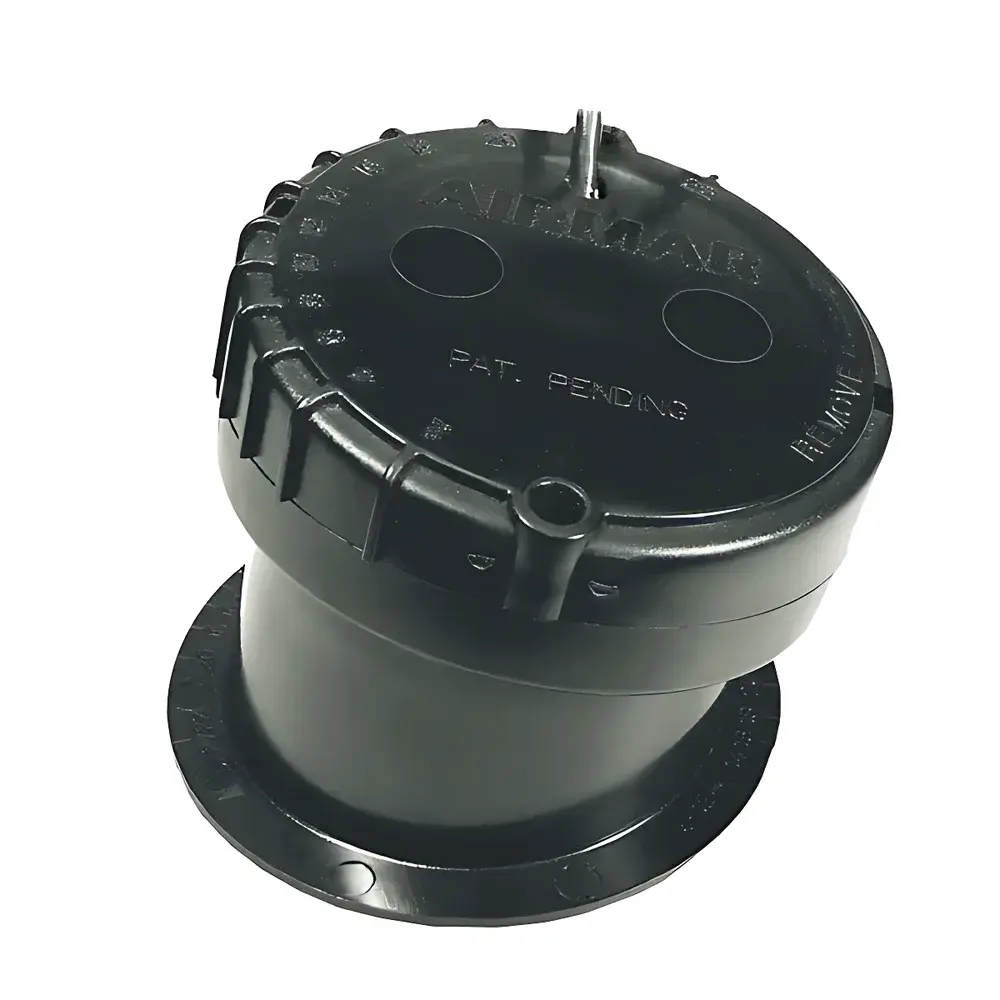
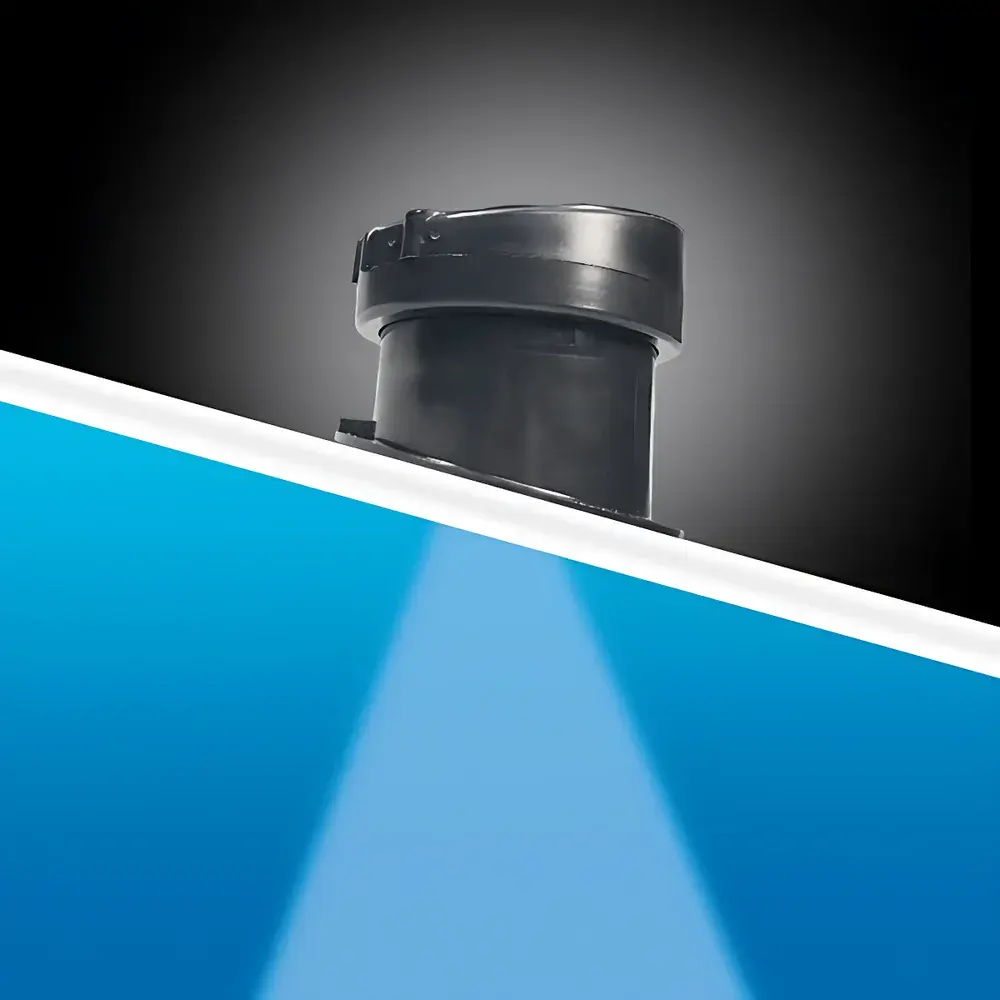
AirMar P95M Chirp Through-Hull Depth Sounder
| Brand | AIRMAR |
|---|---|
| Origin | USA |
| Model | P95M |
| Output Power | 300 W |
| Operating Frequency | 95–155 kHz (Chirp broadband) |
| Beam Width | 26°–17° (variable with frequency) |
| Maximum Depth Range | 152 m (500 ft) |
| Depth Measurement Accuracy | ±0.54% of reading |
| Depth Resolution | 0.01 m |
| Hull Angle Compensation | 2°–22° adjustable |
| Housing Material | Polyurethane (liquid-filled) |
| Weight | 4.16 kg (9.17 lb) |
| Compatible Hull Type | Solid fiberglass only |
| Transducer Mounting | Internal through-hull installation with Xducer ID® technology |
| Fill Medium | Eco-friendly antifreeze gel |
| Minimum Detection Depth | 0.4 m |
Overview
The AirMar P95M is a high-performance, broadband Chirp through-hull depth sounder engineered for precision hydrographic measurement in shallow to medium-depth inland and nearshore marine environments. Utilizing advanced frequency-modulated (FM) Chirp sonar technology, the P95M transmits continuous swept-frequency pulses across a 95–155 kHz band—enabling superior target resolution, improved signal-to-noise ratio, and enhanced bottom discrimination compared to traditional fixed-frequency echosounders. Its 300 W acoustic output delivers robust penetration and consistent return signals in turbid or thermally stratified waters, while the variable beam width (26° at lower frequencies tapering to 17° at higher frequencies) optimizes vertical resolution and lateral coverage depending on operational depth and vessel speed. Designed exclusively for solid fiberglass hulls, the P95M mounts internally without external protrusions—preserving hydrodynamic integrity and eliminating drag or fouling risks common with transom- or keel-mounted alternatives.
Key Features
- Chirp broadband sonar architecture delivering real-time spectral processing and adaptive pulse compression for high-fidelity depth profiles
- Through-hull mounting system with patented Xducer ID® technology enabling automatic transducer identification and configuration within compatible chartplotter networks (e.g., NMEA 2000)
- Polyurethane encapsulated housing filled with environmentally safe, non-toxic antifreeze gel—ensuring stable acoustic coupling through fiberglass hulls and thermal stability across operating temperatures (−10°C to +50°C)
- Adjustable hull angle compensation (2°–22°) to correct for vessel trim and maintain vertical beam alignment during dynamic operation
- Optimized acoustic impedance matching between transducer ceramic, fill medium, and fiberglass hull—minimizing signal loss and maximizing energy transfer into water
- Compact, low-profile design suitable for vessels under 7.6 m (25 ft), including center consoles, small trawlers, and hydraulic-lift platforms where external transducer clearance is constrained
Sample Compatibility & Compliance
The P95M is validated for use only on solid, non-cored fiberglass hulls with minimum thickness of 6 mm and no internal air gaps or foam core layers. It is incompatible with aluminum, steel, wood, cored composites, or hulls with integral fuel tanks adjacent to the mounting zone. Installation requires precise hull surface preparation and adherence to AirMar’s published mounting guidelines—including minimum standoff distance from thru-hull fittings, strakes, and structural reinforcements. The device complies with FCC Part 15 Class B emissions standards and meets CE marking requirements for electromagnetic compatibility (EMC Directive 2014/30/EU). While not certified for safety-critical navigation under IMO or IEC 62288, it conforms to standard marine sonar performance benchmarks referenced in ISO 17670:2017 (Echo sounders — Performance requirements and methods of testing).
Software & Data Management
The P95M operates as a NMEA 2000-certified sensor node, publishing depth, temperature, and signal quality data via standardized PGNs (e.g., PGN 127750 – Depth Below Transducer). When integrated with compatible multifunction displays (MFDs) or vessel management systems, it supports full data logging, overlay mapping, and alarm thresholds configurable per GLP-aligned operational protocols. Raw echo envelope data is not directly accessible; however, processed depth outputs include timestamped metadata compliant with NMEA 2000 time synchronization standards. Firmware updates are delivered via AirMar’s official utility software and require connection through an NMEA 2000 gateway or USB-to-NMEA adapter. No proprietary cloud services or remote telemetry are embedded—ensuring data sovereignty and compatibility with offline-capable marine IT infrastructures.
Applications
- Shallow-water bathymetric surveying for marina development, dredging planning, and aquatic habitat mapping in lakes, rivers, and estuaries
- Real-time depth monitoring for small commercial fishing vessels operating in coastal zones with rapidly changing bottom topography
- Scientific limnology studies requiring repeatable, low-drift depth measurements under variable salinity and temperature conditions
- Recreational boating navigation support in inland waterways where chart datum accuracy is critical for safe passage over submerged hazards
- Integration into autonomous surface vehicle (ASV) platforms for uncrewed hydrographic reconnaissance missions
FAQ
Can the P95M be installed on a cored fiberglass hull?
No. The P95M requires direct mechanical coupling between the transducer face and a solid, homogeneous fiberglass substrate. Cored hulls introduce acoustic impedance mismatches and internal reflections that severely degrade signal fidelity and depth accuracy.
Is the fill medium replaceable by the end user?
No. The eco-friendly antifreeze gel is factory-sealed under vacuum and is not serviceable. Attempting to breach the housing voids warranty and compromises acoustic performance and IP68 ingress protection.
Does the P95M support bottom discrimination or fish detection?
It is designed exclusively for high-accuracy depth measurement—not target imaging or biomass assessment. While strong returns may indicate hard bottoms or large submerged objects, it lacks the pulse structure, bandwidth, and processing firmware required for echogram generation or species classification.
What is the minimum water depth detectable?
The specified minimum measurable depth is 0.4 meters, contingent upon proper hull angle calibration, stable vessel attitude, and absence of air entrainment or bubble interference beneath the hull.
Is firmware update capability available via wireless connection?
No. All firmware updates require physical connection to a Windows-based PC using AirMar’s dedicated configuration utility and an approved NMEA 2000 interface adapter.