
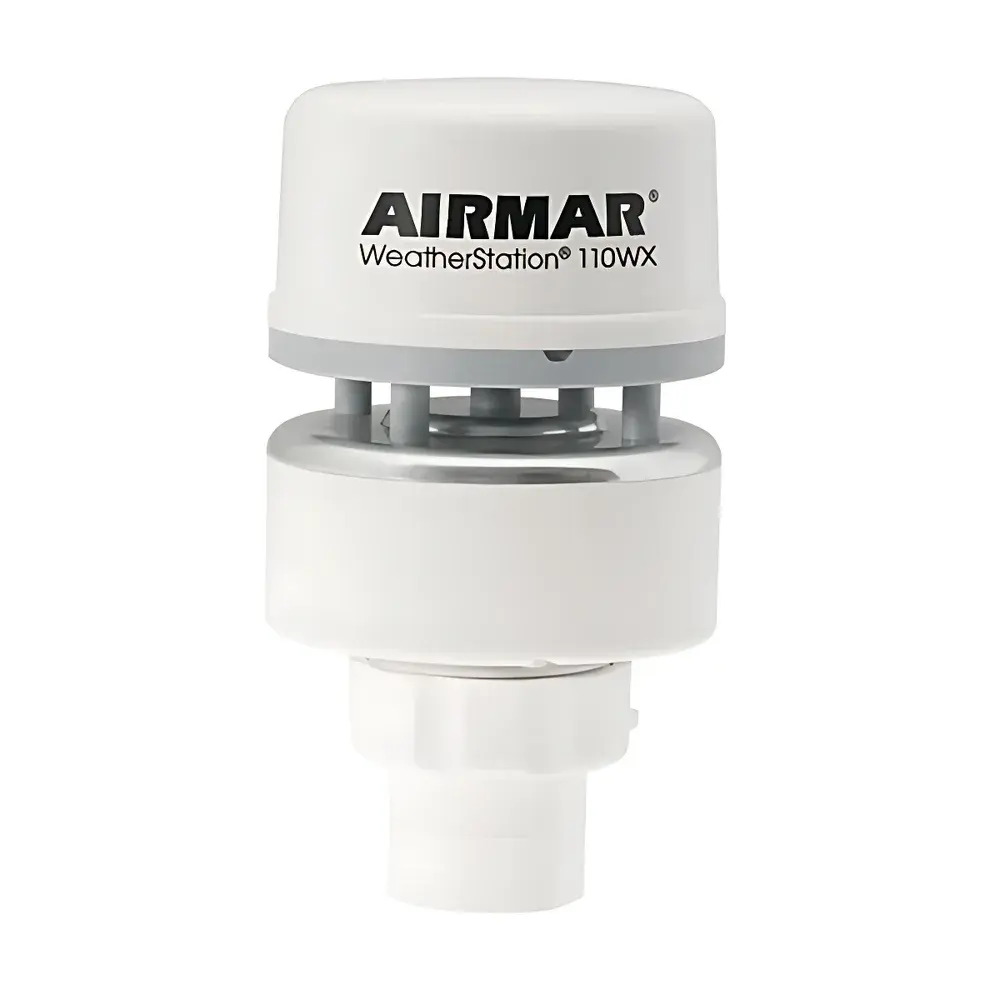
Airmar 110WX Ultrasonic Weather Station
| Brand | Airmar |
|---|---|
| Origin | USA |
| Model | 110WX |
| Instrument Type | Portable Weather Station |
| Enclosure Rating | IPX6 |
| Communication Protocols | NMEA 0183 (RS232/RS422) and NMEA 2000 (CAN Bus) |
| Optional Sensor | Integrated Relative Humidity (RH) Module |
| Wind Measurement Principle | Ultrasonic Time-of-Flight |
| Temperature Range | –40 °C to +70 °C (operational) |
| Pressure Accuracy | ±0.5 hPa |
| Wind Speed Range | 0–60 m/s |
| Wind Direction Range | 0–360° |
| Humidity Range (optional) | 0–100% RH, ±3% RH accuracy |
Overview
The Airmar 110WX Ultrasonic Weather Station is an industrial-grade, solid-state environmental sensor engineered for continuous, high-reliability meteorological monitoring in fixed and rapidly deployable applications. Unlike mechanical anemometers and vane-based systems, the 110WX employs ultrasonic time-of-flight technology to determine apparent wind speed and direction—eliminating moving parts, wear mechanisms, and calibration drift associated with traditional rotating cups or propellers. This principle relies on precise measurement of acoustic transit time between opposing transducer pairs; wind-induced asymmetry in sound propagation velocity enables vector calculation of horizontal wind components with sub-degree directional resolution and millisecond-level temporal response. Integrated thermistor-based air temperature sensing, piezoresistive barometric pressure measurement, and (optionally) capacitive relative humidity detection provide a complete suite of core atmospheric parameters. Designed for unattended operation across diverse climatic zones—from coastal marine environments to arid construction sites—the unit features a robust marine-grade polymer housing rated to IPX6 (protection against powerful water jets), enabling long-term stability under rain, salt spray, and thermal cycling without degradation in metrological performance.
Key Features
- Ultrasonic wind sensing: Measures true 2D wind vector (speed and direction) with no mechanical wear, zero maintenance, and immunity to icing or particulate accumulation.
- High-stability environmental sensing: Precision thermistor for air temperature (–40 °C to +70 °C), compensated silicon piezoresistive barometer (±0.5 hPa accuracy), and optional factory-calibrated RH module (0–100% RH, ±3% RH).
- Dual-output communication architecture: Simultaneous NMEA 0183 (RS232 or RS422 selectable per variant) and NMEA 2000 (CAN Bus) outputs ensure seamless integration into marine navigation networks, SCADA systems, and IoT data loggers.
- Compact, low-profile form factor: Dimensions of 190 mm × 127 mm × 127 mm (L×W×H) and weight under 1.2 kg facilitate mounting on masts, towers, buoys, or temporary structures without structural reinforcement.
- Field-serviceable design: RH sensor module is user-replaceable without tools or recalibration—critical for mission-critical deployments where downtime must be minimized.
- Extended operational envelope: Rated for continuous operation from –40 °C to +70 °C ambient, with UV-stabilized housing and corrosion-resistant hardware suitable for marine, agricultural, and industrial exposure.
Sample Compatibility & Compliance
The 110WX is designed for outdoor atmospheric sampling only and does not interface with liquid or gaseous process streams. It complies with IEC 60529 for IPX6 ingress protection, meets EMC requirements per EN 61000-6-3 (Emission) and EN 61000-6-2 (Immunity), and adheres to marine electronics standards including ABYC E-11 and ISO 8846 for ignition protection. While not certified for regulatory compliance in pharmaceutical or food safety contexts (e.g., FDA 21 CFR Part 11 or ISO 17025), its output data structure conforms to NMEA standard sentence formats (MWV, MWD, MDA, XDR), enabling traceable data ingestion into validated environmental monitoring platforms used in GLP-aligned field studies and infrastructure health monitoring.
Software & Data Management
The 110WX operates as a self-contained sensor node with no embedded firmware update capability or onboard storage. All configuration—including NMEA sentence selection, update rate (1–10 Hz configurable via NMEA command set), and RH enable/disable—is performed externally using standard NMEA 0183 commands. Raw parameter outputs are delivered in real time via serial or CAN bus interfaces, supporting direct ingestion into third-party software such as LabVIEW, MATLAB, Python-based data acquisition frameworks (e.g., PySerial + CANoe), or commercial weather dashboards (WeatherLink, Wunderground API integrators). Timestamp synchronization relies on host system clock discipline; no internal RTC or GPS timing source is included. For audit-trail applications, users must implement external logging with metadata tagging (e.g., device ID, firmware revision, environmental timestamp) to satisfy basic data integrity requirements.
Applications
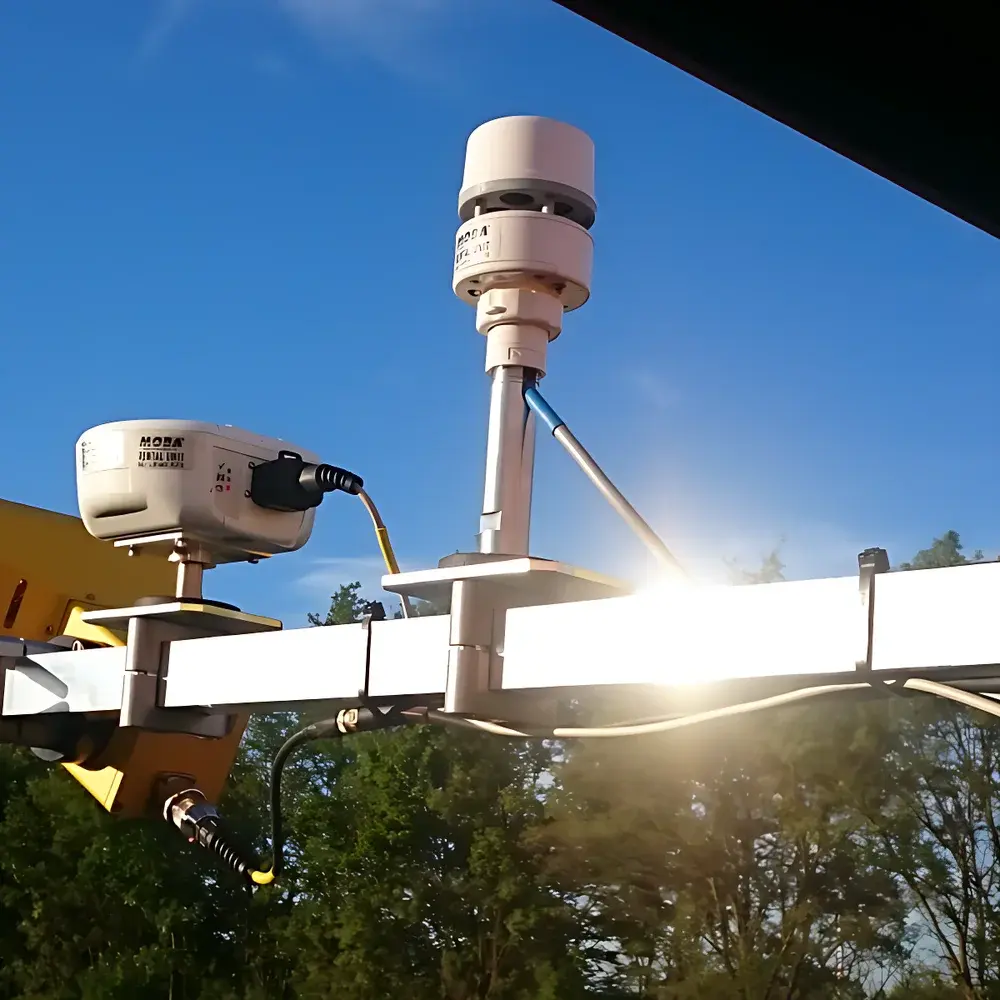
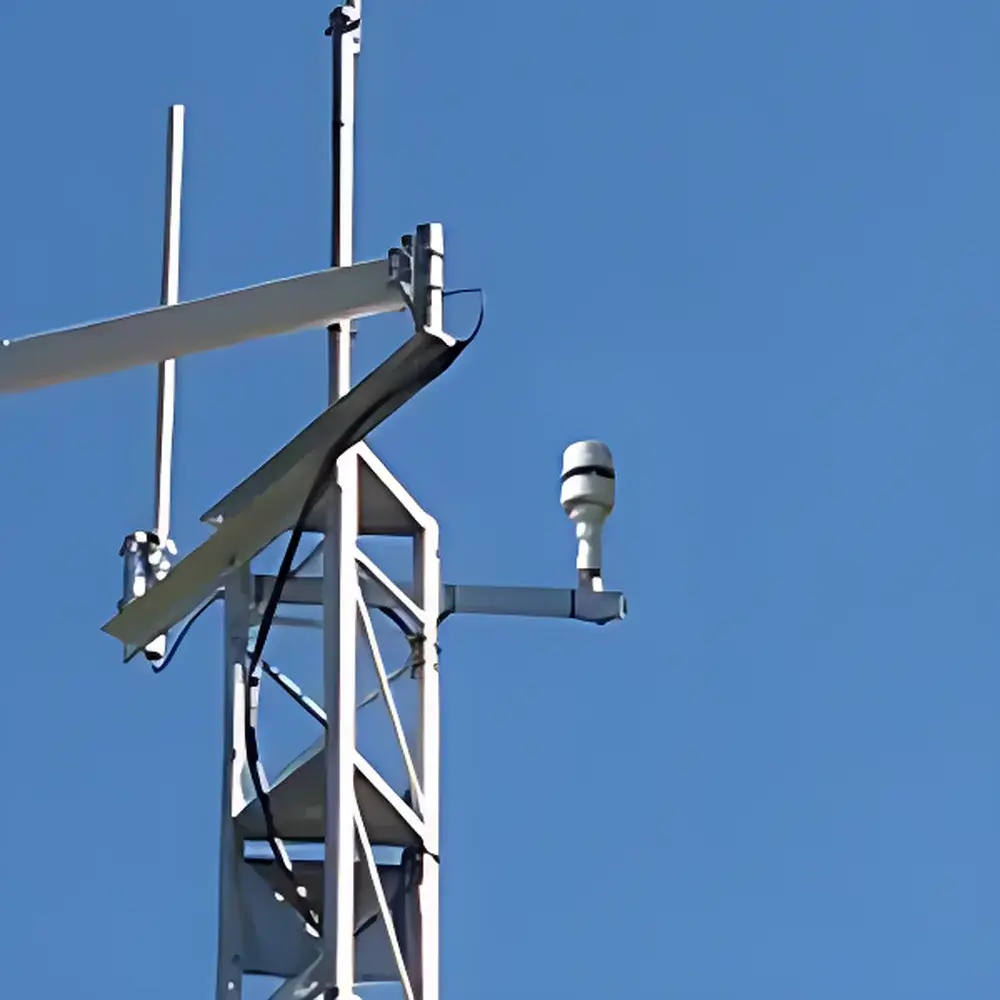
- Fixed-site environmental monitoring networks: Deployed on telecom towers, hydrological gauging stations, and national weather service auxiliary nodes where long-term reliability and minimal servicing are mandatory.
- Agricultural microclimate observation: Mounted in orchards, vineyards, and greenhouse perimeters to support evapotranspiration modeling, frost prediction, and irrigation scheduling.
- Construction site meteorological compliance: Used to monitor wind thresholds for crane operation, suspended load handling, and dust suppression system activation per OSHA and local regulatory guidelines.
- Marine and coastal infrastructure: Integrated into port authority buoy networks, offshore platform weather telemetry, and vessel traffic service (VTS) support systems requiring real-time wind vector input.
- Rapid-deployment emergency response: Field-configurable for post-disaster atmospheric assessment, wildfire perimeter monitoring, and temporary air quality station augmentation.
FAQ
Does the 110WX require periodic calibration?
No scheduled recalibration is specified by Airmar; however, annual verification against traceable reference standards (e.g., NIST-traceable anemometer and barometer) is recommended for applications demanding metrological continuity.
Can the RH sensor be added after initial purchase?
Yes—the RH module is physically and electrically compatible with all 110WX variants; installation requires only mechanical fastening and NMEA configuration via host command.
Is lightning protection built-in?
The 110WX does not include integrated surge suppression; Airmar recommends external gas-discharge tube (GDT) or TVS diode-based protection on all signal and power lines when installed in exposed locations.
What is the maximum cable length for NMEA 0183 RS422 output?
Up to 1,000 meters at 4,800 baud; performance degrades above 9,600 baud beyond 100 meters—consult Airmar’s Interface Specification Document (ISD-110WX) for termination and shielding guidelines.
Is firmware upgrade supported?
No—firmware is factory-programmed and non-upgradable; functional enhancements are delivered exclusively through new hardware revisions.
Related Products







