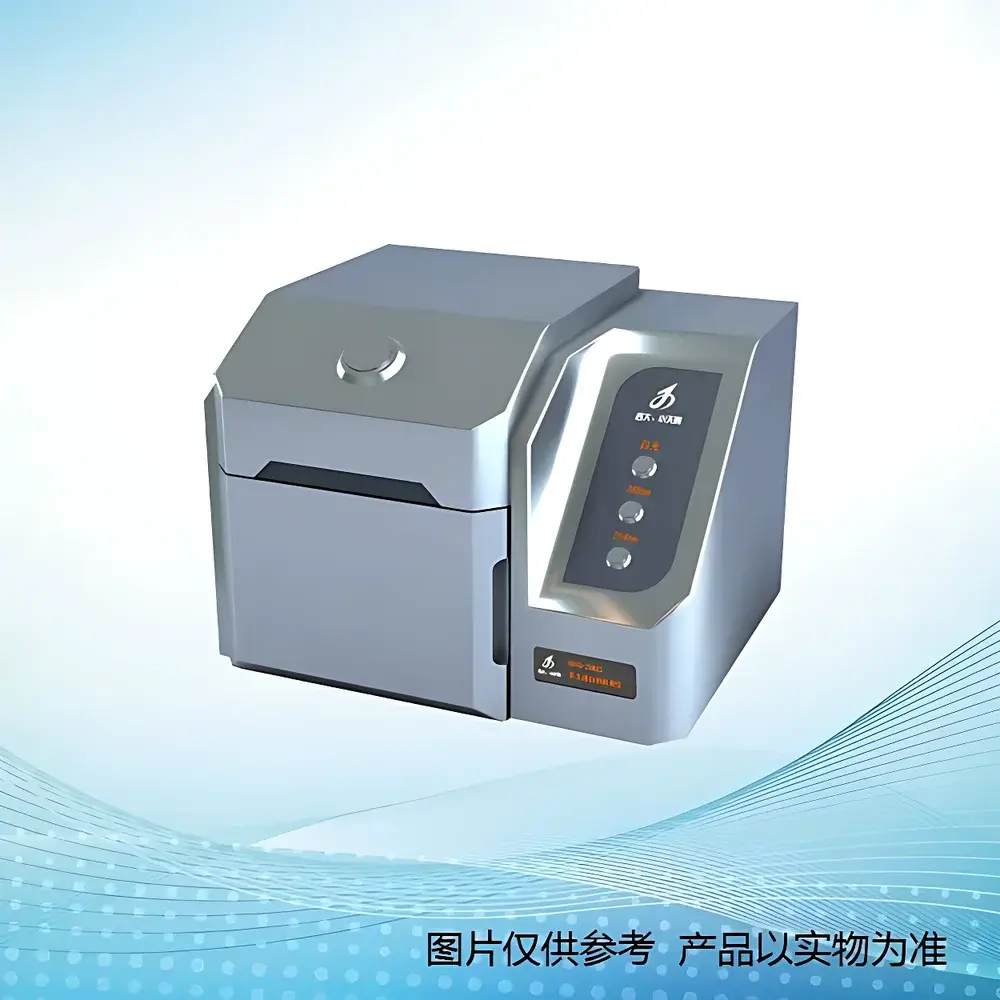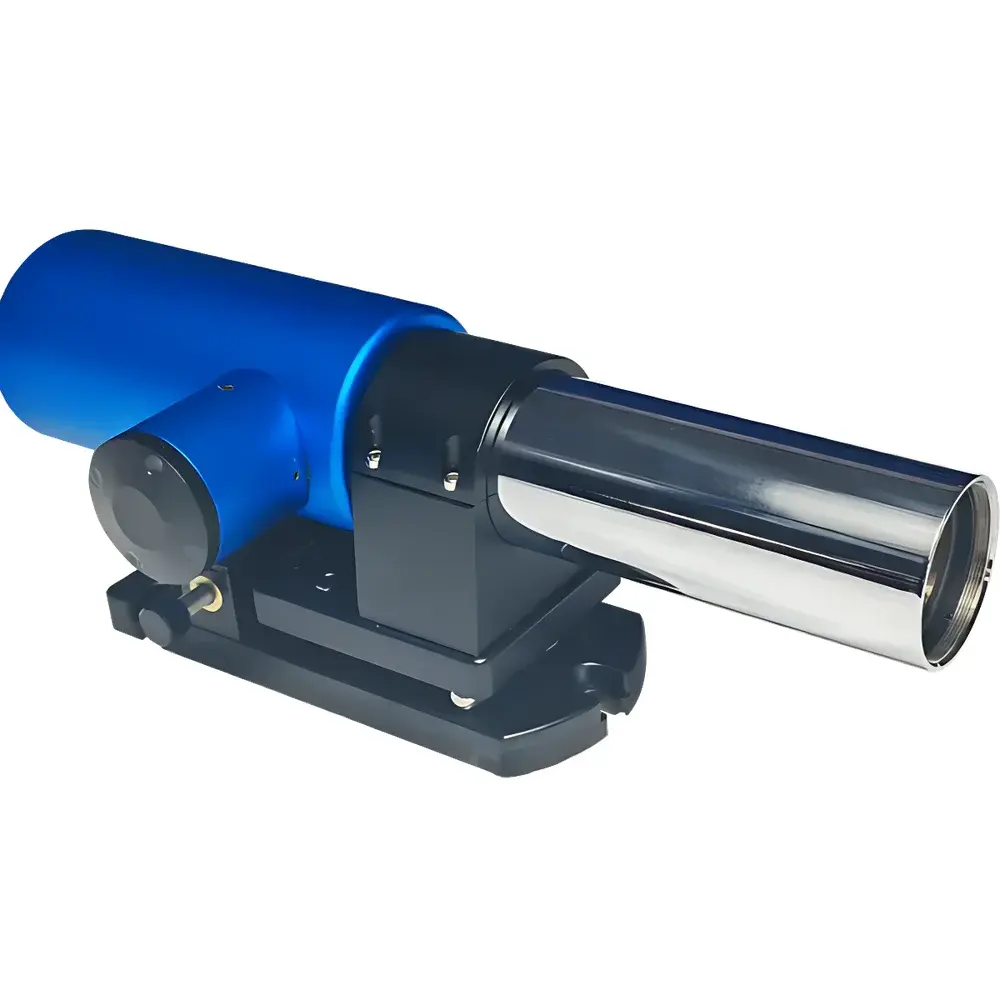
YANRUN MC030-MAT200/38/1 Dual-Axis Photoelectric Autocollimator
| Brand | YANRUN |
|---|---|
| Origin | Shanghai, China |
| Manufacturer Type | Direct Manufacturer |
| Country of Origin | China |
| Model | MC030-MAT200/38/1 |
| Price Range | USD 2,800 – 14,000 |
Overview
The YANRUN MC030-MAT200/38/1 Dual-Axis Photoelectric Autocollimator is a precision optical metrology instrument engineered for non-contact angular and positional error measurement in high-accuracy industrial and laboratory environments. Based on the fundamental principle of autocollimation—where a collimated beam is reflected back from a target mirror and its angular deviation is quantified via centroid displacement on a high-resolution image sensor—the system delivers traceable, repeatable angular measurements with sub-arcsecond resolution. Unlike single-axis variants, this dual-axis configuration enables simultaneous X- and Y-plane angular assessment, eliminating sequential alignment steps and reducing cumulative setup uncertainty. The instrument integrates a stabilized LED light source (525 nm nominal wavelength, >50,000-hour lifetime), a telecentric imaging lens assembly, and a monochrome CMOS sensor with ≥1920 × 1080 active pixels, optimized for low-noise centroid detection under controlled ambient lighting conditions. Its rigid aluminum alloy housing ensures thermal stability and mechanical robustness during extended operation in calibration labs or production-floor metrology stations.
Key Features
- Dual-axis synchronous angular measurement capability, supporting real-time X/Y deviation analysis without mechanical reorientation
- High-sensitivity photoelectric detection system with auto-thresholding and sub-pixel centroid algorithm for angular resolution down to 0.1 arcsecond (typical)
- Long-life, spectrally stable LED illumination (IEC 62471 compliant) with integrated intensity regulation to maintain consistent signal-to-noise ratio across environmental temperature fluctuations
- Modular optical path design accommodating interchangeable reticle targets, reference mirrors, and beam-splitting accessories for customized measurement configurations
- IP52-rated enclosure with vibration-damped base mount, suitable for use on optical tables, granite surface plates, or portable metrology carts
- Compliance with ISO 10110-3 (optical component surface quality) and ISO 10360-2 (coordinate measuring machine performance verification) geometric metrology frameworks
Sample Compatibility & Compliance
The MC030-MAT200/38/1 is compatible with standard optical flats (λ/20 or better), kinematic mirror mounts (e.g., Thorlabs KM100 series), and precision-machined reflectors used in machine tool alignment and optical bench assembly. It supports reflective surfaces with reflectivity ≥85% in the visible spectrum (400–700 nm) and minimum aperture diameter ≥10 mm. For regulatory compliance, the system’s measurement traceability chain aligns with national metrological standards maintained by the Shanghai Institute of Measurement and Testing Technology (SIMT). Data acquisition protocols adhere to ISO/IEC 17025 requirements for testing laboratories, and software-generated reports include mandatory metadata: operator ID, calibration certificate number, environmental conditions (temperature ±0.5°C, humidity 40–60% RH), and uncertainty budget per GUM (JCGM 100:2008). The instrument is not intended for use in hazardous locations or explosive atmospheres (ATEX/IECEx not applicable).
Software & Data Management
The bundled YANRUN MetroSuite v4.2 software provides native support for Windows 10/11 (64-bit) and includes modules for straightness profiling, squareness mapping, flatness evaluation (via least-squares best-fit plane), and tilt-compensated angular trending. All raw sensor frames and processed results are stored in HDF5 format with embedded timestamps and hardware configuration logs. Audit trail functionality meets FDA 21 CFR Part 11 requirements for electronic records, including user authentication, immutable action logging, and digital signature integration. Export options include CSV (for statistical process control), PDF (ISO-compliant test reports), and STEP AP242 (for GD&T annotation interoperability with CAD-based inspection workflows). Remote operation is supported via TCP/IP Ethernet interface with TLS 1.2 encryption; no cloud storage or third-party telemetry is enabled by default.
Applications
- Metrological verification of CNC machine tool linear axes (per ISO 230-1 and VDI/VDE 2617-6)
- Alignment of laser resonators, interferometer arms, and multi-element optical systems in R&D laboratories
- In-process monitoring of bearing seat parallelism and spindle axis orthogonality during precision gearbox assembly
- Calibration of rotary stages and goniometers against primary angle standards
- Verification of wafer stepper stage flatness and leveling accuracy in semiconductor equipment maintenance
- GD&T validation of aerospace structural components per ASME Y14.5–2018 (especially for profile of a line/surface and orientation controls)
FAQ
What is the maximum working distance for reliable measurement?
The standard optical configuration supports effective measurement distances from 0.3 m to 10 m, with optimal angular sensitivity achieved between 1 m and 5 m. Extended-range optics (optional) extend the upper limit to 20 m with recalibrated sensitivity.
Does the system require periodic recalibration?
Yes. Annual calibration against NIST-traceable angle artifacts is recommended. Internal self-check routines verify LED intensity stability and sensor baseline drift prior to each measurement session.
Can it measure dynamic angular changes?
The system captures up to 30 full-frame readings per second, enabling quasi-static tracking of slow thermal drift or mechanical relaxation—however, it is not designed for high-frequency vibration analysis (>10 Hz).
Is third-party software integration supported?
Yes. A documented DLL API and LabVIEW-compatible VI library are provided for integration into custom automation platforms, subject to OEM licensing terms.
What environmental conditions affect measurement accuracy?
Air turbulence (e.g., HVAC drafts), localized thermal gradients (>0.3°C/m), and strong ambient light sources can induce refractive index fluctuations. Operation within ISO 25178-6 Class 2 environmental specifications is advised for ≤0.2 arcsecond uncertainty.