
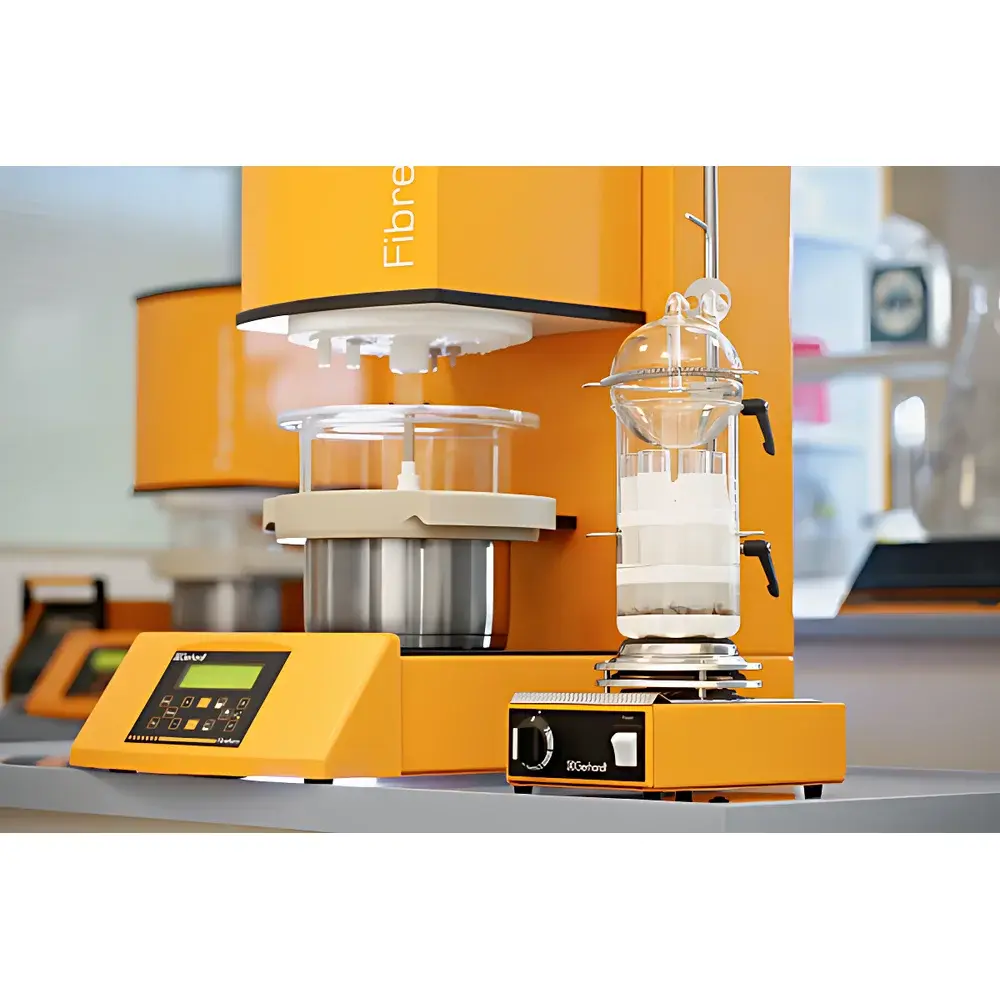
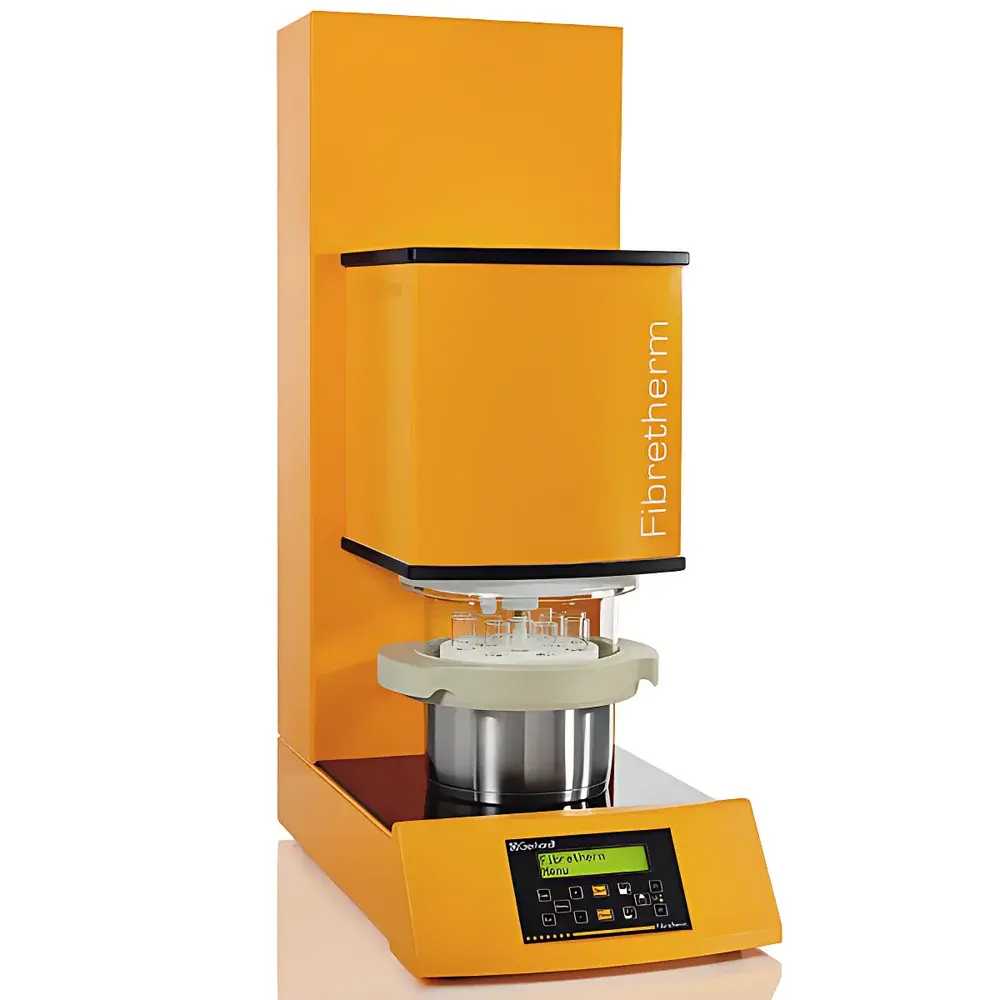
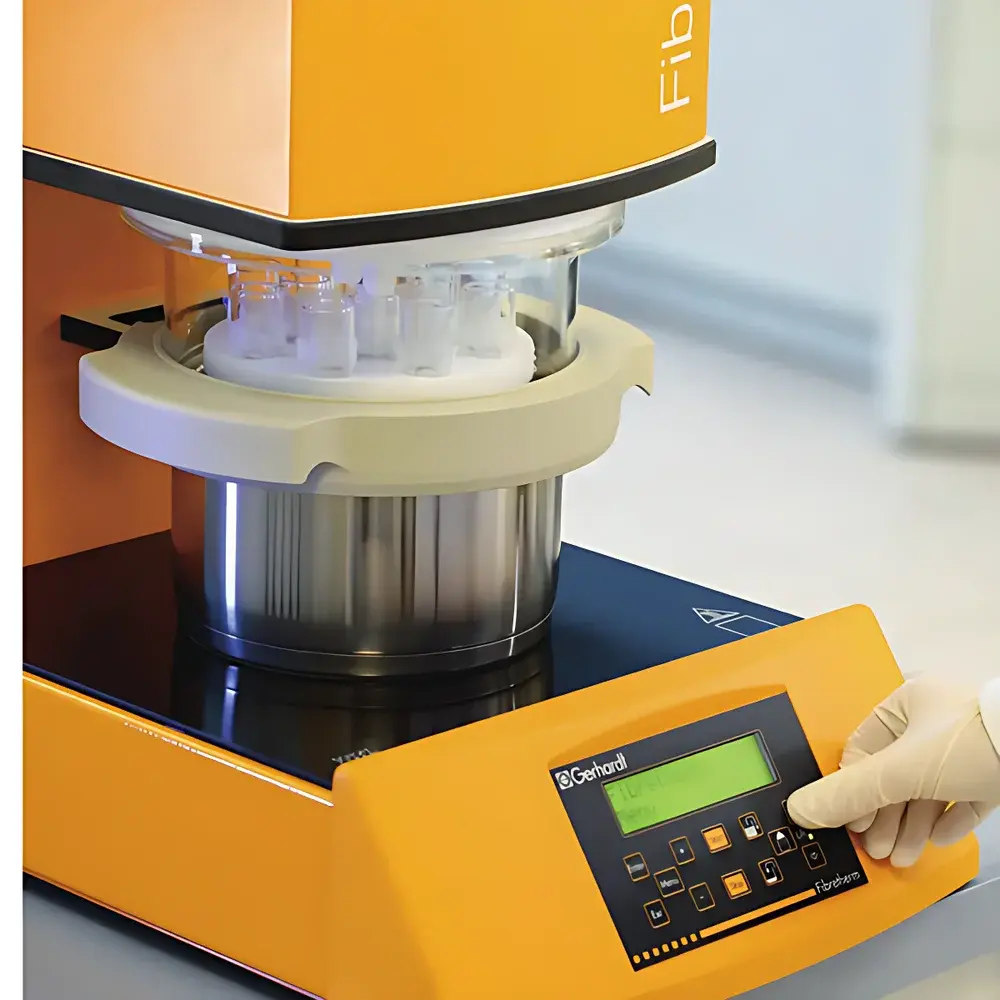
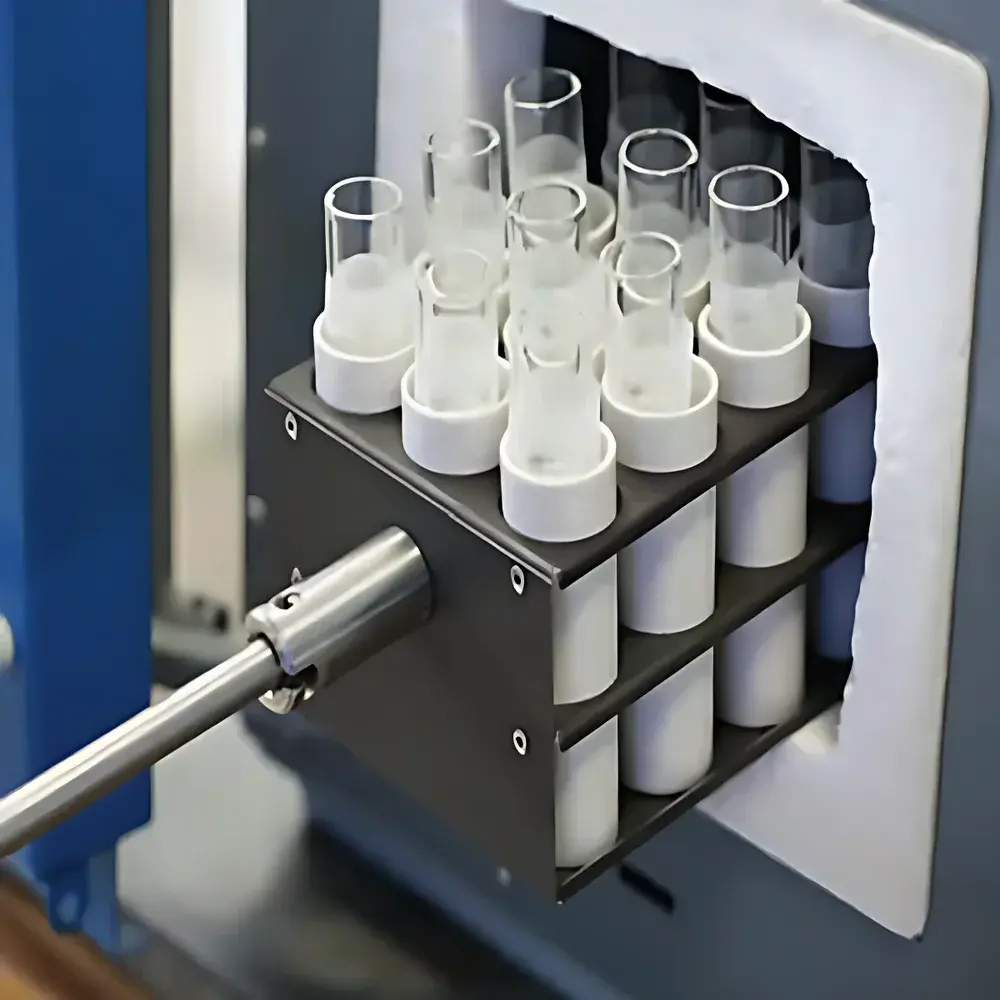
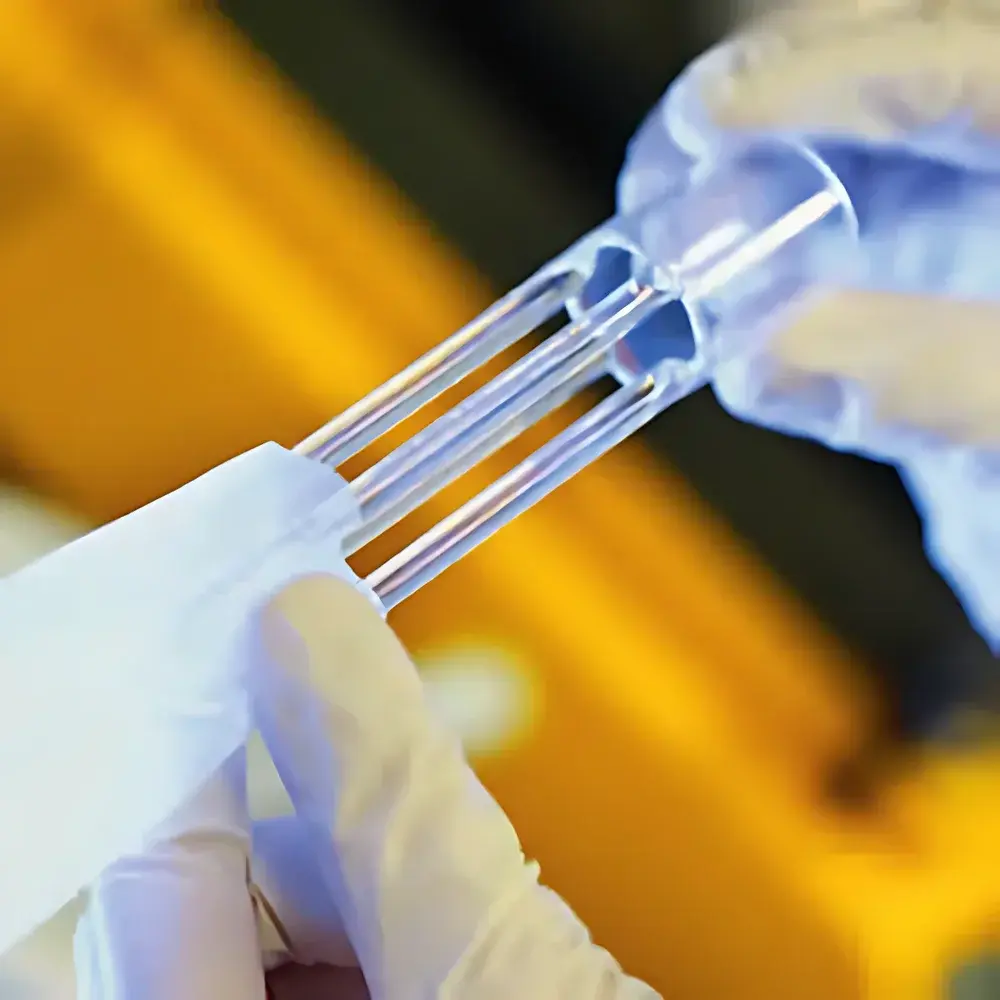
C. Gerhardt Fibretherm FT12 Automated Fiber Analyzer
| Brand | C. Gerhardt |
|---|---|
| Origin | Germany |
| Manufacturer | Yes |
| Import Status | Imported |
| Model | FT12 |
| Price Range | USD 25,000 – 50,000 |
| Sample Capacity | 1–12 samples per batch |
| Heating System | Crystalline ceramic heater |
| Programmable Methods | 10 |
| Reagent Dispensing | Automated acid/alkali/water/waste handling |
| Filtration | Pneumatically controlled FibreBag® filtration |
| Safety Features | Closed-system operation, audible/visual error alerts |
| Cooling Water Requirement | 5 L/min (on-demand) |
| Power Supply | 230 V AC, 50 Hz |
| Power Consumption | 1900 W |
| Dimensions | 330 × 650 × 860 mm |
| Weight | 42 kg |
Overview
The C. Gerhardt Fibretherm FT12 Automated Fiber Analyzer is a fully integrated, benchtop instrument engineered for the precise, standardized determination of crude fiber (CF), neutral detergent fiber (NDF), and acid detergent fiber (ADF) in feed, forage, and agricultural biomass samples. It implements the classical gravimetric principle—based on sequential solvent extraction, acid/alkali digestion, filtration, drying, ashing, and mass difference calculation—but replaces manual labor-intensive steps with programmable, pneumatically actuated, and thermally regulated automation. The system operates exclusively with proprietary FibreBag® filter bags—pre-weighed, inert cellulose-based microfiltration pouches that retain undigested residues while permitting complete reagent penetration and uniform thermal exposure. This architecture ensures analytical reproducibility aligned with AOAC 973.18, AACC 32-20, and Weende method requirements, while eliminating inter-operator variability inherent in traditional hotplate-based fiber analysis.
Key Features
- Fully automated digestion and filtration for up to 12 samples simultaneously—eliminating serial processing bottlenecks and reducing total assay time by >60% compared to manual protocols.
- Ceramic crystalline heating elements provide stable, uniform temperature control across all digestion vessels (±0.5 °C), critical for consistent hydrolysis kinetics during NDF (neutral detergent) and ADF (acid detergent) procedures.
- Integrated pneumatic lift mechanism precisely positions FibreBags® into boiling chambers and filtration stations—ensuring repeatable immersion depth, drainage timing, and mechanical stress minimization.
- Automated reagent delivery system dispenses standardized volumes of neutral detergent solution (for NDF), sulfuric acid (for ADF), and dilute HCl/NaOH (for CF) with volumetric accuracy ±1.5%, minimizing operator exposure and reagent waste.
- Closed-loop operation confines steam, vapors, and aerosols within the instrument housing—meeting OSHA and EU Directive 2004/40/EC occupational exposure limits for acid fumes and thermal hazards.
- On-board diagnostics monitor cooling water flow, heating status, bag positioning, and waste line pressure—triggering visual and audible alerts for deviations beyond predefined safety thresholds.
Sample Compatibility & Compliance
The FT12 accepts solid, ground, or milled biological matrices—including alfalfa hay, corn silage, soybean meal, distillers’ grains, grass clippings, and cereal straws—with particle size ≤1 mm recommended for optimal bag loading and digestion homogeneity. All analyses conform to internationally recognized reference methods: AOAC Official Method 973.18 (NDF/ADF), ISO 6865:2000 (crude fiber), and the Weende system (CF). Instrument validation supports GLP-compliant laboratories through audit-ready electronic logs (timestamped method execution, reagent lot tracking, operator ID, and environmental parameter recording). Optional firmware upgrade enables 21 CFR Part 11–compliant user authentication, electronic signatures, and immutable audit trails for regulated feed testing facilities.
Software & Data Management
The FT12 runs on embedded real-time OS with a 7-inch capacitive touchscreen interface. Users configure, store, and recall up to 10 pre-validated analytical methods—including customizable ramp rates, hold times, reagent sequences, and post-digestion drying/ashing profiles. All run data—including start/stop timestamps, temperature curves, reagent consumption logs, and error flags—are exported via USB or Ethernet as CSV files compatible with LIMS integration. No proprietary software installation is required on host PCs; raw data files contain metadata fields compliant with ASTM E1469–22 (Standard Guide for Laboratory Information Management Systems) for seamless traceability.
Applications
This analyzer serves quality control laboratories in animal nutrition, feed manufacturing, agricultural research, and regulatory agencies performing routine fiber profiling for nutritional labeling (e.g., TDN, NEL calculations), feed formulation optimization, digestibility modeling, and compliance verification against national feed standards (e.g., EU Regulation 767/2009, US FDA Title 21). Its robustness and reproducibility make it suitable for ISO/IEC 17025-accredited testing, particularly where high-throughput NDF/ADF screening is required for batch release of ruminant feedstuffs.
FAQ
Does the FT12 require external vacuum or compressed air sources?
No—the system integrates an internal oil-free diaphragm pump and sealed pneumatic circuit; only standard lab-grade cooling water and mains power are required.
Can FibreBag® filters be reused?
No—FibreBag® units are single-use, pre-tared consumables designed to eliminate cross-contamination and ensure consistent pore integrity across batches.
Is ash correction automatically calculated?
Yes—the instrument stores user-input ash weights from separate muffle furnace runs and applies them algorithmically to final fiber mass calculations per AOAC guidelines.
What maintenance intervals are recommended?
Daily wipe-down of chamber seals; quarterly inspection of ceramic heater calibration (traceable to NIST standards); annual replacement of filtration gaskets and reagent tubing.
How is method validation documented for regulatory audits?
Each analysis generates a timestamped digital log containing method ID, operator credentials, raw mass inputs, thermal profiles, reagent lots, and pass/fail status for all critical control points—exportable as PDF or CSV for submission.




