
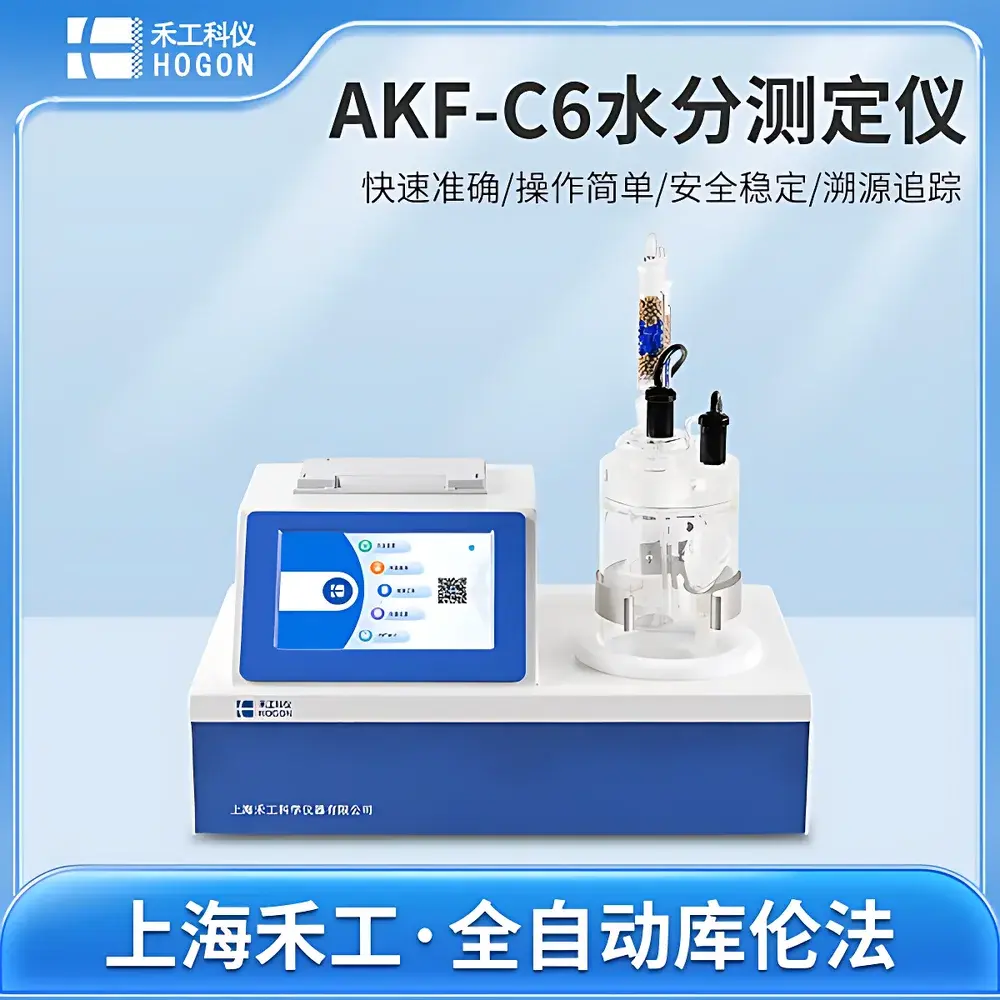
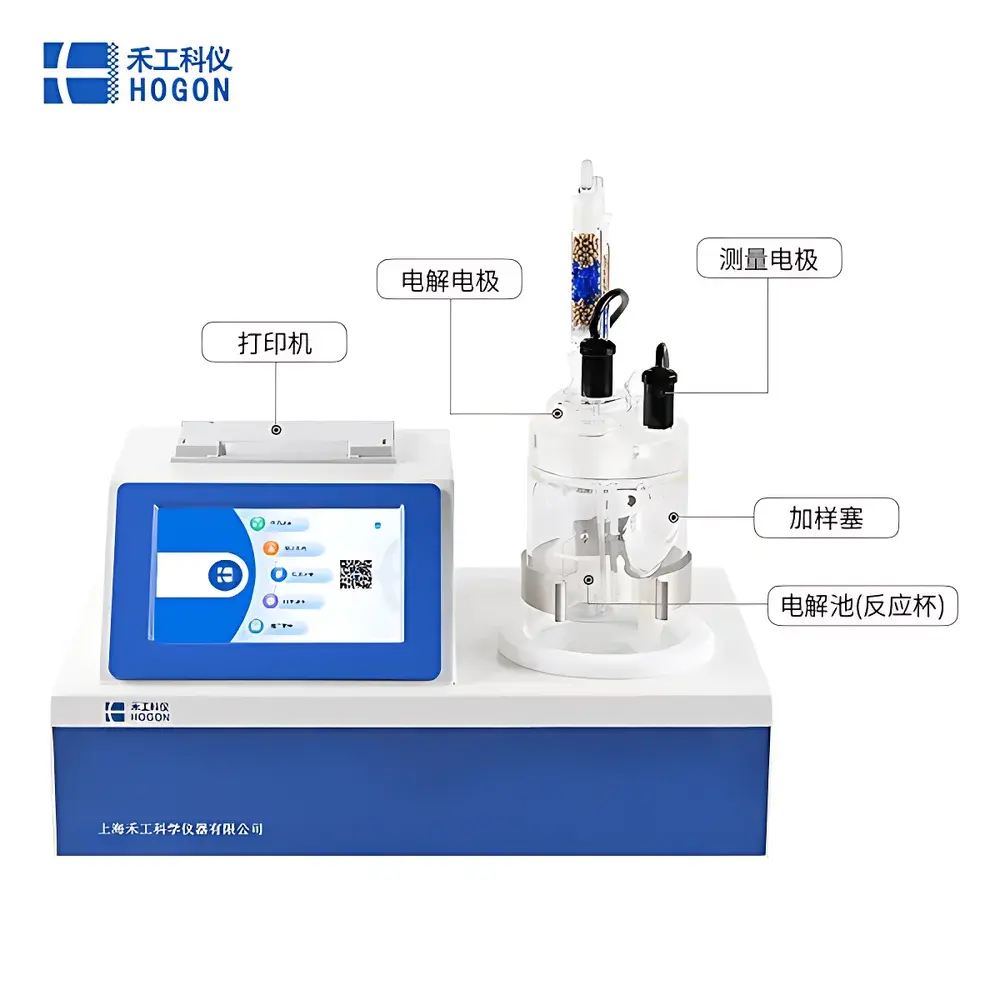
HOGON AKF-C6 Toluene-Specific Coulometric Karl Fischer Moisture Analyzer
| Brand | HOGON |
|---|---|
| Origin | Shanghai, China |
| Manufacturer Type | Direct Manufacturer |
| Instrument Type | Coulometric Karl Fischer Moisture Analyzer |
| Titration Mode | Fully Automatic |
| Moisture Range | 1 ppm to 100% (w/w) |
| Resolution | 1 µV (electrochemical detection) |
| Accuracy | >99.7% at 1000 µg water |
| Repeatability | >99.7% at 1000 µg water |
| Linearity (R²) | 0.999 |
| Polarization Voltage Range | ±10 mV |
| Electrode System | Dual Platinum Electrolysis Electrodes |
| Current Control Precision | 0.1 mA |
| Power Supply | 110–240 V AC, 50–61 Hz |
| Data Storage Capacity | 200 test records |
| Compliance | Designed for GMP/GLP environments with audit trail, user-level access control, and 21 CFR Part 11–ready software architecture |
Overview
The HOGON AKF-C6 Toluene-Specific Coulometric Karl Fischer Moisture Analyzer is a purpose-engineered analytical instrument designed to deliver trace-level moisture quantification in low-polarity, high-boiling solvents—particularly toluene—and other challenging organic media used across pharmaceutical, biotechnology, and specialty chemical manufacturing. Based on the fundamental principle of coulometric Karl Fischer titration, the AKF-C6 generates iodine electrochemically via controlled current through a dual-platinum electrolysis cell, enabling precise stoichiometric reaction with water (H₂O + I₂ + SO₂ + 3RN + CH₃OH → 2RN·HI + RN·HSO₄CH₃). Unlike volumetric systems, coulometric operation eliminates reagent standardization drift and delivers inherent accuracy for samples containing ≤100 µg water per analysis. The instrument’s hardware and firmware are optimized for stable performance in volatile solvent environments, including rigorous handling of toluene’s low dielectric constant (ε ≈ 2.4), high vapor pressure, and potential for electrode passivation—addressed via adaptive polarization voltage tuning (±10 mV) and real-time drift compensation algorithms.
Key Features
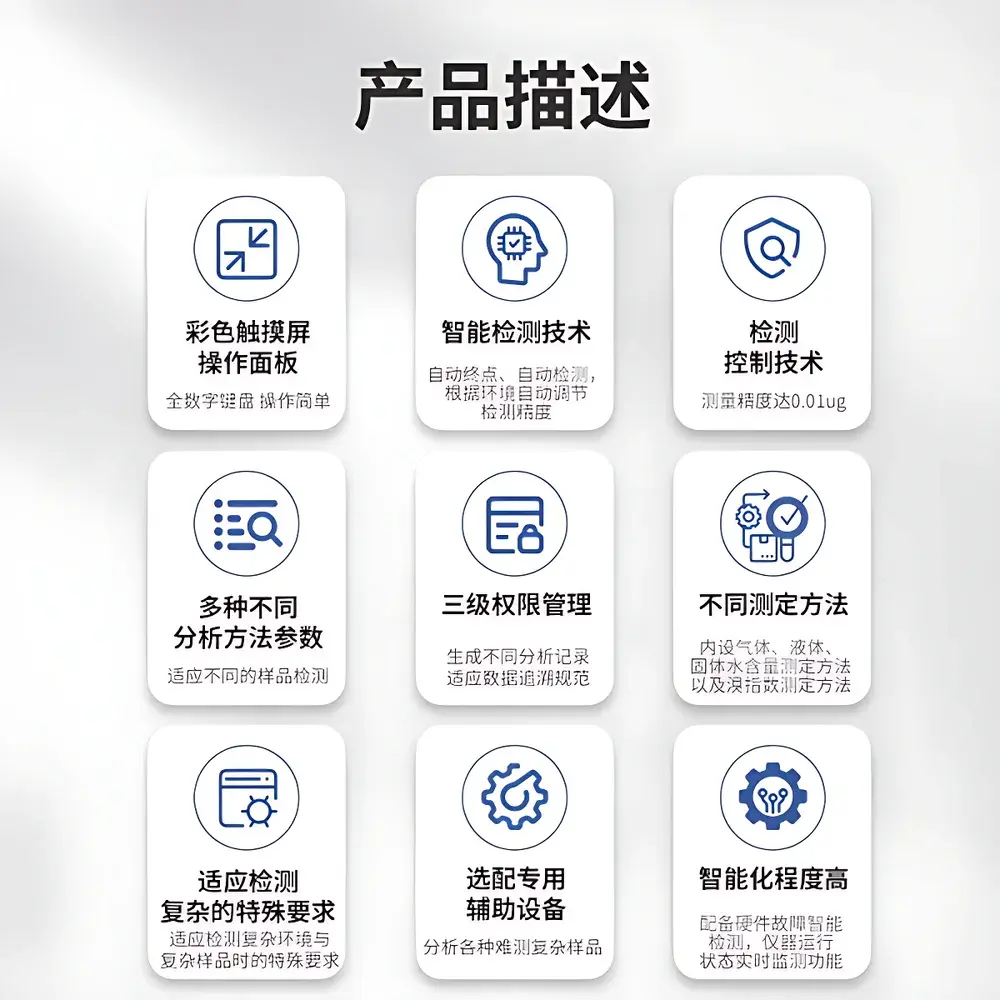
- Electrochemically stabilized coulometric generation of iodine with 0.1 mA current resolution and <1 µV detection threshold for ultra-trace water determination (down to 1 ppm)
- Dedicated solvent optimization firmware for toluene and structurally similar aromatics (e.g., xylene, chlorobenzene), ensuring rapid endpoint stabilization and minimized side reactions
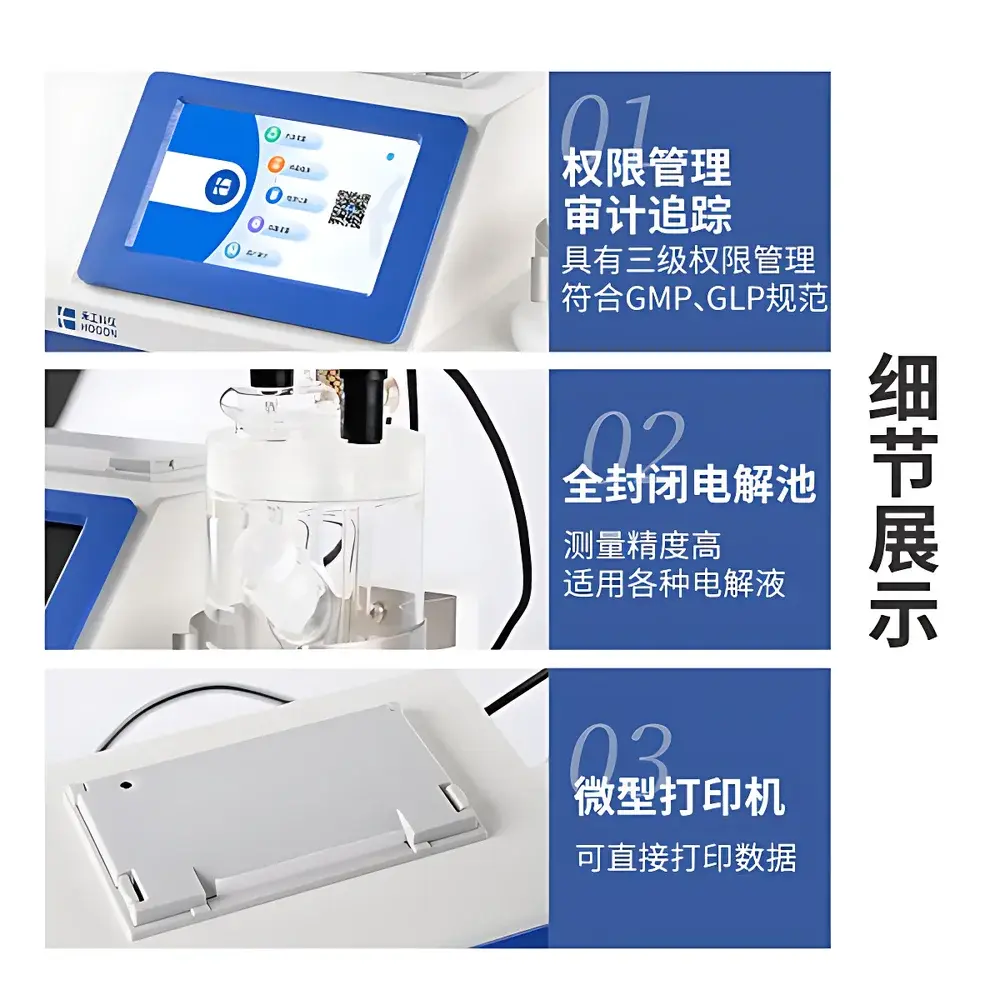
- Full-color capacitive touchscreen interface with intuitive workflow navigation; no specialized training required for routine operation
- Three-tier user management system (Administrator / Supervisor / Analyst) enforcing role-based access to method editing, calibration, data export, and audit log review
- Embedded audit trail compliant with FDA 21 CFR Part 11 requirements: immutable timestamped records of all user actions, parameter changes, and result modifications
- Integrated bromine index measurement capability—leveraging identical coulometric principles without hardware modification or accessory installation
- Adaptive endpoint detection algorithm that dynamically adjusts sensitivity based on ambient humidity, solvent evaporation rate, and background drift
- Onboard storage for up to 200 complete analysis records, each preserving raw current-time curves, titration profiles, blank corrections, and environmental metadata
- Hardware self-diagnostic suite monitoring electrode impedance, cell temperature, power stability, and electrolyte saturation status
Sample Compatibility & Compliance
The AKF-C6 is validated for direct analysis of pharmaceutical excipients (e.g., lactose, starch, PVP K30), lyophilized biologics (PLA, PGA, serum-derived freeze-dried powders), sterile ophthalmic solutions, active pharmaceutical ingredients (e.g., amoxicillin granules, ibuprofen capsules), and high-purity solvents including toluene, acetonitrile, chloroform, glacial acetic acid, and magnesium chloride hexahydrate. It meets critical regulatory alignment requirements: USP <921>, EP 2.5.12, JP 2.05, and Chinese Pharmacopoeia 2020 Edition General Chapter 0832. Method validation support includes linearity (R² ≥ 0.999 over 10–1000 µg water), repeatability (RSD ≤ 0.3% at 1000 µg), and intermediate precision across operators and days. All software logs—including login sessions, method version history, and electronic signatures—are structured for GLP/GMP inspection readiness and full data traceability.
Software & Data Management
The embedded Windows CE–based operating system runs HOGON’s proprietary KF-Studio v3.2 software, engineered for regulated laboratory environments. It supports CSV and PDF report export with embedded digital signatures, customizable templates aligned with internal SOPs, and automated backup to USB mass storage devices. Audit trail entries capture operator ID, timestamp, action type (e.g., “method save”, “result override”, “calibration executed”), and pre-/post-change parameter values. Data integrity safeguards include write-protection for historical records, automatic session timeout, and forced password rotation every 90 days. Optional network integration enables centralized data archiving via secure FTP or LDAP-authenticated domain login.
Applications
The AKF-C6 serves as a primary moisture verification tool in QC laboratories for release testing of API intermediates, sterile fill-finish components (e.g., stoppers, syringe barrels), and final drug products where residual moisture directly impacts stability, dissolution, and microbial growth risk. Its toluene-specific calibration profile supports quality control of solvent recovery streams in API synthesis, while its bromine index function satisfies ASTM D1492 and SH/T 1551 for unsaturation assessment in aromatic hydrocarbon feedstocks. Additional use cases span lithium battery electrolyte purity (SJ/T 11723-2018), natural gas hydrate risk assessment (GB/T 18619.1), and polymer-grade butadiene certification (GB/T 6023).
FAQ
Does the AKF-C6 require separate reagents for toluene versus other solvents?
No—the instrument uses a single, universal anolyte/catholyte formulation compatible with toluene and >30 additional solvents. Solvent-specific parameters (e.g., mixing speed, endpoint delay, polarization offset) are stored within method files.
Can raw current-time data be exported for independent kinetic modeling?
Yes—each analysis record includes full time-stamped current (µA) vs. time (s) arrays in CSV format, suitable for post-acquisition Faradaic efficiency or diffusion-controlled reaction analysis.
Is the system compatible with external sample changers or heating accessories?
Yes—standard RS-232 and USB device ports support integration with HOGON’s optional HS-100 heated sample stage, KL-200 oven-based headspace sampler, and robotic autosamplers meeting ISO/IEC 17025 traceability requirements.
How is compliance with 21 CFR Part 11 enforced in daily operation?
Electronic signatures are mandatory for result approval; audit logs cannot be edited or deleted; all user accounts require two-factor authentication when enabled; and system clocks are synchronized via NTP servers with tamper-evident logging.
What maintenance intervals are recommended for long-term accuracy?
Electrode cleaning every 500 injections; catholyte replacement every 3 months or after 200 analyses; annual verification of current source linearity and polarization voltage calibration using NIST-traceable reference standards.
Related Products





