
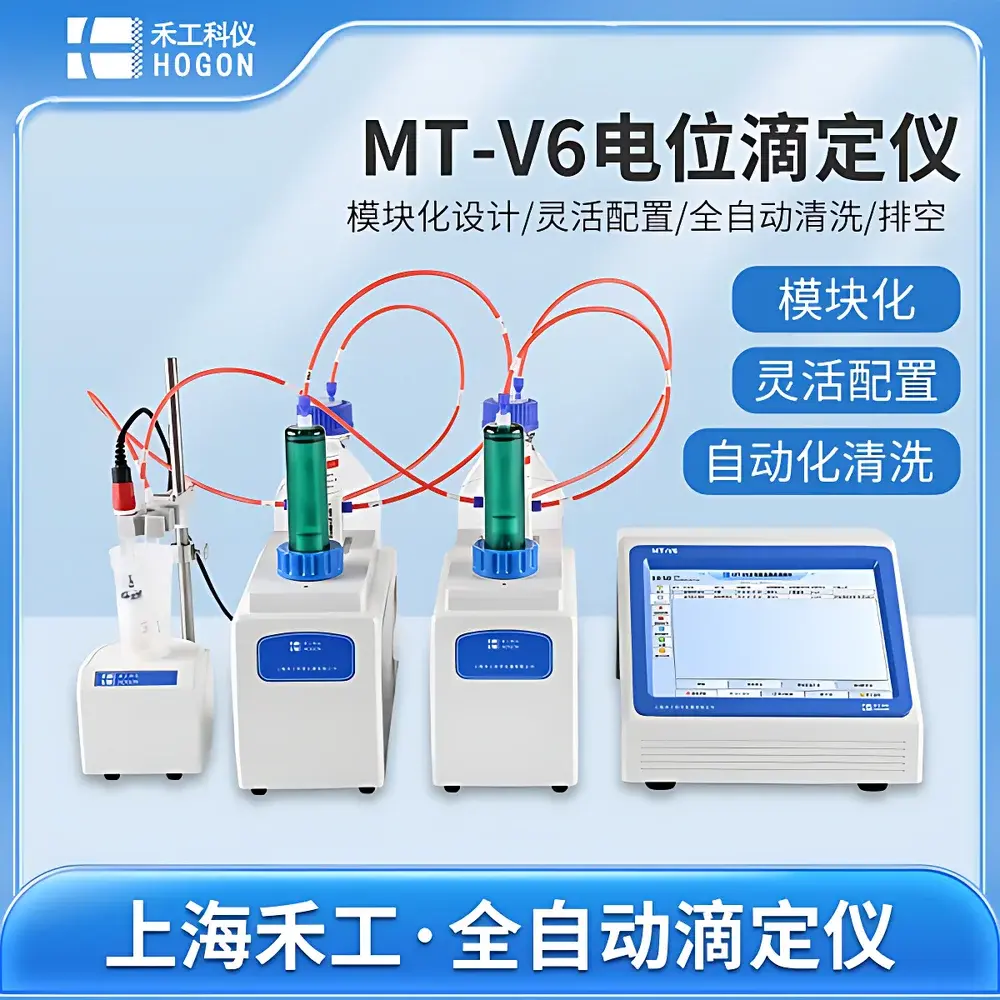
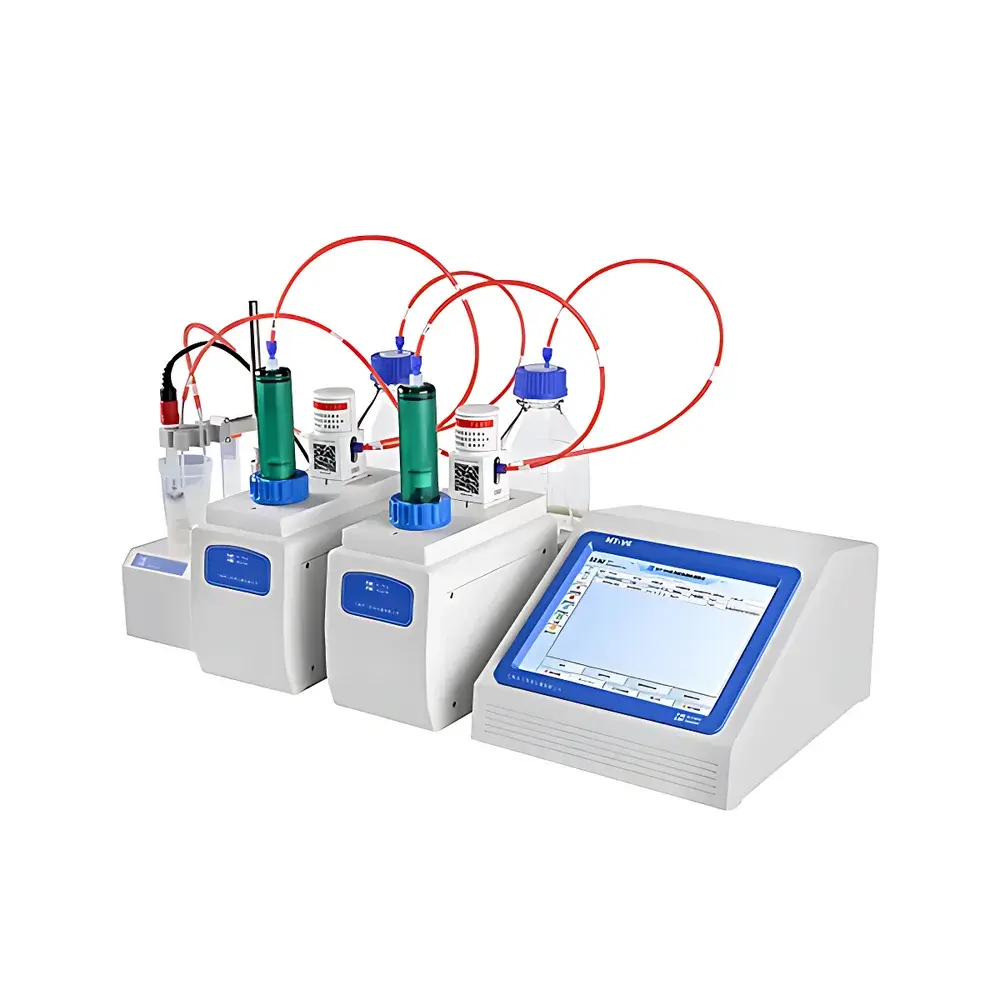
HOGON MT-V6 Multi-Channel Fully Automatic Potentiometric Titrator
| Brand | HOGON |
|---|---|
| Origin | Shanghai, China |
| Manufacturer Type | Direct Manufacturer |
| Regional Classification | Domestic (China) |
| Model | MT-V6 |
| Instrument Type | General-Purpose Potentiometric Titrator |
| Application Scope | Universal |
| pH Measurement Range | 0.000–14.000, Resolution: 0.001 pH |
| Meter Accuracy | ±0.1 mV |
| Meter Resolution | 0.1 mV |
| Burette Precision | 20 mL standard burette / 1 µL |
| Potential Input Range | ±2000 mV, Resolution: 0.1 mV |
Overview
The HOGON MT-V6 Multi-Channel Fully Automatic Potentiometric Titrator is an engineered platform for high-reproducibility electrochemical endpoint detection in regulated and research-intensive laboratories. Based on potentiometric titration principles—where the potential difference between a reference electrode and an indicator electrode is monitored continuously as titrant is added—the MT-V6 delivers quantitative determination of analyte concentration through precise inflection point detection in E–V curves. Its modular architecture supports multi-step, multi-reagent workflows including automated sample dissolution, buffer/indicator dosing, dilution, endpoint confirmation, and post-analysis cleaning—all without manual intervention. Designed for compliance-critical environments, the system integrates with laboratory infrastructure via standardized digital protocols and adheres to foundational requirements for traceable, auditable analytical data generation.
Key Features
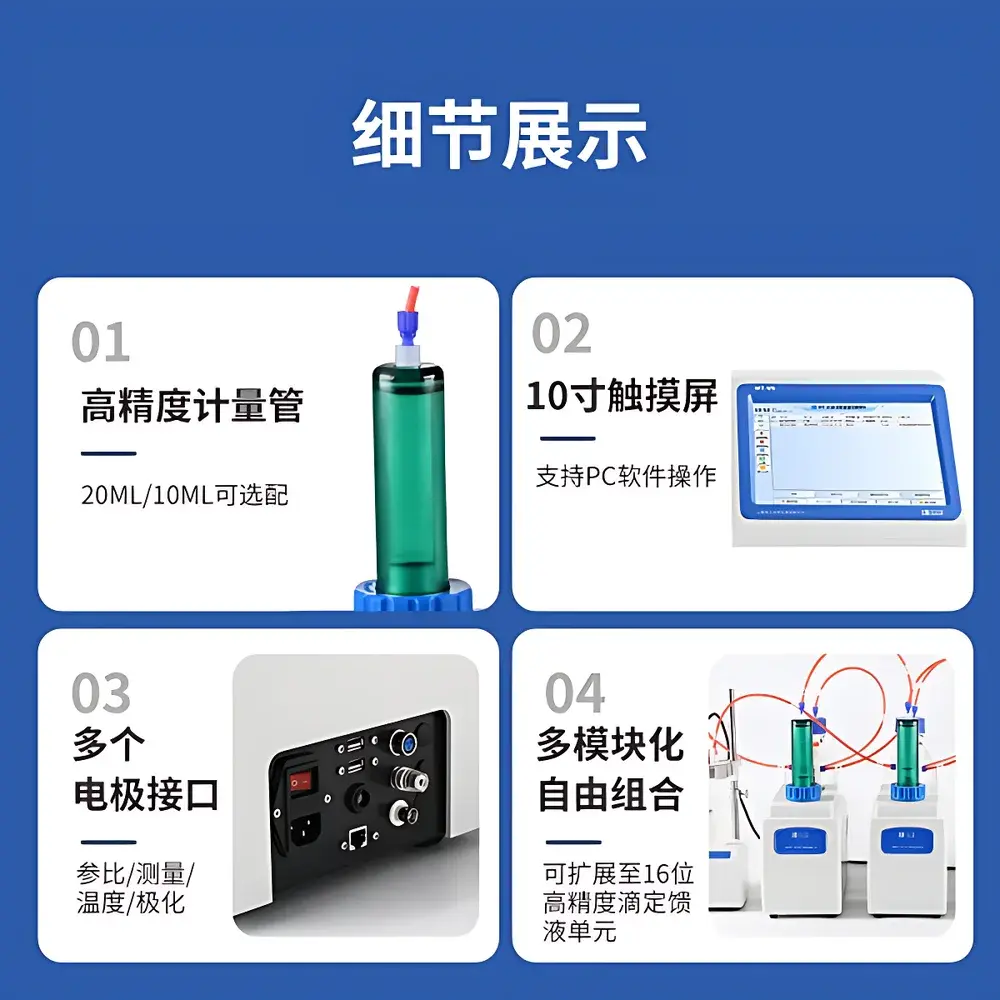
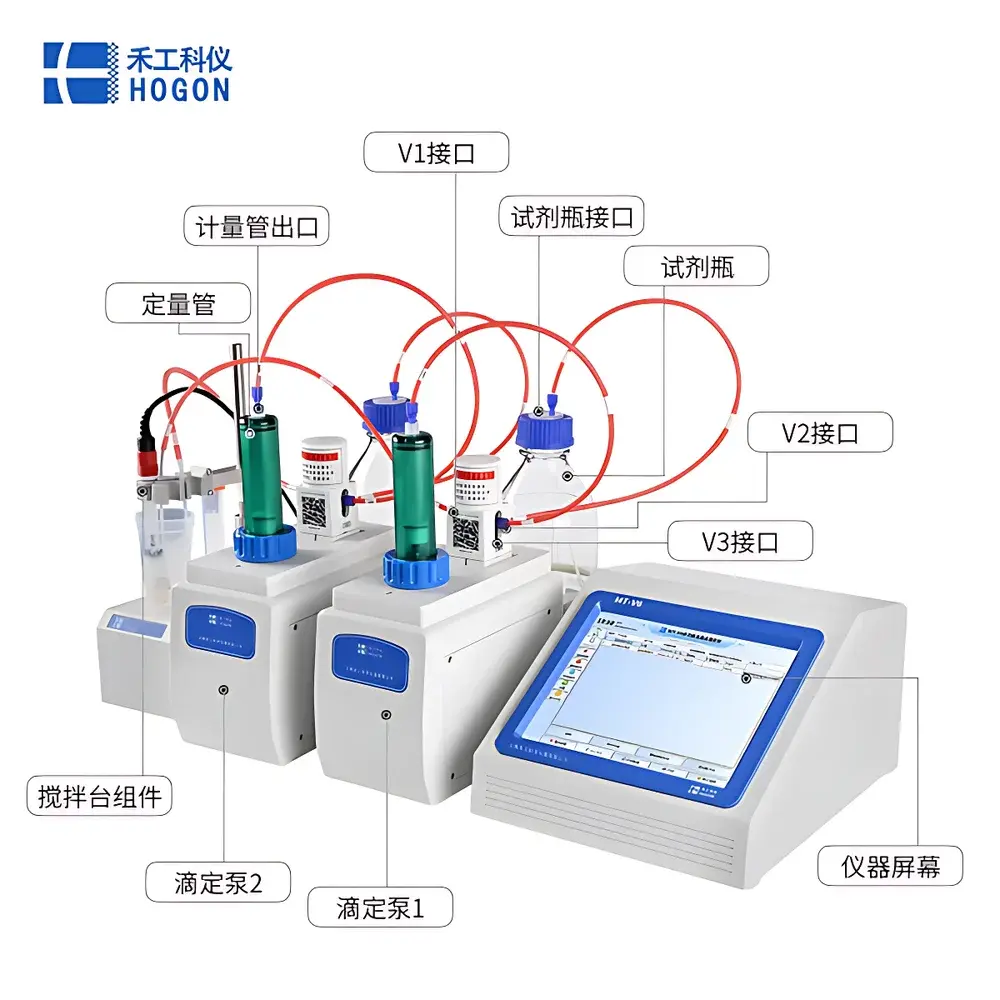
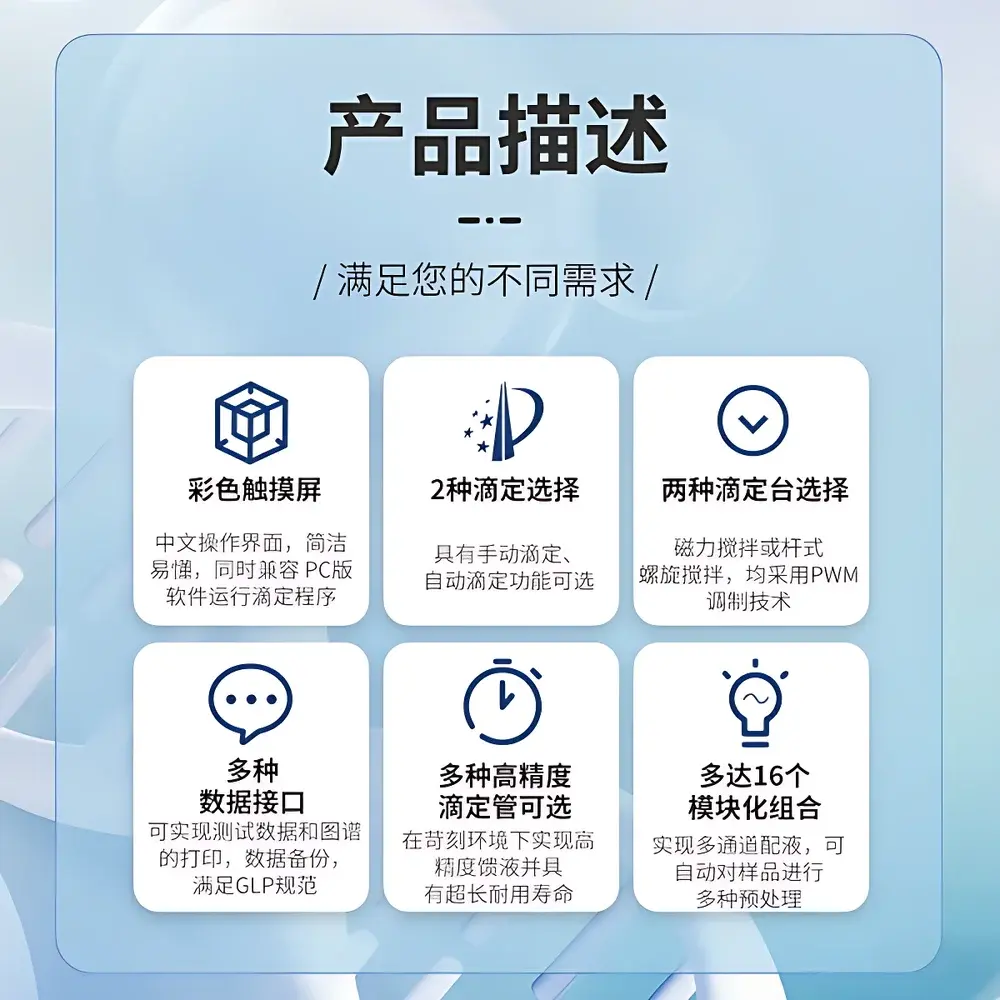
- Modular hardware architecture supporting up to 16 functional units: burettes, reagent dispensers, sample handling modules, pH/temperature sensors, and auxiliary detection interfaces.
- HOGON patented burette technology (CN ZL 2011 1 0307036.0): enables feed precision down to 1/20,000 of nominal burette volume; compatible with interchangeable 10 mL, 20 mL, and 50 mL burettes with in-situ volumetric calibration.
- Dual stirring options: PWM-controlled magnetic stirrer or rod-type helical stirrer, both with motorized vertical positioning for optimized electrode immersion and reproducible mixing kinetics.
- Multi-mode detection expansion: base unit supports potentiometric titration; optional add-on modules enable amperometric (dead-stop), photometric, and colorimetric titration—enabling method flexibility across acid-base, redox, complexometric, non-aqueous, conductometric, and pH-stat applications.
- Integrated temperature compensation: built-in Pt1000 probe enables real-time thermal correction during pH and potentiometric titrations per ISO 3696 and ASTM E2087 guidelines.
Sample Compatibility & Compliance
The MT-V6 accommodates aqueous, alcoholic, and low-dielectric media—including acetic anhydride, glacial acetic acid, and DMF—across diverse sample matrices such as pharmaceutical actives, catalysts, food extracts, petrochemical distillates, and environmental water samples. All titration sequences are fully programmable with conditional logic (e.g., pause on slope threshold, dynamic volume incrementing, dual-endpoint detection). The system complies with core GLP documentation requirements: electronic signatures, audit trails, user-level access control, and tamper-evident PDF report generation with embedded metadata (operator ID, timestamp, method version, raw sensor traces). Data export conforms to ASTM E1384 and ISO/IEC 17025–aligned formats for LIMS/MES integration via TCP/IP or RS-485.
Software & Data Management
HOGON TitraSoft v5.x provides intuitive workflow configuration, method validation templates, and real-time curve visualization (E vs. V, dE/dV vs. V, second derivative overlays). All methods are stored with version control and digital signature enforcement. Raw data—including mV, pH, temperature, burette position, and stir speed—is logged at ≥10 Hz and retained in binary+CSV dual format. Secure PDF reports include QR-coded integrity hashes and support 21 CFR Part 11–compliant electronic signatures when deployed with validated certificate authority integration. USB host ports accept keyboards, external storage, webcams (for procedural documentation), and certified printers; network interface enables scheduled data push to enterprise databases or cloud-based analytics platforms.
Applications
- Pharmaceutical QC: assay of active ingredients (e.g., ibuprofen, ascorbic acid) via non-aqueous titration; chloride quantification in saline formulations using potentiometric silver nitrate titration.
- Food & Beverage: total acidity (TA) in wines and juices; salt content (NaCl) in dairy and meat products; peroxide value in edible oils via redox titration.
- Chemical Manufacturing: purity assessment of organic bases/acids; catalyst residue analysis (e.g., residual NaOH in polyesters); water content determination by Karl Fischer adaptation (with optional coulometric module).
- Environmental Testing: alkalinity and hardness profiling in wastewater; cyanide speciation in industrial effluents using selective ion electrodes.
- Academic Research: kinetic titration studies, equilibrium constant derivation, and multi-step reaction monitoring under controlled temperature and inert atmosphere conditions.
FAQ
Does the MT-V6 support remote operation and unattended batch analysis?
Yes—when paired with HOGON AS-series autosamplers (up to 120-position capacity) and configured with network-enabled scheduling, the system executes fully autonomous sequences with pre-programmed cleaning, calibration, and error recovery routines.
Can the instrument validate burette accuracy in accordance with ISO 8655?
Yes—integrated gravimetric calibration routines comply with ISO 8655-5 for piston burettes; users may perform full-volume, partial-volume, and linearity verification with traceable weight standards.
Is method transfer between MT-V6 units supported?
Yes—methods, calibration profiles, and report templates are exportable as encrypted .TMD files, ensuring consistent performance across installations in multi-site GMP environments.
What electrode types are natively supported?
Standard configurations include combination pH electrodes, Ag/AgCl reference electrodes, platinum redox electrodes, and ion-selective electrodes (e.g., fluoride, chloride); custom sensor interfaces are available via analog input expansion cards.
How is data integrity ensured during power interruption?
The system employs non-volatile memory for method/state retention and automatic resume-from-interrupt functionality; all ongoing titrations log intermediate states prior to shutdown and recover with full traceability.




