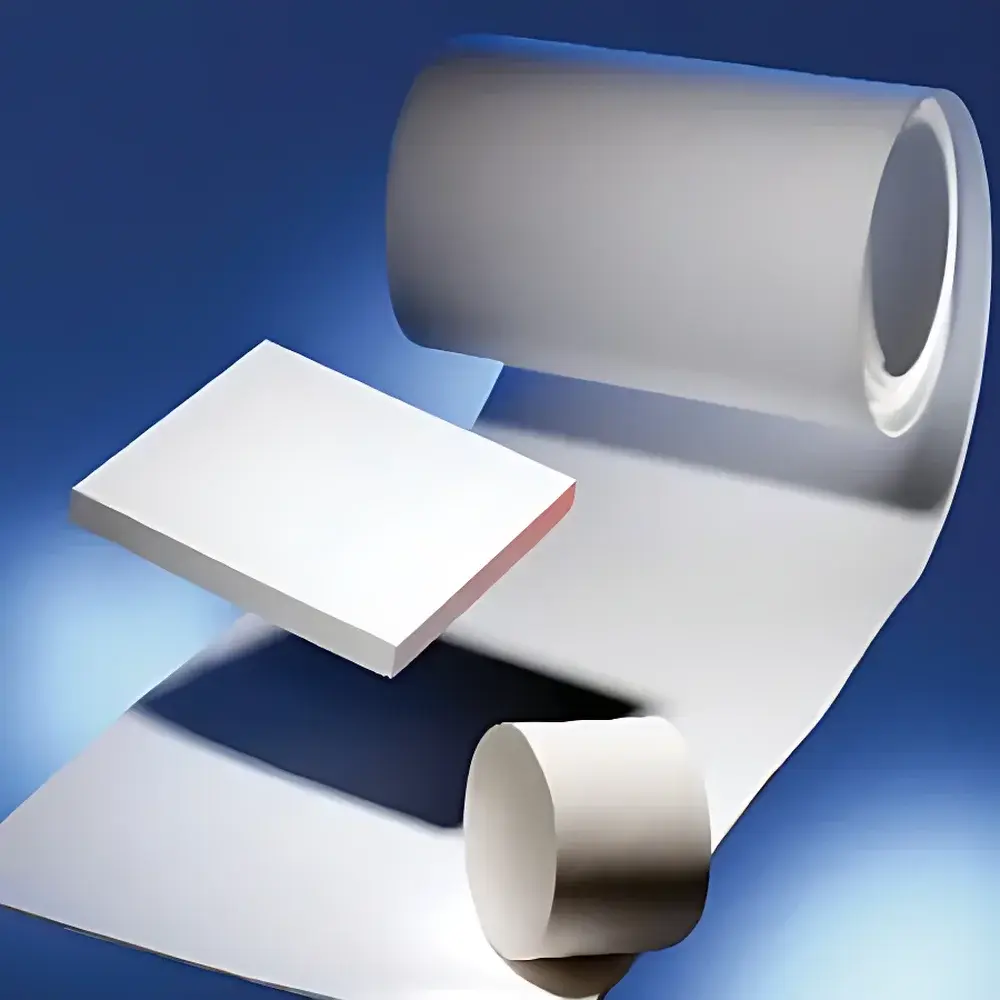
Labsphere Zenith Polymer® Diffuse Reflectance and Transmission Standard
| Brand | Labsphere |
|---|---|
| Origin | USA |
| Manufacturer Type | Authorized Distributor |
| Origin Category | Imported |
| Model | Zenith Polymer® |
| Thickness Options | 100 µm, 250 µm, 500 µm, 1 mm, 2 mm |
| Spectral Range | 250–2500 nm |
| Transmittance | 4–50% (wavelength-dependent) |
| Surface Characteristics | Lambertian diffusion |
| Compliance | ASTM E308, ISO/CIE 11664-4, NIST-traceable reflectance calibration available |
Overview
The Labsphere Zenith Polymer® Diffuse Reflectance and Transmission Standard is a high-performance optical reference material engineered for precision radiometric, photometric, and colorimetric applications. Constructed from rigorously purified polytetrafluoroethylene (PTFE) polymer, Zenith delivers spectrally neutral, near-perfect Lambertian scattering behavior across the ultraviolet, visible, and near-infrared spectrum (250–2500 nm). Unlike painted or coated standards, Zenith’s bulk-scattering architecture ensures long-term stability under intense illumination, thermal cycling, and repeated mechanical handling—making it ideal for integration into integrating spheres, backlight uniformity test fixtures, display calibration systems, and laboratory-grade optical benches. Its intrinsic low bidirectional reflectance distribution function (BRDF) asymmetry and minimal retro-reflection support high-fidelity measurement of directional light sources, collimated beams, and diffuse emitters in both reflectance and transmittance modes.
Key Features
- Lambertian Diffusion Profile: Certified angular scattering distribution compliant with CIE 110 and ISO/CIE 11664-4, enabling accurate cosine-corrected irradiance measurements and reliable source characterization.
- Stable Spectral Performance: Minimal spectral drift over time; no binder degradation or pigment migration—critical for long-duration integrations in UV-sensitive applications such as LED aging studies or solar simulator validation.
- Controlled Thickness Variants: Available in five standardized thicknesses (100 µm to 2 mm), each optimized for specific optical path requirements: thin films for high-transmission backlight diffusers; thicker variants for high-reflectance sphere coatings and integrating cavity baffles.
- Chemical & Environmental Robustness: Resistant to common solvents, humidity (>95% RH), and temperatures up to 260 °C short-term—enabling use in cleanroom environments, accelerated life testing chambers, and industrial QA labs.
- Cleanability & Reusability: Surface contaminants (e.g., fingerprints, dust, thin oil films) are removable using isopropyl alcohol without altering diffuse characteristics—verified per ASTM F2742 cleaning protocol.
Sample Compatibility & Compliance
Zenith Polymer® is compatible with all major optical metrology platforms, including spectroradiometers (e.g., Konica Minolta CS-2000, Instrument Systems CAS 140D), imaging colorimeters (Radiant Vision Systems ProMetric series), and goniophotometers. It serves as a primary transfer standard in laboratories accredited to ISO/IEC 17025 and routinely referenced in ASTM E275, E1331, and E308 procedures for reflectance/transmittance validation. When calibrated against NIST-traceable standards, Zenith supports GLP-compliant documentation for FDA-regulated display qualification (e.g., medical monitor luminance uniformity per IEC 62366-1) and automotive HUD brightness verification per SAE J1711. Its non-hygroscopic nature eliminates moisture-induced spectral shifts—a known error source in cellulose-based diffusers.
Software & Data Management
While Zenith itself is a passive optical component, its performance data integrates seamlessly into industry-standard optical modeling and calibration workflows. Labsphere provides spectral transmittance/reflectance datasets (ASCII .csv format) traceable to NIST SRM 2020 and 931, compatible with LightTools, ASAP, Zemax OpticStudio, and MATLAB-based radiometric analysis toolboxes. Users may import these datasets directly into instrument firmware (e.g., Ocean Insight OceanView, Admesy Hera software) for real-time correction of system responsivity curves. For regulated environments, full audit trails—including calibration certificate ID, date, uncertainty budget, and environmental conditions at time of measurement—are supplied in PDF and XML formats compliant with 21 CFR Part 11 requirements.
Applications
- Radiometric calibration of integrating spheres used in LED package and module flux measurement (IES LM-79, CIE 127)
- Backlight unit (BLU) uniformity assessment in LCD, OLED, and microLED display manufacturing
- Diffuser characterization for smartphone ambient light sensors and proximity detectors
- Reference standard in spectrophotometer validation per ISO 13655 (graphic technology) and ISO 17321-1 (color measurement)
- Beam homogenization in laser-based inspection systems operating from 266 nm to 1550 nm
- Calibration target for hyperspectral imaging systems in agricultural and remote sensing R&D
FAQ
Is Zenith Polymer® suitable for UV-C (200–280 nm) applications?
Yes—Zenith exhibits >85% absolute reflectance down to 250 nm and maintains structural integrity under prolonged UV-C exposure when operated within recommended irradiance limits (<10 W/cm²).
Can Zenith be cut or machined on-site without compromising optical performance?
Yes—mechanical cutting (e.g., laser, die-cutting, or precision shearing) is permissible; however, edge chipping must be minimized. Post-cut surfaces retain nominal diffuse properties if handled in cleanroom Class 1000 or better.
What is the typical uncertainty associated with a NIST-traceable Zenith calibration?
For reflectance, expanded uncertainty (k=2) is ±0.3% absolute in the VIS range (400–700 nm); for transmittance, ±0.5% absolute across 350–1000 nm—per Labsphere Certificate of Calibration No. ZEN-XXXXX.
How does Zenith compare to Spectralon® in terms of BRDF stability?
Both materials meet CIE 110 criteria for Lambertian behavior, but Zenith demonstrates superior resistance to surface abrasion and lower sensitivity to particulate adhesion—validated via ISO 10110-7 scratch testing and ISO 14644-1 particle shedding assays.