Lufft IRS31Pro-UMB Passive Road Surface Sensor
| Brand | Lufft |
|---|---|
| Origin | Germany |
| Model | IRS31Pro-UMB |
| Measurement Principles | Conductivity-based salt concentration & freezing point detection, FMCW radar for water film thickness, NTC thermistor for surface temperature |
| Output Interfaces | UMB (Universal Measurement Bus), SDI-12, RS-485 |
| Power Supply | 6–30 VDC, solar-compatible |
| Operating Temperature | −40 °C to +70 °C |
| IP Rating | IP68 |
| Mounting | Flush-mountable in asphalt/concrete |
| Compliance | EN 12830, ASTM E1952, ICAO Annex 3, WMO Guide to Instruments and Methods of Observation |
Overview
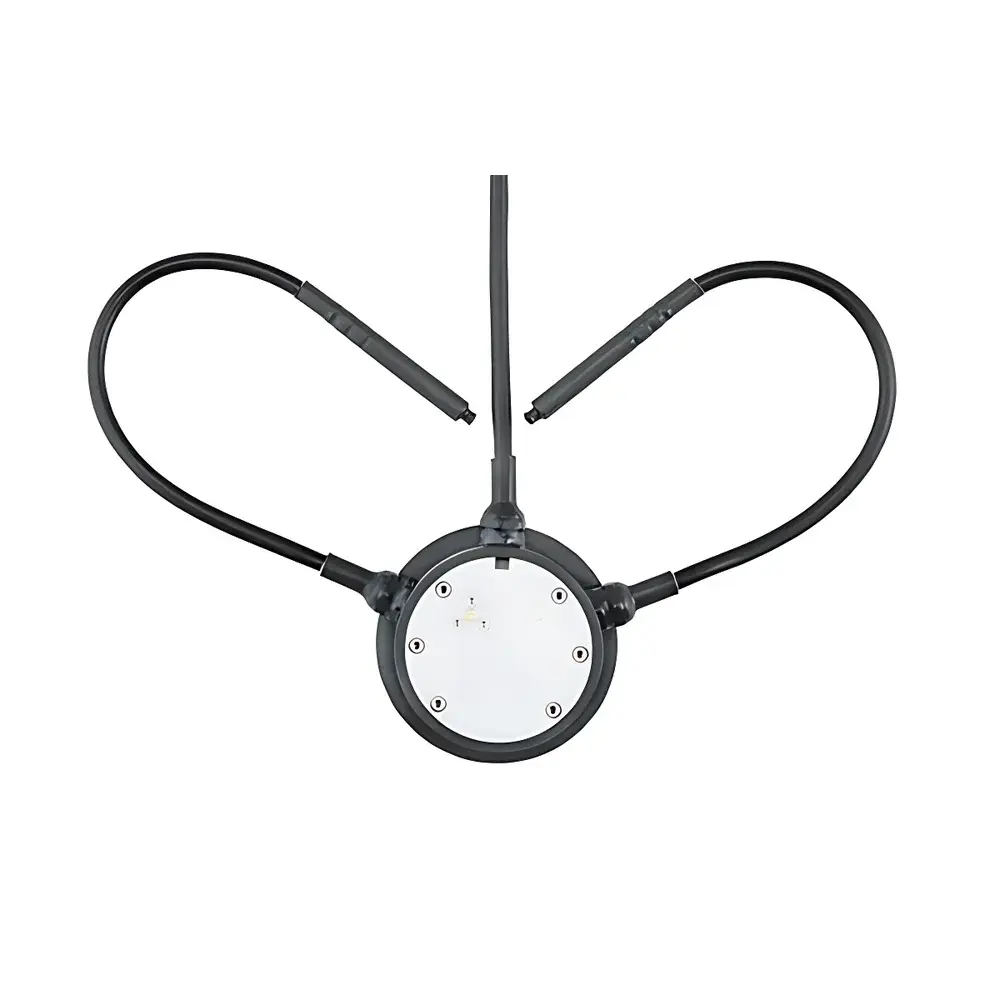
The Lufft IRS31Pro-UMB is a passive, flush-mounted road surface sensor engineered for continuous, high-reliability monitoring of critical pavement parameters in intelligent transportation infrastructure. Unlike active thermal or optical systems, the IRS31Pro-UMB operates on a multi-physical principle architecture: it combines conductivity-based electrolyte analysis to determine de-icing salt concentration and derived freezing point depression; frequency-modulated continuous-wave (FMCW) radar for sub-millimeter resolution of water film thickness (0–15 mm); and precision NTC thermistors for direct road surface temperature measurement (±0.2 °C accuracy). Its passive design eliminates moving parts and external heating elements, significantly enhancing long-term stability and reducing calibration drift in harsh outdoor environments. The sensor is deployed directly within the pavement structure—embedded flush with asphalt or concrete surfaces—ensuring representative thermal coupling and mechanical resilience under heavy traffic loads. It serves as a foundational component in automated road weather information systems (RWIS), supporting real-time decision-making for winter maintenance, aviation safety protocols, and adaptive traffic management.
Key Features
- Multi-parameter fusion: Simultaneous output of road surface temperature, water film height, freezing point temperature, ice fraction, surface condition classification (dry/wet/frozen/icy/snow-covered), and optional sub-surface (roadbed) temperature via integrated Pt100 probe.
- Modular electronics core: Field-replaceable sensor head and detachable electronic module enable rapid maintenance, recalibration, and firmware updates without full sensor excavation.
- Low-power architecture: Designed for autonomous operation—compatible with 6–30 VDC power sources and optimized for solar-battery hybrid systems (typical average consumption < 15 mA @ 12 VDC).
- UMB protocol support: Native Universal Measurement Bus interface enables plug-and-play integration with Lufft’s own meteo stations (e.g., WS600, WS700) and third-party data loggers compliant with UMB v2.0 specification.
- Ruggedized construction: Stainless steel housing with IP68 ingress protection and −40 °C to +70 °C operational range; qualified per EN 12830 for road meteorological sensors and tested for mechanical durability under AASHTO T301 load cycles.
Sample Compatibility & Compliance
The IRS31Pro-UMB is validated for deployment in standard bituminous pavements, Portland cement concrete, and polymer-modified overlays. Its flush-mount geometry ensures minimal disruption to tire–pavement interaction and preserves skid resistance metrics. Calibration traceability follows DIN EN ISO/IEC 17025 requirements through accredited laboratories using NIST-traceable reference standards for temperature and conductivity. The sensor meets ICAO Annex 3 requirements for runway condition reporting and supports WMO-defined road surface state classifications (RWS). For regulatory deployments in EU Member States, it aligns with EN 12830:2018 for road weather sensors and supports audit-ready data logging compliant with GLP principles when paired with certified data acquisition systems.
Software & Data Management
Raw sensor outputs are transmitted via UMB, SDI-12, or RS-485 to compatible data loggers (e.g., Campbell Scientific CR6, Delta-T DL6, or Lufft’s own OTT Hydromet platforms). Lufft’s free UMB ConfigTool provides field configuration, zero-point verification, and diagnostic status reporting. When integrated into centralized RWIS platforms such as Vaisala’s Indigo or Siemens Desigo CC, the IRS31Pro-UMB supports automated condition-based alerts (e.g., “Freezing Rain Imminent” or “Ice Formation Detected”) and feeds machine-readable JSON/XML payloads for API-driven dashboard visualization. All measurement timestamps include UTC synchronization via optional GPS input, and data records support FDA 21 CFR Part 11-compliant audit trails when used in regulated transportation safety applications.
Applications
- Traffic meteorology networks: Real-time input for dynamic winter maintenance dispatching and anti-icing chemical dosage optimization.
- Bridge deck icing monitoring: Early detection of subsurface moisture migration and freeze-thaw cycles impacting structural integrity.
- Airport pavement safety: Integration into FAA AC 150/5220-22B-compliant Runway Condition Assessment Programs (RCAP) for friction advisory and NOTAM generation.
- Smart city infrastructure: Feeding edge analytics engines for predictive road hazard mapping and V2X (vehicle-to-infrastructure) communication systems.
- Research-grade climatology: Long-term pavement thermal response studies under varying albedo, moisture, and salinity conditions per ASTM E1952-20 guidelines.
FAQ
Does the IRS31Pro-UMB require periodic factory recalibration?
No—its modular design allows on-site verification and adjustment using the included UMB Test Kit and certified reference solutions. Full recalibration is recommended every 24 months or after physical impact events.
Can it distinguish between black ice and frost?
Yes—via combined analysis of surface temperature gradient, water film thickness (< 0.2 mm), and freezing point depression; frost exhibits higher emissivity and negligible conductivity response compared to supercooled water films.
Is roadbed temperature measurement mandatory?
No—it is an optional add-on using a separate Pt100 probe installed at 5–10 cm depth during sensor embedment; default configuration monitors only surface-layer parameters.
What mounting materials are approved for installation?
Epoxy-based anchoring compounds meeting ASTM D3658 specifications for traffic-grade adhesives; mechanical clamping is not supported due to thermal expansion mismatch risks.
How does it handle snow accumulation over the sensing surface?
The flush-mount design and hydrophobic coating minimize snow adhesion; output reverts to “snow-covered” classification with temperature and conductivity-derived melt-rate estimation once ambient conditions permit partial melting.