
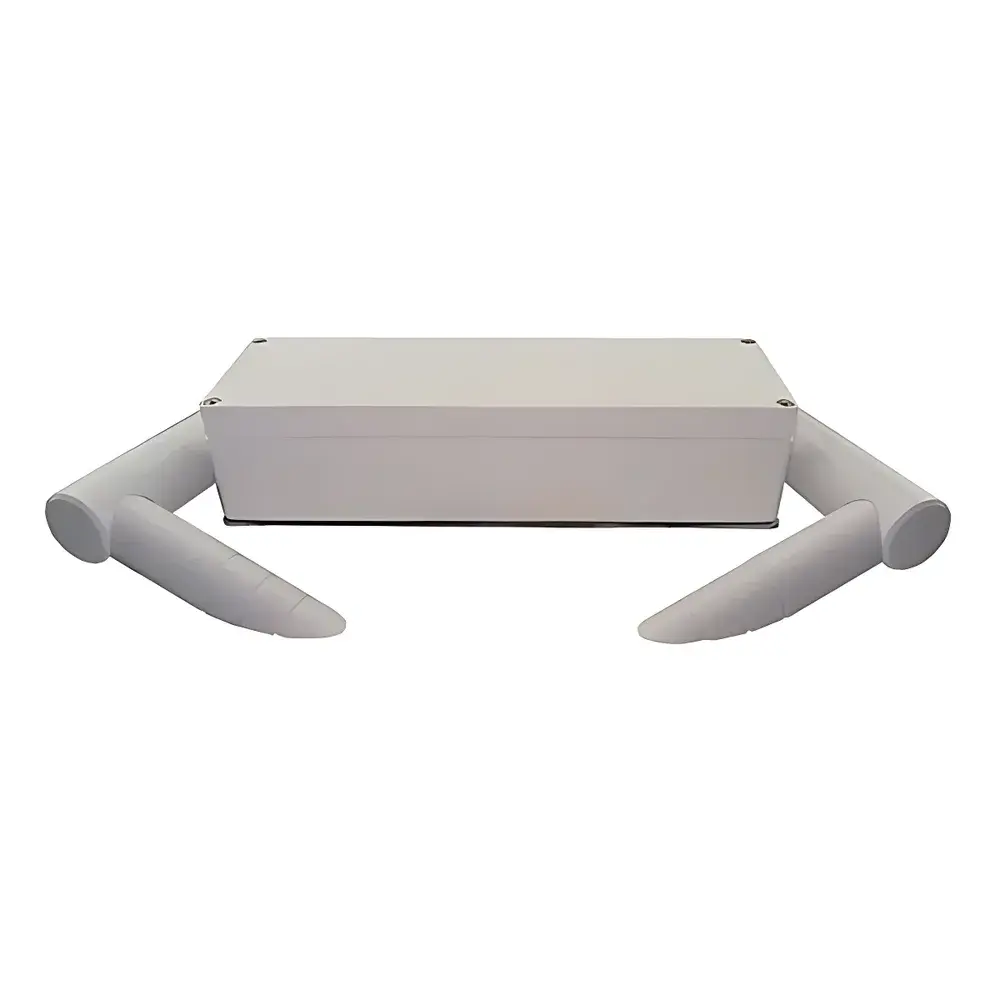
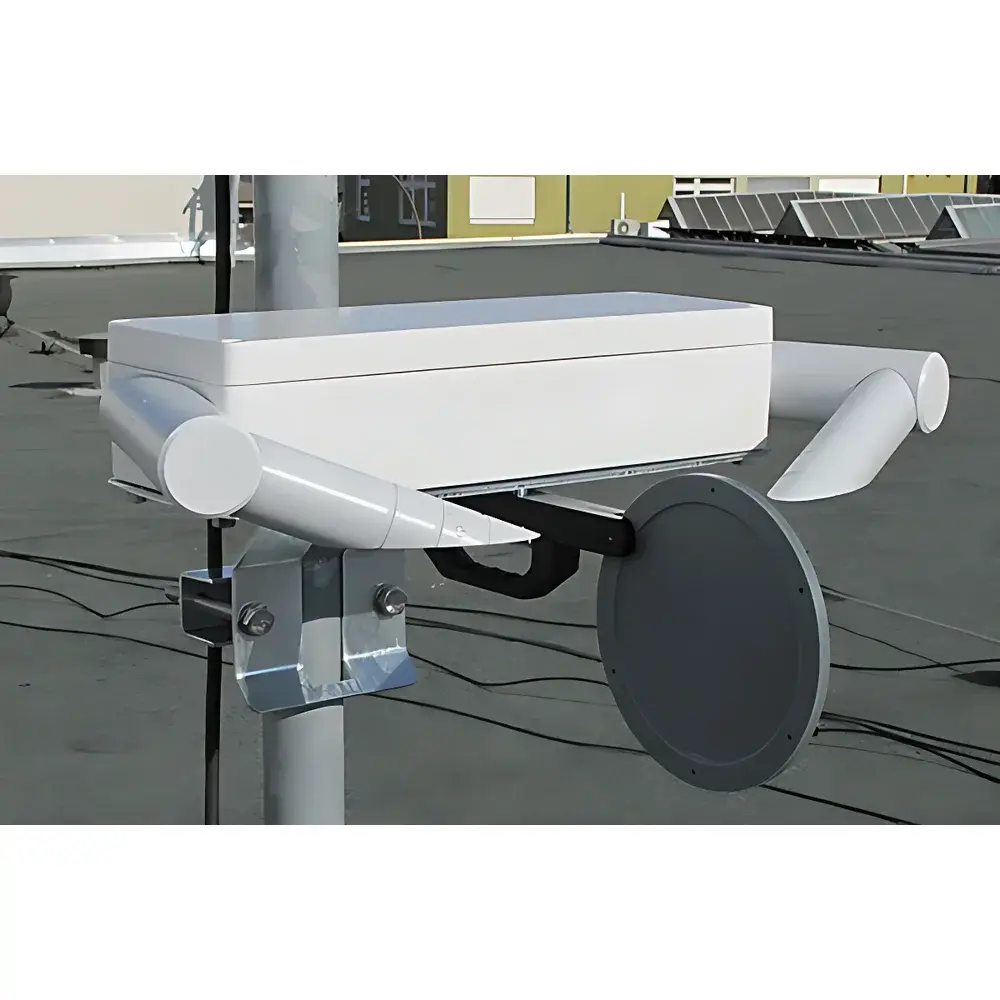
Lufft VS2K/VS20K-UMB Visibility Sensor
| Brand | Lufft |
|---|---|
| Model | VS2K/VS20K-UMB |
| Measurement Principle | Forward Scattering (Infrared, 850 nm) |
| Operating Temperature Range | –40 °C to +60 °C |
| IP Rating | IP66 |
| Output Interfaces | RS-485 (UMB protocol), 4–20 mA analog, optional SDI-12 |
| Detection Range | 10 m to 75 km (VS2K) |
| Power Supply | 12–30 VDC |
| Housing Material | Anodized aluminum with anti-icing downward tilt design |
| Compliance | WMO Guide to Meteorological Instruments and Methods of Observation (CIMO Guide), EN 60529, IEC 61326-1 |
Overview
The Lufft VS2K/VS20K-UMB Visibility Sensor is an industrial-grade forward-scatter optical instrument engineered for continuous, high-reliability atmospheric visibility measurement in demanding environmental and safety-critical applications. It operates on the physical principle of infrared forward scattering at 850 nm wavelength: a collimated infrared beam emitted by a precision LED source intersects with a defined sampling volume; airborne particles—such as fog droplets, dust, smoke, or precipitation—scatter light within this volume. A calibrated photodiode receiver detects the intensity of scattered radiation in the forward direction (typically 30°–50° from the incident beam axis). The measured scattering signal is converted into an extinction coefficient (σ, units: Mm⁻¹) using factory-established calibration curves traceable to NIST-traceable reference standards. Visibility (V, in meters or kilometers) is then derived via the Koschmieder equation: V = 3.912 / σ — a physically grounded relationship widely adopted in meteorology and aviation standards.
Key Features
- Robust dual-range capability: VS2K variant optimized for medium-range visibility monitoring (10 m – 75 km); VS20K extends upper detection limit to 100 km for long-range aviation and maritime applications.
- Integrated lens contamination monitoring system continuously assesses optical path degradation using reference photodiode feedback, enabling automatic diagnostic alerts and scheduled maintenance planning.
- Patented anti-webbing design minimizes spider intrusion risk through mechanical geometry and low-static-surface treatment of the optical housing aperture.
- Corrosion-resistant anodized aluminum enclosure with downward-tilted front window geometry prevents snow/ice accumulation and facilitates natural runoff of rainwater and condensate.
- Simultaneous digital and analog output: UMB protocol over RS-485 supports multi-sensor daisy-chaining and firmware updates; 4–20 mA loop provides fail-safe analog redundancy compatible with legacy SCADA and PLC systems.
- Wide operating temperature range (–40 °C to +60 °C) and IP66-rated ingress protection ensure stable performance across arctic roadways, offshore platforms, and tropical coastal zones.
Sample Compatibility & Compliance
The sensor is designed for ambient atmospheric sampling without sample conditioning or active aspiration. It measures bulk extinction properties of naturally occurring aerosols and hydrometeors—fog, mist, drizzle, haze, dust storms, and volcanic ash plumes—within its defined optical path. No consumables, filters, or moving parts are required. Compliance includes adherence to the World Meteorological Organization’s CIMO Guide (Chapter 12, Visibility Instruments), EN 60529 (IP66), IEC 61326-1 (EMC for industrial environments), and compatibility with national meteorological service requirements for automated weather stations (AWS) and aviation meteorological observing systems (AMOS). Data integrity meets GLP-aligned logging practices when integrated with compliant data acquisition systems supporting time-stamped audit trails.
Software & Data Management
The VS2K/VS20K-UMB communicates via the standardized UMB (Universal Measurement Bus) protocol, enabling plug-and-play integration with Lufft’s own meteoStation software, third-party AWS platforms (e.g., Campbell Scientific LoggerNet, Vaisala MAWS), and cloud-based IoT infrastructure (MQTT/HTTP APIs available via gateway middleware). Firmware updates, configuration changes, and real-time diagnostics—including lens soiling index, signal-to-noise ratio, and internal temperature compensation status—are accessible remotely. When deployed in regulated environments (e.g., airport surface observation systems), the sensor supports timestamped, non-erasable visibility logs exportable in CSV or NetCDF format—facilitating traceability under FAA AC 150/5220-19B or EASA AMC 20-19 guidelines.
Applications
- Road weather information systems (RWIS) for dynamic speed advisories and fog-zone warning activation.
- Hydrological and synoptic weather networks requiring WMO-compliant visibility data for climate trend analysis.
- Offshore oil & gas platforms where low-visibility events impact helicopter operations and crane safety protocols.
- Aviation meteorological terminals (AMTs) and automated observing systems (ASOS/AWOS) at civil and military airfields.
- Port authority safety management systems for vessel navigation during restricted visibility conditions.
- Environmental monitoring networks assessing regional haze transport, PM₂.₅ correlation studies, and transboundary air pollution events.
FAQ
How does the VS2K/VS20K differ from backward-scatter visibility sensors?
Forward-scatter geometry provides higher sensitivity in the 10–5,000 m range and reduced susceptibility to background solar interference compared to backward-scatter designs—making it preferred for road and airport applications.
Is field recalibration required?
No routine field recalibration is needed; the sensor employs factory calibration validated against reference scatterometers and includes built-in drift compensation algorithms. Periodic verification against known reference conditions (e.g., clear-sky baseline checks) is recommended annually.
Can it operate unattended for extended periods?
Yes—designed for autonomous operation with low power consumption (<1.5 W typical), integrated diagnostics, and watchdog-timer reset functionality ensuring recovery from transient communication faults.
What mounting orientation is recommended?
Horizontal mounting with the optical axis aligned parallel to ground level is standard; downward tilt of the front window (integrated in housing design) must remain unobstructed to maintain ice-shedding performance.
Does it comply with FAA or EASA regulatory requirements for airport use?
While the sensor itself is not certified as a standalone ATC device, its measurement methodology, accuracy specifications, and data reporting structure align with Annex 3 (WMO) and FAA AC 150/5220-19B technical criteria for visibility instrumentation in certified ASOS/AWOS installations.





