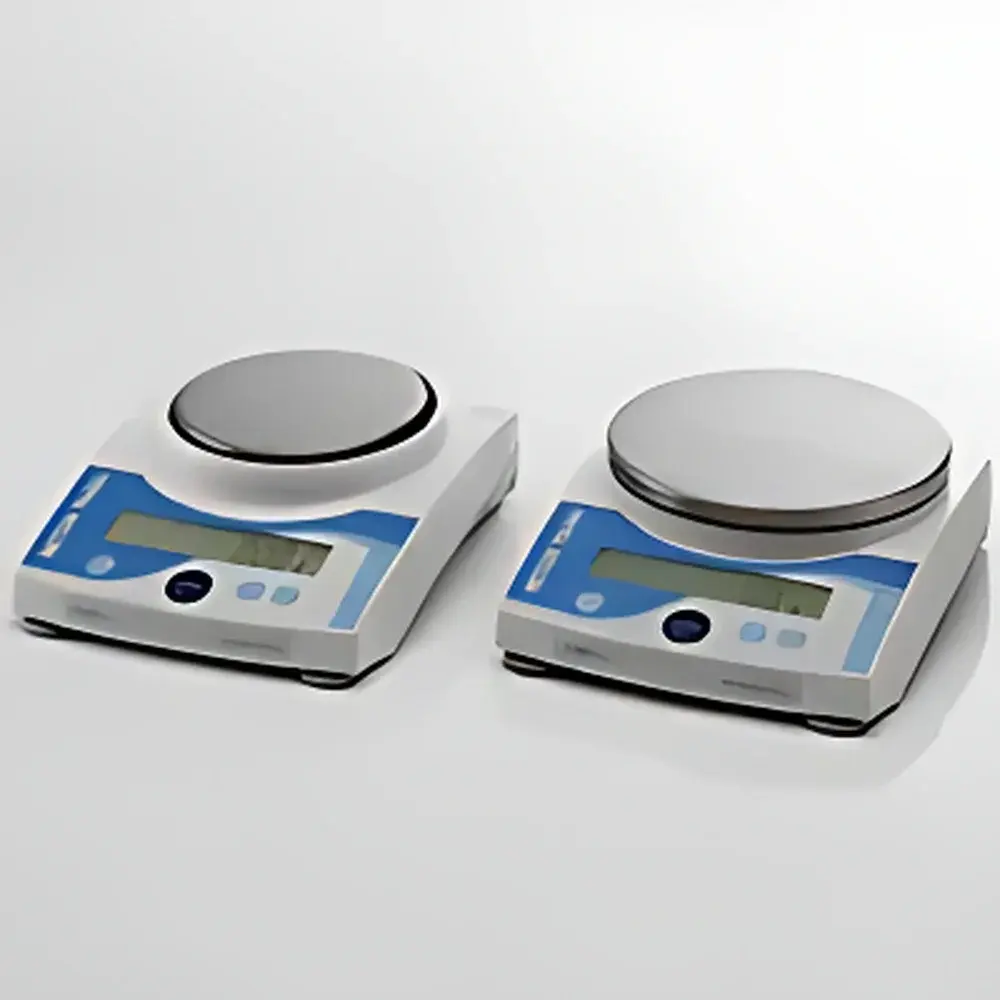
METTLER TOLEDO PL6001-L Precision Balance
| Brand | METTLER TOLEDO |
|---|---|
| Origin | Switzerland |
| Model | PL6001-L |
| Maximum Capacity | 6100 g |
| Readability | 0.1 g |
| Linearity | ±0.2 g |
| Repeatability | ±0.1 g |
| Pan Size | Ø160 mm |
| Calibration | External (with standard weights) |
| Power | AC adapter or batteries (25–30 h operation) |
| Weighing Units | g, kg, mg, ct, lb, oz, ozt, GN, dwt, momme, mesghal, tael, tical, tola, bath |
| Compliance | CE, RoHS, ISO/IEC 17025-compatible operation |
| Application Modes | Standard, Percentage, Piece Counting, Dynamic Weighing, Accumulation, Checkweighing |
Overview
The METTLER TOLEDO PL6001-L is a high-reliability precision balance engineered for routine laboratory, quality control, and industrial weighing tasks where robustness, ease of use, and traceable accuracy are essential. Based on METTLER TOLEDO’s proven compact digital sensor architecture, the PL6001-L employs an integrated load cell and temperature-compensated signal processing circuitry to deliver stable readings under variable environmental conditions—including minor air currents, bench vibrations, and ambient thermal fluctuations. Its 6100 g maximum capacity and 0.1 g readability position it within the Class II precision balance category per OIML R 76 and ASTM E898-22 guidelines. Designed for consistent performance across shifts and operators, the balance meets foundational metrological requirements for non-regulated environments while supporting GLP-compliant documentation workflows when paired with certified external weights and optional RS232 data logging.
Key Features
- Compact, impact-resistant ABS housing with corrosion-resistant surface finish—optimized for shared lab spaces and production floor deployment.
- Dedicated external calibration interface with intuitive keypad-triggered calibration sequence; compatible with standard Class M2 or better calibration weights (e.g., 500 g, 2000 g, 5000 g).
- Large, high-contrast LCD display with backlight and tactile membrane keypad—designed for readability under varied lighting and gloved-hand operation.
- Battery-powered mobility (alkaline or rechargeable AA cells) enabling up to 30 hours of continuous operation—ideal for field sampling, warehouse audits, or mobile QC stations.
- Integrated overload protection safeguards the load cell from mechanical shock or accidental overloading beyond 120 % of nominal capacity.
- Down-hanging weighing hook included as standard—enabling density determination, magnetic susceptibility testing, or suspended sample measurement without accessory purchase.
Sample Compatibility & Compliance
The PL6001-L accommodates a broad range of sample types—from powders and granules in pharmaceutical pre-formulation to bulk materials in food processing and raw material receipt inspection. Its Ø160 mm stainless steel pan provides sufficient surface area for containers up to 140 mm in diameter and supports stability during rapid placement or removal. While not designed for microgram-level resolution, the balance complies with ISO 9001 internal calibration requirements and supports audit-ready documentation when used with METTLER TOLEDO’s certified calibration weights and traceable calibration certificates. It conforms to electromagnetic compatibility (EMC) Directive 2014/30/EU and Low Voltage Directive 2014/35/EU (CE marked), and its firmware architecture allows alignment with basic FDA 21 CFR Part 11 principles through controlled user access and manual record retention.
Software & Data Management
Data output is supported via optional RS232 serial interface (no USB or Ethernet), enabling direct transmission to label printers, SPC software, or Excel-based LIMS templates. The balance transmits stable weight values in ASCII format with configurable baud rate (9600 default), carriage return/line feed termination, and optional prefix/suffix identifiers. No proprietary software is required; integration with third-party platforms such as LabWare LIMS or NetSuite Quality Management is achievable using standard serial parsing scripts. Built-in memory stores up to 99 recent weighing records (timestamped only if external clock synchronization is implemented), supporting retrospective review for non-critical process verification. Firmware updates are performed exclusively by authorized service centers—ensuring configuration integrity and regulatory consistency.
Applications
- Routine batch verification in chemical manufacturing and raw material intake.
- Percentage formulation checks in food and cosmetics blending operations.
- Piece counting for hardware, fasteners, or electronic components (with user-defined reference piece weight).
- Dynamic weighing of moving or unstable samples—such as live organisms in veterinary labs or viscous liquids in open vessels.
- Checkweighing against upper/lower tolerance limits in packaging line validation (e.g., net content compliance per EU Directive 2004/22/EC).
- Educational laboratories requiring durable, entry-level instrumentation meeting ISO/IEC 17025 pedagogical standards.
FAQ
What calibration weights are recommended for the PL6001-L?
External calibration requires certified weights traceable to national standards (e.g., NIST or PTB), with Class M2 tolerance appropriate for 0.1 g readability. A 5000 g weight is optimal for full-span verification.
Is the PL6001-L suitable for GMP-regulated environments?
It supports basic GMP documentation practices but lacks built-in audit trail, electronic signatures, or role-based access control—making it appropriate for non-critical weighing steps in GMP workflows.
Can the balance be used in humid or dusty environments?
Its IP42-rated enclosure provides limited protection against solid objects >1 mm and vertically falling water drops; extended use in high-humidity or particulate-laden areas requires localized environmental control.
Does the PL6001-L support internal calibration?
No—it relies exclusively on external calibration with physical reference masses; no motorized or internal weight mechanism is present.
How is battery life affected by backlight usage?
Continuous backlight operation reduces runtime by approximately 15 %; auto-dimming after 30 seconds of inactivity preserves battery longevity.