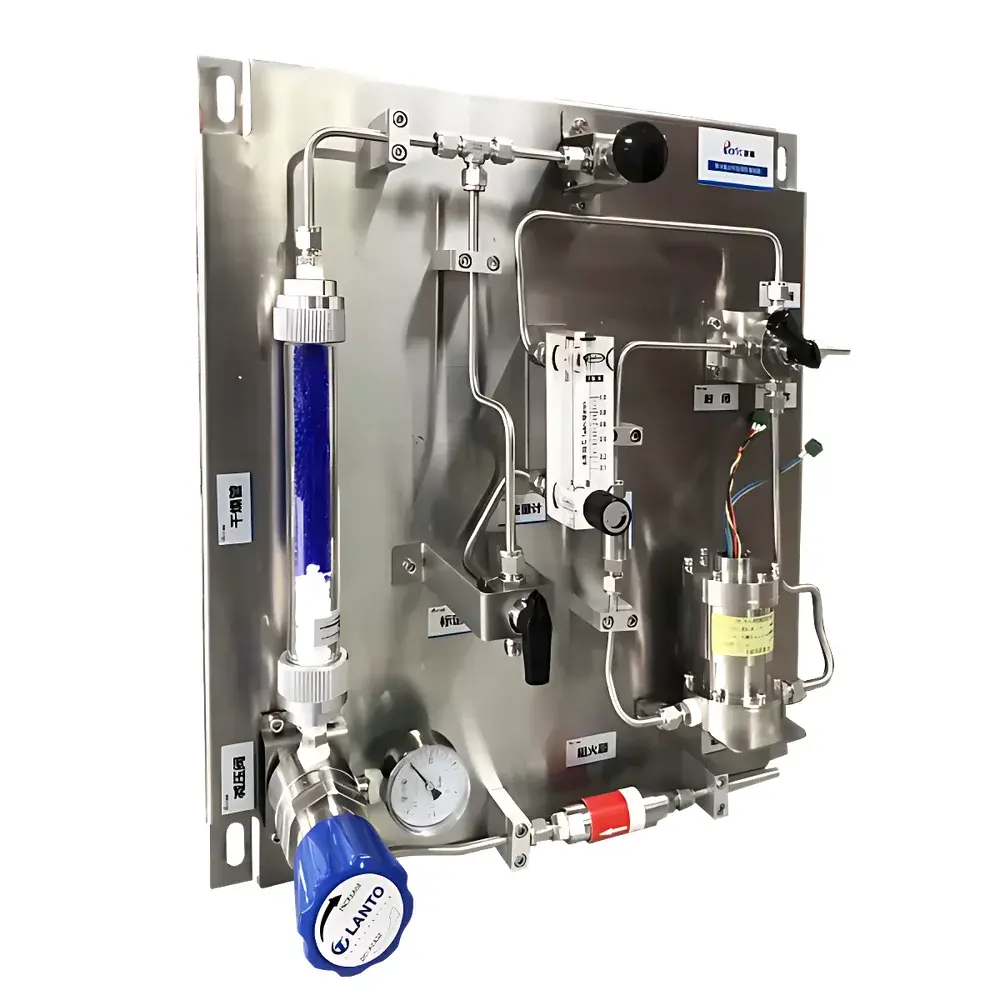
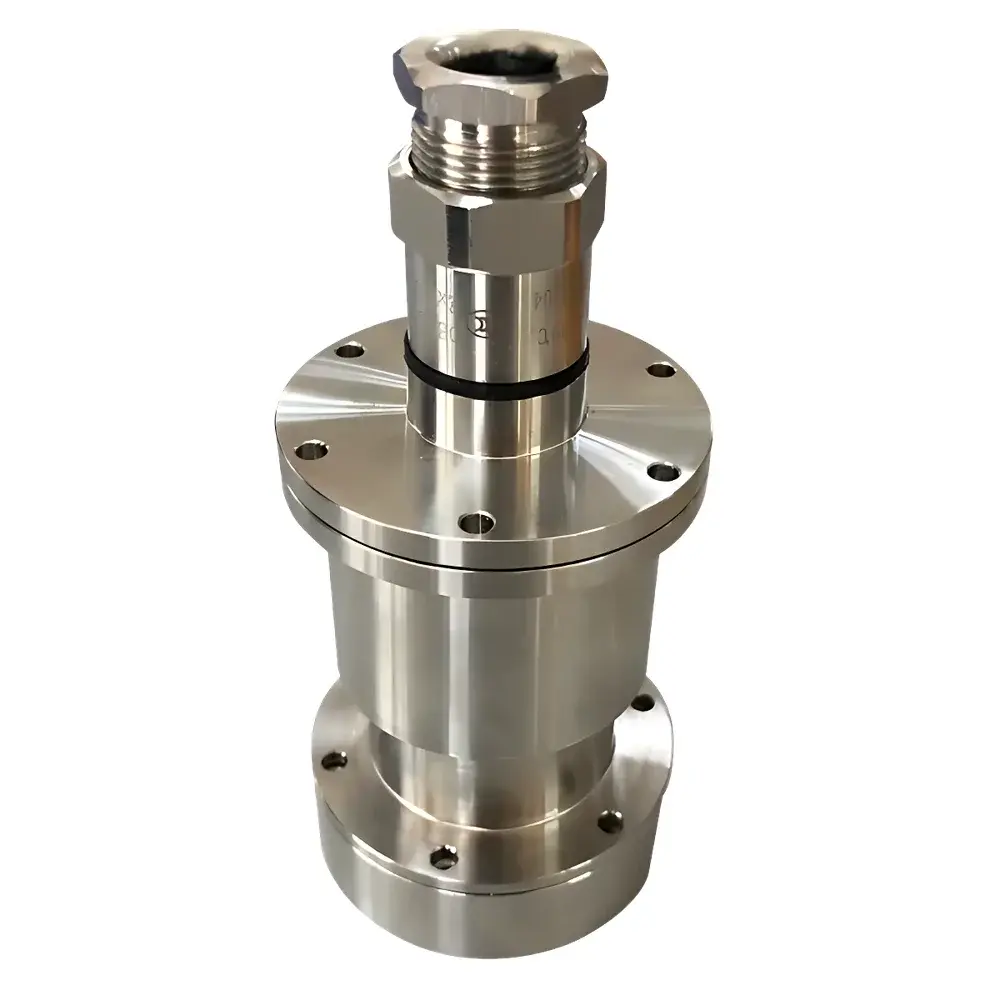
PERIC GNF-TR-O2 Intrinsically Safe Oxygen Analyzer
| Brand | PERIC |
|---|---|
| Origin | Hebei, China |
| Manufacturer Type | OEM Manufacturer |
| Country of Origin | China |
| Model | GNF-TR-O2 |
| Price | Upon Request |
| Measurement Principle | Fuel Cell Electrochemical Sensor |
| Measurement Range | 0–5.00% O₂ (customizable) |
| Resolution | 0.01% O₂ |
| Accuracy | ≤ ±1% FS |
| Repeatability | ≤ ±1% FS |
| Response Time (T90) | ≤ 30 s |
| Sample Pressure | ≤ 0.2 MPa |
| Sample Flow Rate | 500 ± 10 mL/min |
| Sample Temperature | 0–50 °C |
| Ambient Temperature | 0–50 °C |
| Storage Temperature | 0–50 °C |
| Relative Humidity | 20–80% RH (non-condensing) |
| Power Supply | 24 V DC ±10% |
| Power Consumption | < 1 W |
| Output Signal | 4–20 mA DC (load ≤ 250 Ω) or RS485 digital interface |
| Enclosure Material | Stainless Steel |
| Dimensions | 68 × 68 × 110 mm (L × W × H) |
| Process Connection | 1/4" NPT internal thread |
| Explosion Protection | Ex d II C T6 Gb |
| Temperature Compensation | Integrated |
| Compliance | ATEX Directive 2014/34/EU, IEC 60079-1, GB 3836.1 & GB 3836.2 |
Overview
The PERIC GNF-TR-O2 Intrinsically Safe Oxygen Analyzer is a certified hazardous-area instrument engineered for continuous, real-time measurement of trace oxygen concentrations in inert and reactive process gas streams. Designed specifically for demanding industrial environments—including hydrogen production via water electrolysis, nitrogen generation in air separation units (ASUs), and inert gas blanketing in petrochemical, pharmaceutical, and semiconductor manufacturing—the analyzer employs a high-stability fuel cell electrochemical sensing principle. Unlike paramagnetic or zirconia-based systems, this sensor operates at ambient temperature without external heating, delivering low-power, drift-free performance with minimal maintenance. The fuel cell consists of a catalytic cathode, lead anode, and aqueous alkaline electrolyte, generating a current linearly proportional to partial pressure of O₂ in the sample gas. Its sealed, diffusion-limited architecture ensures long-term baseline stability and immunity to flow fluctuations within specified operating ranges.
Key Features
- Fuel cell electrochemical sensor with proven longevity (>24 months typical service life under continuous operation)
- Explosion-proof enclosure certified to Ex d II C T6 Gb per IEC 60079-1 and GB 3836.1/2—suitable for Zone 1 and Zone 2 classified areas handling hydrogen, ethylene, acetylene, and other Group II C gases
- Integrated temperature compensation circuitry enabling accurate O₂ quantification across 0–50 °C sample and ambient conditions
- Dual-output capability: isolated 4–20 mA analog signal (HART-compatible wiring topology supported) and RS485 Modbus RTU interface for bidirectional configuration and diagnostics
- Low power consumption (<1 W) facilitates integration into explosion-proof junction boxes and intrinsically safe barrier systems
- Stainless steel (316L) housing with IP65-rated ingress protection; compact footprint (68 × 68 × 110 mm) enables panel-mount or direct pipeline installation
- Factory-calibrated with NIST-traceable reference gases; zero and span adjustments accessible via PC-based configuration software
Sample Compatibility & Compliance
The GNF-TR-O2 is optimized for non-corrosive, dry-to-moderately humid gas matrices including N₂, Ar, He, H₂, CO₂, and synthetic air. It is not recommended for use in strongly acidic, reducing, or solvent-saturated streams without prior conditioning (e.g., particulate filtration, coalescing, and dew point control). All wetted parts comply with ASTM A240 and EN 10088 standards. The analyzer meets electromagnetic compatibility requirements per EN 61326-1 (industrial environment) and is designed to operate without degradation in magnetic fields up to 400 A/m and RF fields up to 10 V/m (80 MHz–2 GHz). Documentation includes full Declaration of Conformity (DoC) for ATEX, CE, and RoHS directives, supporting compliance with ISO 9001-certified QA processes and FDA 21 CFR Part 11 audit trails when used with validated host SCADA systems.
Software & Data Management
Configuration, calibration, and diagnostic logging are managed via PERIC’s proprietary Windows-based PC utility, compatible with Windows 10/11 (64-bit). The software supports remote firmware updates, real-time data streaming (up to 10 Hz), alarm threshold setting (high/low O₂ limits), and automatic logging of calibration events with user ID and timestamp. All configuration changes generate immutable audit records compliant with GLP and GMP documentation practices. RS485 communication uses standard Modbus RTU protocol (slave ID configurable, baud rates 9600–115200 bps), enabling seamless integration into DCS platforms such as Siemens PCS7, Emerson DeltaV, and Honeywell Experion PKS.
Applications
- Hydrogen purity monitoring in PEM and alkaline electrolyzers (O₂ < 1 ppm detection limit achievable with optional pre-concentrator module)
- Inert gas quality assurance in ASU nitrogen delivery lines (ensuring O₂ < 10 ppm for electronics-grade N₂)
- Blanket gas verification in reactor headspaces during API synthesis and lyophilization
- Leak detection in vacuum furnaces and gloveboxes via residual O₂ rise rate analysis
- Process safety interlocks in flammable solvent recovery systems where O₂ concentration must remain below LEL thresholds
FAQ
What certification standards does the GNF-TR-O2 meet for hazardous area use?
It carries Ex d II C T6 Gb marking per IEC 60079-1 and GB 3836.1/2, permitting installation in Zone 1 locations with Group II C gases.
Can the measurement range be extended beyond 5.00% O₂?
Yes—custom configurations support ranges up to 25% O₂ using alternative electrode formulations; contact PERIC Engineering for application-specific validation reports.
Is field recalibration possible without returning the unit to the factory?
Yes—zero and span adjustments can be performed on-site using certified span gas (e.g., 1.00% O₂ in N₂) and the included PC software with password-protected admin access.
Does the analyzer require periodic electrolyte replacement?
No—the fuel cell is sealed and maintenance-free for the rated service life; end-of-life is indicated by >10% sensitivity loss or failure to meet T90 specification.
How is temperature compensation implemented?
An integrated Pt100 RTD measures sample gas temperature upstream of the sensor chamber, and compensation coefficients are applied in real time using a polynomial algorithm stored in flash memory.
Related Products