
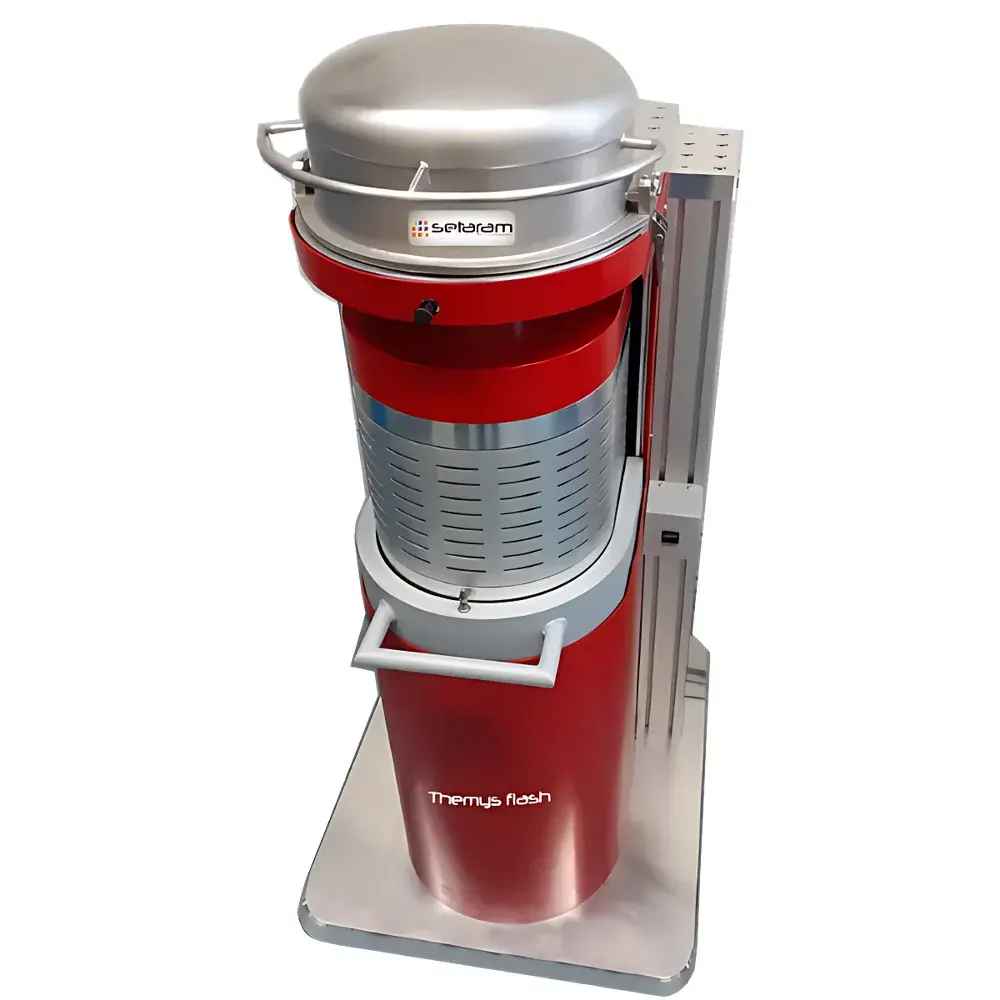
SETARAM Themys Flash Multi-Channel Thermogravimetric Analyzer
| Brand | SETARAM |
|---|---|
| Origin | France |
| Model | Themys Flash |
| Operating Environment | Ambient Pressure |
| Simultaneous Sample Capacity | Up to 5 |
| Instrument Type | Universal TGA |
| Temperature Range | Room Temperature to 1200 °C |
| Dynamic Weighing Range | ±20 mg, ±200 mg |
| Balance Sensitivity | 0.0023 µg |
| Heating/Cooling Rate | Up to 600 K/min |
| Maximum Sample Mass | 35 g |
Overview
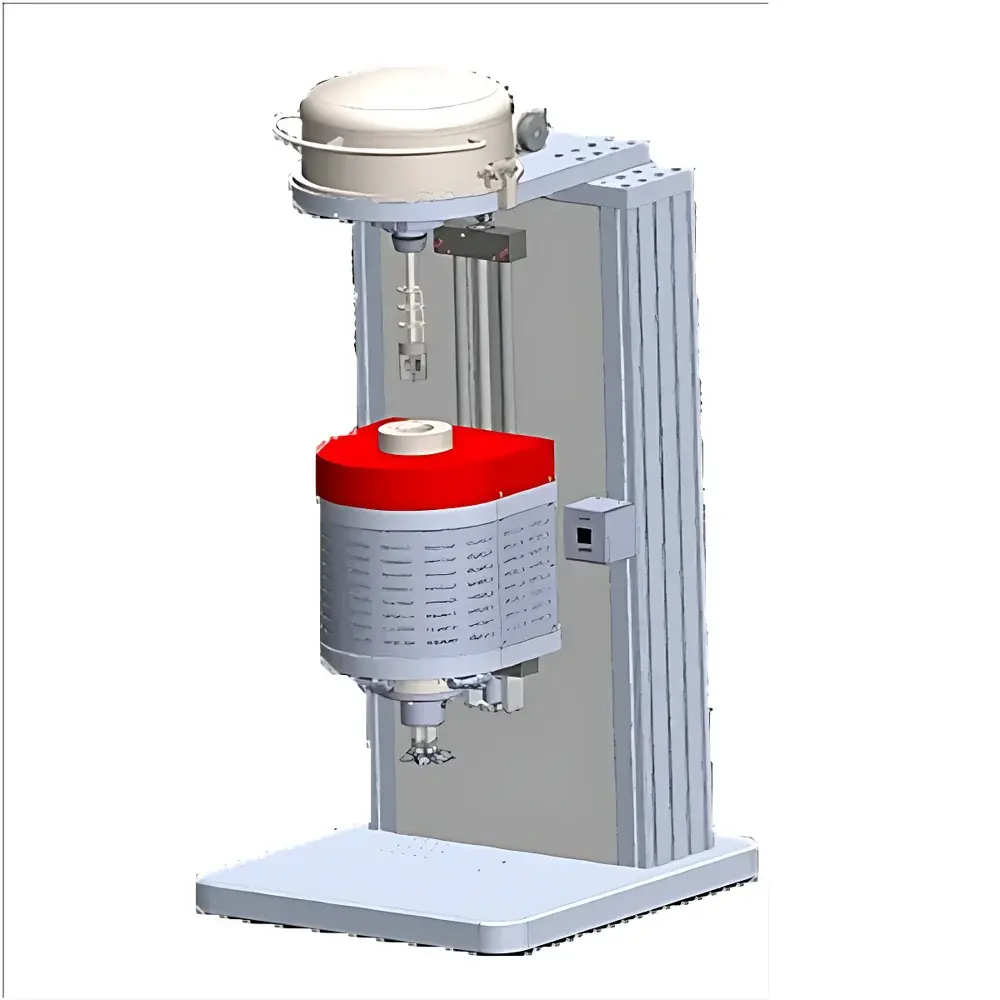
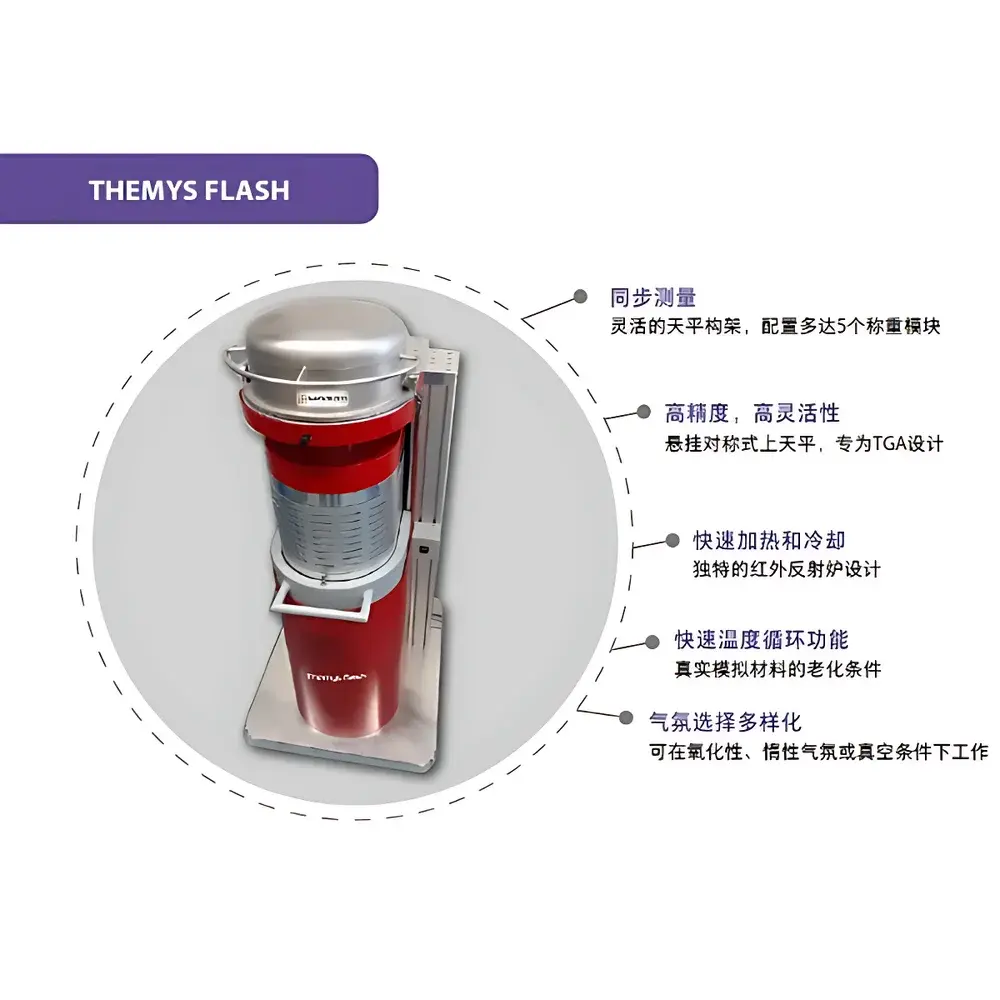
The SETARAM Themys Flash Multi-Channel Thermogravimetric Analyzer is an advanced thermal analysis platform engineered for high-throughput, high-fidelity thermogravimetric characterization under dynamically controlled thermal and atmospheric conditions. Based on the fundamental principle of mass change detection during programmed temperature ramps or isothermal holds, the Themys Flash employs a proprietary infrared reflective furnace architecture—distinct from conventional resistive or induction heating systems—to achieve rapid, uniform, and highly reproducible thermal transients. This design enables precise simulation of real-world thermal stress profiles encountered in aerospace component qualification, nuclear fuel matrix stability assessment, and rapid pyrolysis kinetics of biomass or polymer feedstocks. Unlike single-channel TGA systems, the Themys Flash integrates five independent weighing modules onto a single suspended upper-balance assembly, allowing concurrent, time-synchronized mass tracking across multiple samples without cross-talk or thermal crosstalk.
Key Features
- Five-channel simultaneous TGA measurement with synchronized temperature programming and real-time mass recording
- Suspended symmetrical upper-balance configuration optimized for microgram-level resolution (0.0023 µg) and minimized buoyancy artifacts
- Infrared reflective furnace enabling heating and cooling rates up to 600 K/min—critical for kinetic modeling of fast decomposition pathways
- Extended operational temperature range from ambient to 1200 °C, validated for ceramic sintering, metal oxidation, and refractory material stability studies
- Modular atmosphere control supporting oxidative (e.g., synthetic air, O₂), inert (N₂, Ar), reducing (H₂/Ar), and high-vacuum (<10⁻² mbar) environments
- Robust mechanical architecture with active vibration damping and electromagnetic shielding for stable long-duration isotherms
Sample Compatibility & Compliance
The Themys Flash accommodates diverse solid-state materials—including metallic alloys, oxide ceramics, battery electrode composites, catalysts, polymers, and organic precursors—within standard crucibles (alumina, platinum, graphite) or custom holders. Its multi-sample capability supports comparative studies under identical thermal histories, essential for ASTM E1131 (standard test method for compositional analysis by TGA) and ISO 11358-1 (polymer thermal degradation evaluation). The system complies with GLP and GMP data integrity requirements through hardware-enforced audit trails, user-access controls, and electronic signature support aligned with FDA 21 CFR Part 11. All firmware and calibration records are traceable to NIST-traceable reference standards.
Software & Data Management
Control and analysis are performed via SETARAM’s Calisto software suite, a Windows-based platform featuring real-time multi-channel visualization, automated baseline correction, derivative thermogravimetry (DTG), and model-free kinetic analysis (e.g., Ozawa-Flynn-Wall, Kissinger-Akahira-Sunose). Raw data are stored in vendor-neutral .tdf format compliant with ASTM E1641 metadata conventions. Export options include CSV, Excel, and ASCII for integration into LIMS or third-party modeling tools (e.g., Thermo-Calc, MATLAB). Secure database archiving supports version-controlled method templates, instrument calibration logs, and user activity history for regulatory audits.
Applications
- Aerospace: Oxidation kinetics of Ni-based superalloys under cyclic thermal loading mimicking turbine blade service conditions
- Energy: Thermal stability and ash formation behavior of lignocellulosic biomass during fast pyrolysis at >300 K/s
- Electronics: Decomposition onset and residue yield of dielectric polymer films used in flexible PCB substrates
- Nuclear: Volatilization behavior of fission product oxides (e.g., Cs₂MoO₄, SrZrO₃) under simulated accident scenarios
- Materials Development: High-throughput screening of catalytic support degradation in fluidized-bed reactors
FAQ
How does the infrared furnace improve thermal response compared to conventional resistive furnaces?
The infrared reflective design delivers direct radiant energy transfer with minimal thermal inertia, eliminating lag between setpoint and sample temperature—enabling true ramp fidelity above 100 K/min.
Can the five channels operate at different temperatures simultaneously?
No—the Themys Flash maintains identical thermal profiles across all channels; temperature uniformity is guaranteed by the monolithic furnace geometry and distributed IR emitter array.
Is vacuum operation compatible with rapid heating rates?
Yes; the furnace and gas handling manifold are rated for continuous operation down to 10⁻² mbar at full 600 K/min ramp rates, with pressure-compensated mass correction algorithms embedded in Calisto.
What calibration protocols are supported for quantitative mass accuracy?
NIST-traceable single-point and multi-point calibrations using certified weights (10 µg–100 mg), plus thermal drift compensation routines executed automatically before each run.
Does the system support coupling to evolved gas analysis (EGA)?
Yes—integrated heated transfer lines (up to 300 °C) and standardized flange interfaces enable seamless connection to FTIR, MS, or GC-MS systems for real-time evolved gas identification.



