NARISHIGE H-12 and H-13 Electrode Holders
| Brand | NARISHIGE |
|---|---|
| Origin | Japan |
| Model | H-12 / H-13 |
| Length (H-12) | 80 mm |
| Weight (H-12) | 8 g |
| Length (H-13) | 136 mm |
| Weight (H-13) | 16 g |
| Electrode OD Compatibility | 0.5–2.0 mm |
| X-axis Micrometer Resolution (H-13) | ±10 µm |
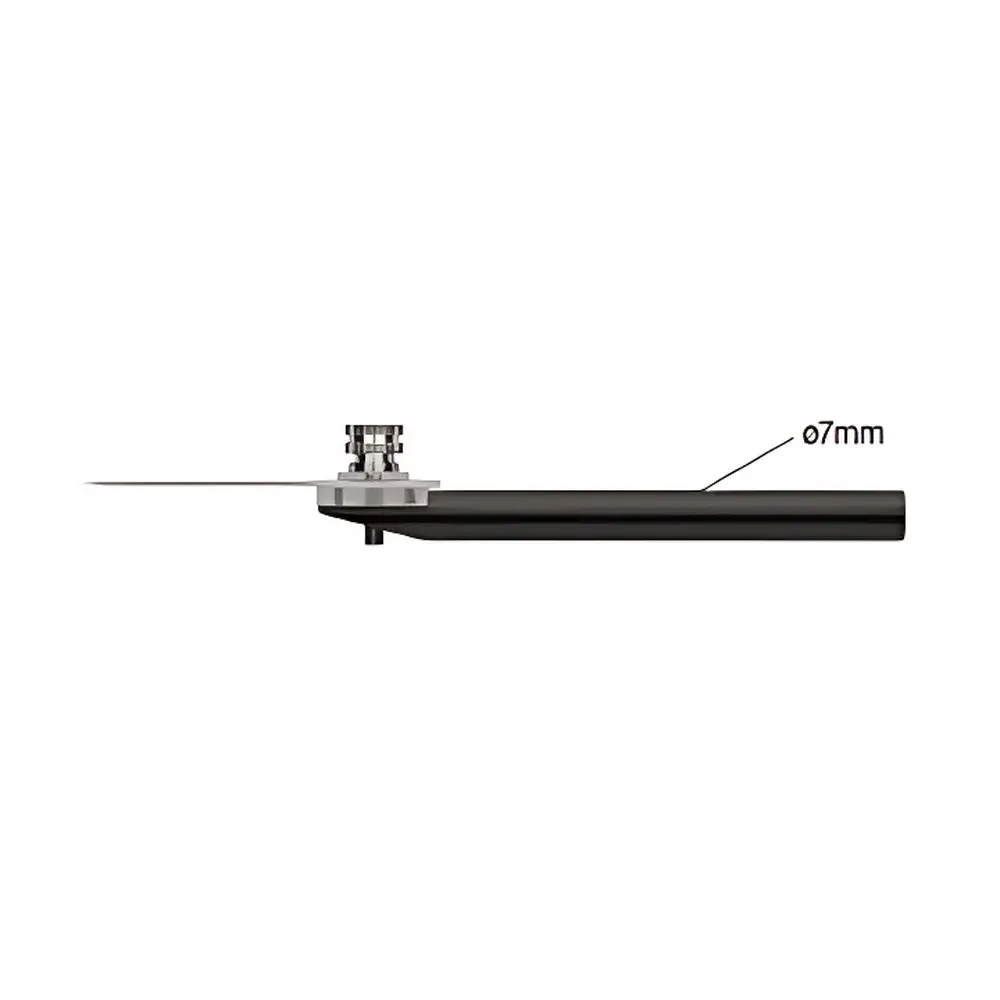
| Heater Rod Dimensions | H-12: Ø7 mm × L65 mm |
| H-13 | Ø7 mm × L120 mm |
Overview
The NARISHIGE H-12 and H-13 Electrode Holders are precision-engineered mechanical fixtures designed for stable, low-noise clamping and precise positional control of glass micropipettes and metal microelectrodes in electrophysiological and microinjection applications. Developed by NARISHIGE Co., Ltd. (Tokyo, Japan), these holders integrate rigorous mechanical tolerancing with application-specific ergonomics to support high-fidelity signal acquisition and reproducible micromanipulation. The H-12 prioritizes lightweight modularity and rapid electrode exchange, while the H-13 extends functionality with integrated one-dimensional micrometric positioning and rotational adjustability—enabling controlled approach trajectories in three-dimensional space. Both models operate on the principle of mechanical interference-based clamping, utilizing spring-loaded or screw-actuated collet mechanisms to secure electrodes without slippage under dynamic load, ensuring mechanical stability critical for patch-clamp seal formation and intracellular recording fidelity.
Key Features
- Low-noise electrical interface: Gold-plated or stainless-steel contact surfaces minimize contact resistance and thermal EMF generation, preserving signal integrity for DC-coupled recordings up to 100 kHz bandwidth.
- H-13 integrated X-axis micrometer: Precision-ground lead screw with ±10 µm resolution enables fine axial advancement independent of manipulator motion, reducing mechanical drift during seal formation.
- Rotational extension compatibility: H-13 supports optional X-4 rotary block attachment (sold separately), permitting continuous 360° electrode orientation adjustment—essential for angled penetrations in brain slice or in vivo preparations.
- Modular mounting architecture: Standardized 3/8″-24 UNF threaded base and universal joint interface ensure seamless integration with NARISHIGE MMO-4, MO-202U, MO-10, and MDO-84 micromanipulators, as well as third-party hydraulic and motorized systems.
- Ergonomic handling: H-12’s 8 g mass reduces operator fatigue during prolonged manual manipulation; H-13 features aligned control knobs and calibrated damping to prevent overshoot during sensitive injection protocols.
- Thermal compatibility: Integrated heater rod sleeves (Ø7 mm) accommodate standard resistive heating elements for electrode tip warming—critical for reducing solution viscosity and improving seal stability in whole-cell configurations.
Sample Compatibility & Compliance
The H-12 and H-13 accept borosilicate, quartz, or aluminosilicate capillary tubing (0.5–2.0 mm outer diameter) and solid metal electrodes (e.g., tungsten, platinum-iridium). Their clamping geometry maintains concentricity within ±2 µm over full insertion depth, minimizing lateral deflection during pipette approach. Both holders conform to ISO 9001 manufacturing controls and are routinely deployed in GLP-compliant electrophysiology laboratories. While not standalone medical devices, their use in preclinical neurophysiology studies aligns with ICH-GCP and FDA guidance for nonclinical laboratory study standards (21 CFR Part 58). No regulatory certification (e.g., CE, UKCA) is claimed, as these are research-use-only components intended for integration into validated instrument platforms.
Software & Data Management
As passive mechanical interfaces, the H-12 and H-13 do not incorporate embedded electronics or firmware. However, they are fully compatible with digital data acquisition ecosystems including Axon pCLAMP, HEKA PatchMaster, and Spike2. When paired with motorized manipulators (e.g., MDO-84), position metadata—including micrometer dial readings and encoder-derived coordinates—is logged synchronously with electrophysiological traces via TTL or analog voltage outputs. Audit trails for positional calibration and maintenance records may be maintained per 21 CFR Part 11 requirements when used within validated laboratory information management systems (LIMS).
Applications
- Patch-clamp electrophysiology: H-13’s micrometric control enables sub-micron approach increments during gigaseal formation; its multi-electrode capacity supports dual-patch or loose-patch configurations in acute brain slices.
- Intracellular recording: H-12’s rapid-release collet allows sequential replacement of sharp electrodes without realigning the manipulator—improving throughput in developmental neurobiology assays.
- Microinjection: Combined use of H-12 (for injection needle) and H-13 (for recording electrode) enables simultaneous delivery and monitoring in zygote or oocyte experiments, supporting CRISPR-Cas9 editing validation.
- In vivo stereotaxic procedures: H-13’s rotational adaptability facilitates trajectory correction for deep-brain targeting in rodent models of Parkinson’s disease, consistent with stereotactic atlas coordinate mapping.
- Microfabrication QA: In semiconductor R&D, H-13’s positional repeatability supports probe-based defect localization and nanoscale solder rework on MEMS devices.
FAQ
Are the H-12 and H-13 compatible with non-NARISHIGE micromanipulators?
Yes—both holders feature industry-standard 3/8″-24 UNF threading and a universal joint interface, enabling mechanical coupling with manipulators from Sutter Instrument, Scientifica, and Luigs & Neumann via appropriate adapter plates.
Can the H-13 micrometer be locked during recording?
Yes—the micrometer collar includes a locking screw that immobilizes the lead screw without backlash, preserving axial position during long-duration current-clamp experiments.
Is thermal noise performance characterized for these holders?
NARISHIGE specifies contact resistance < 5 mΩ and thermal EMF < 0.5 µV/°C across the electrode–holder interface under typical lab conditions (22–25°C); full characterization reports are available upon request for GLP audit support.
What maintenance is required to sustain positional accuracy?
Annual inspection of collet wear and micrometer thread lubrication (using Dow Corning 111 silicone grease) is recommended; no recalibration is necessary under normal usage per NARISHIGE Technical Bulletin TB-H-13-Rev.4.