
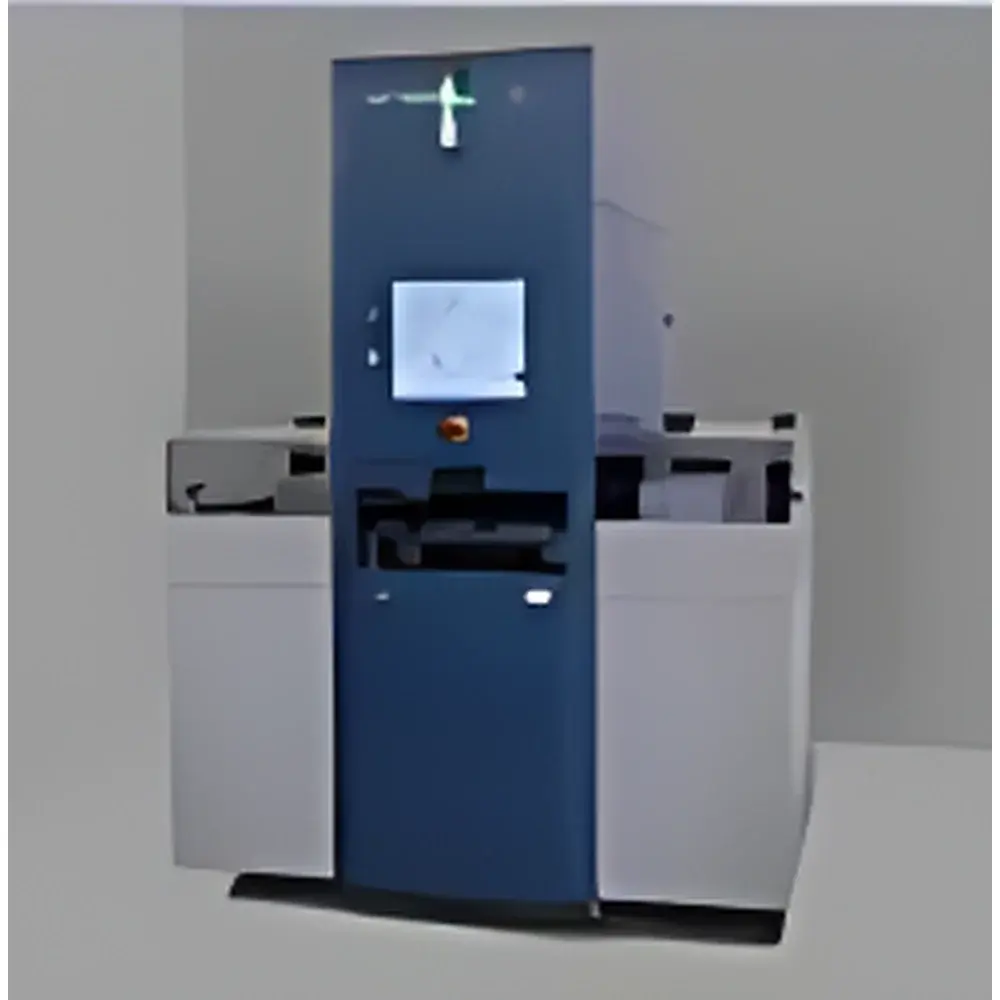
PVA TePla GIGA 80 Plus Microwave & RF Plasma Cleaning System
| Brand | PVA TePla |
|---|---|
| Origin | Germany |
| Model | GIGA 80 Plus |
| Technology | Dual-mode (Microwave + RF) Plasma |
| Chamber Type | Single-chamber, frame-based batch processing |
| Max. Frame Size | 100 × 300 mm |
| Application Focus | Semiconductor packaging pre-bonding, molding, and underfill processes |
| Compliance | Designed for ISO Class 5–7 cleanroom integration |
| Control Architecture | Fully automated PLC-based operation with recipe management |
Overview
The PVA TePla GIGA 80 Plus is a high-precision, dual-mode plasma cleaning system engineered for advanced surface preparation in semiconductor packaging manufacturing. Utilizing both microwave (MW) and radio frequency (RF) excitation within a single vacuum chamber, it delivers controllable, low-damage plasma activation and organic contaminant removal from delicate microelectronic substrates—including leadframes, wafers, molded packages, and flip-chip assemblies. Unlike conventional parallel-plate or downstream plasma tools, the GIGA 80 Plus employs a proprietary resonant microwave cavity design that enables uniform energy coupling across large-area frames (up to 100 × 300 mm), ensuring consistent treatment of heterogeneous material stacks without thermal distortion or ion bombardment damage. Its core function is to remove trace hydrocarbons, oxides, and process residues—particularly at bond pads, mold compound interfaces, and underfill contact zones—thereby enhancing interfacial adhesion, wire bond shear strength, and encapsulation reliability. The system operates under medium vacuum (10⁻² to 10⁻¹ mbar) with precisely regulated gas flow (O₂, Ar, N₂, or custom mixtures), enabling tunable surface chemistry modulation—from mild decontamination to deep functionalization.
Key Features
- Dual excitation architecture: Independent MW (2.45 GHz) and RF (13.56 MHz) sources allow process optimization per material stack and defect sensitivity profile
- Single-chamber, frame-handling platform supporting 100 × 300 mm carriers—eliminating multi-chamber alignment complexity and reducing footprint by >40% vs. legacy cluster tools
- Patented cavity resonance tuning ensures stable plasma ignition and spatial uniformity across full-frame load, validated via Langmuir probe mapping and surface energy verification (contact angle <5° on Cu)
- Automated recipe-driven operation with audit-trail logging compliant with ISO 9001 and semiconductor industry traceability requirements
- Integrated vacuum interlock system with real-time pressure monitoring and gas leak detection (sensitivity <1 × 10⁻⁷ mbar·L/s)
- Modular RF matching network with adaptive impedance control maintains power transfer efficiency across varying load conditions (e.g., empty frame → fully populated)
Sample Compatibility & Compliance
The GIGA 80 Plus accommodates standard JEDEC trays, custom carrier frames, and bare die arrays across silicon, copper, Au/Ni/Pd metallization, epoxy mold compounds (EMC), polyimide, glass, and ceramic substrates. It supports both conductive and insulating surfaces without arcing or charging artifacts, thanks to its balanced MW/RF field distribution and grounded electrode configuration. The system meets mechanical and electrical safety standards per IEC 61000-6-2 (immunity) and IEC 61000-6-4 (emissions), and its vacuum and gas handling subsystems comply with SEMI S2-0215 and S8-0715 guidelines. For GMP-aligned environments, optional 21 CFR Part 11-compliant software modules provide electronic signatures, role-based access control, and immutable process log archiving.
Software & Data Management
Control is managed via a Windows-based HMI with deterministic real-time PLC logic (Siemens S7-1500). Process parameters—including MW/RF power setpoints, gas composition, exposure time, ramp profiles, and chamber temperature—are stored as version-controlled recipes. All operational events (pump-down cycles, plasma ignition attempts, fault codes, gas consumption) are timestamped and exported in CSV or XML format. Optional OPC UA connectivity enables integration into MES platforms (e.g., Siemens Opcenter, Applied Materials EnVision) for SPC-driven yield analysis. Audit trails include operator ID, parameter changes, and calibration timestamps—fully traceable for internal quality audits and external regulatory review.
Applications
- Pre-wire bonding: Removal of organic residues and native oxides from Al/Cu bond pads to increase ball shear strength by ≥25% (per JEDEC JESD22-B117A validation)
- Pre-molding: Activation of EMC–die attach interface to suppress delamination during reflow and thermal cycling (tested per IPC-9701)
- Flip-chip underfill: Hydrophilic surface modification of solder bumps and substrate pads to improve capillary flow and void reduction (<0.5% void area per IPC-J-STD-020)
- MEMS packaging: Low-energy plasma treatment of hermetic lid seals and cavity sidewalls without MEMS structure drift
- R&D prototyping: Rapid screening of plasma chemistries (e.g., O₂/NF₃ blends) for novel substrate combinations including GaN-on-Si and SiC power modules
FAQ
What plasma modes does the GIGA 80 Plus support, and how are they selected?
The system integrates independent microwave and RF generators; mode selection is recipe-defined based on substrate sensitivity, required etch rate, and surface functional group target—e.g., MW for rapid decontamination, RF for gentle hydrophilization.
Can it process non-standard frame sizes or custom carriers?
Yes—the chamber tooling is mechanically adjustable, and frame recognition is supported via integrated optical sensors and programmable carrier definition files.
Is remote diagnostics and service support available?
PVA TePla provides secure remote access via encrypted VPN channels for firmware updates, parameter diagnostics, and collaborative troubleshooting with certified field application engineers.
Does the system require special facility utilities beyond standard cleanroom infrastructure?
It operates on standard 208–240 VAC, 50/60 Hz power; compressed dry air (≥7 bar, ISO 8573-1 Class 2:2:2); and process gases delivered through stainless-steel VCR lines—no chilled water or special exhaust ducting required.
How is process reproducibility ensured across shifts and operators?
All recipes are digitally signed and locked unless modified by authorized engineering personnel; machine-level calibration certificates (vacuum gauge, mass flow controllers) are traceable to DAkkS-accredited labs and renewed annually.



