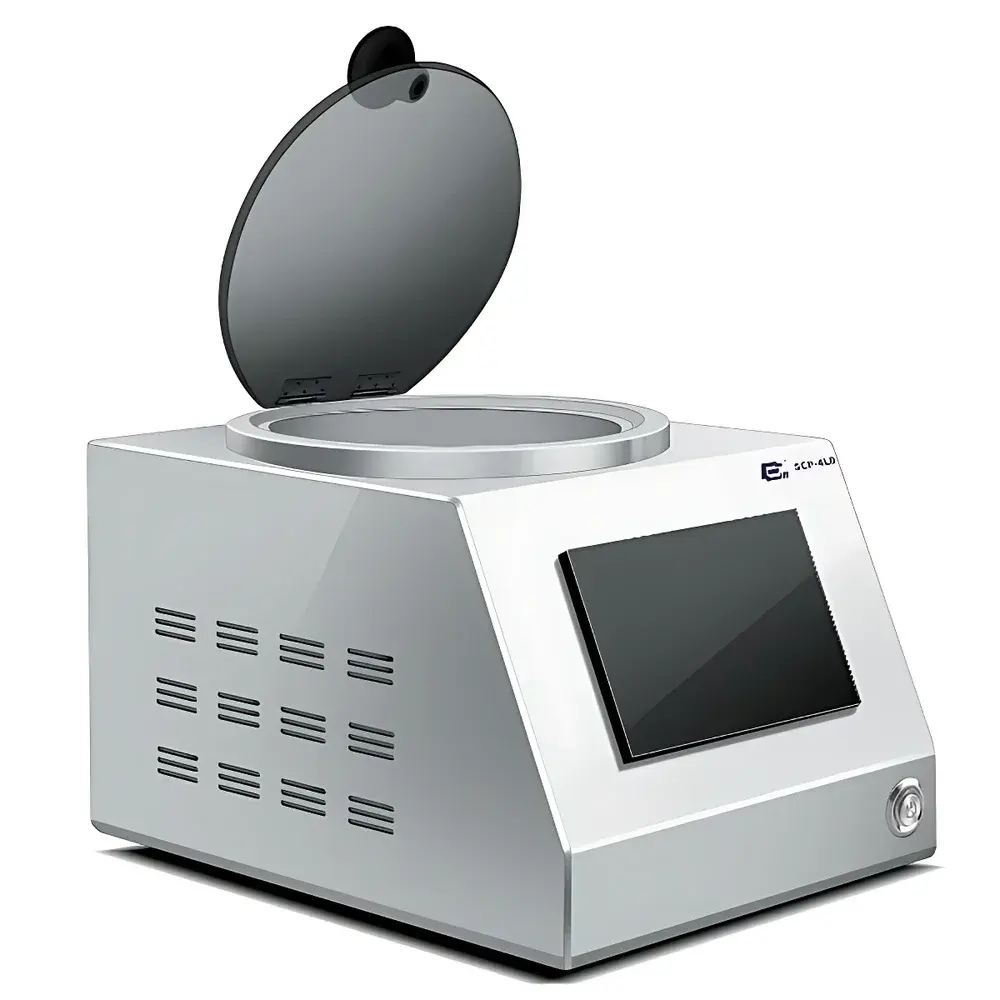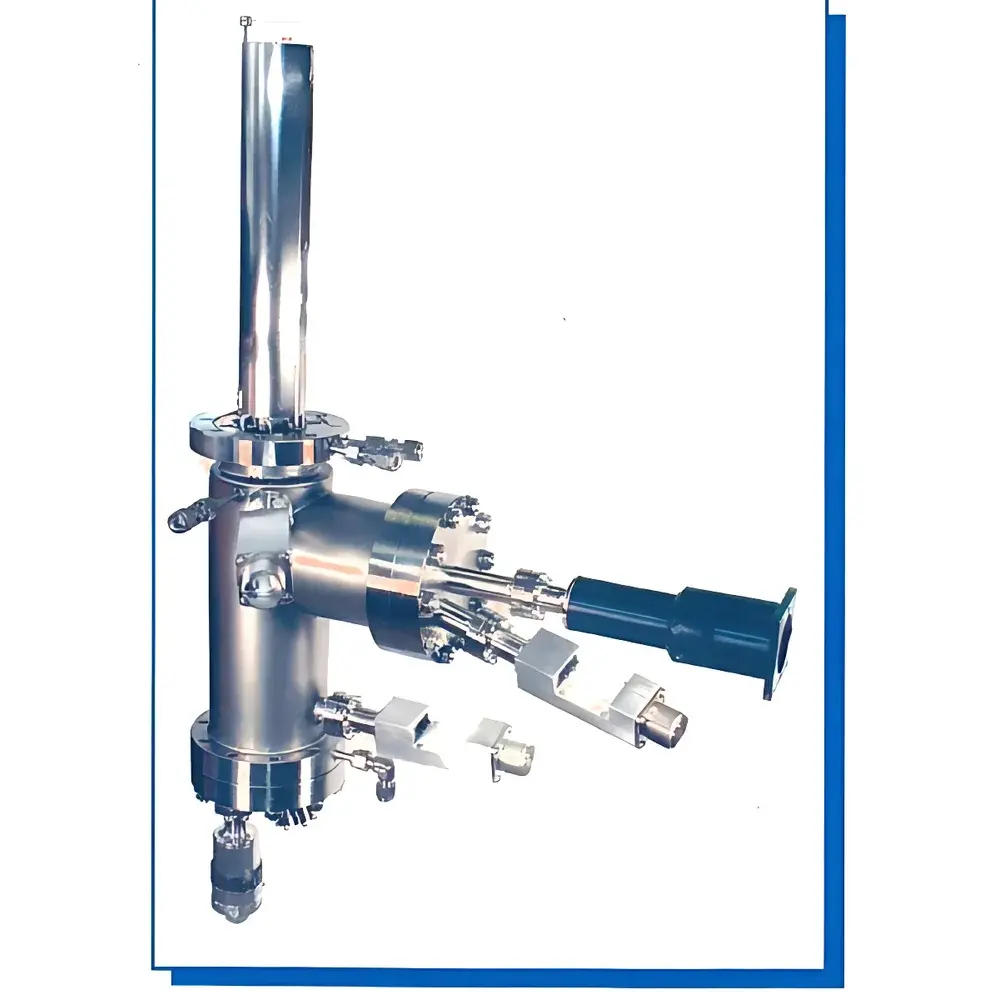
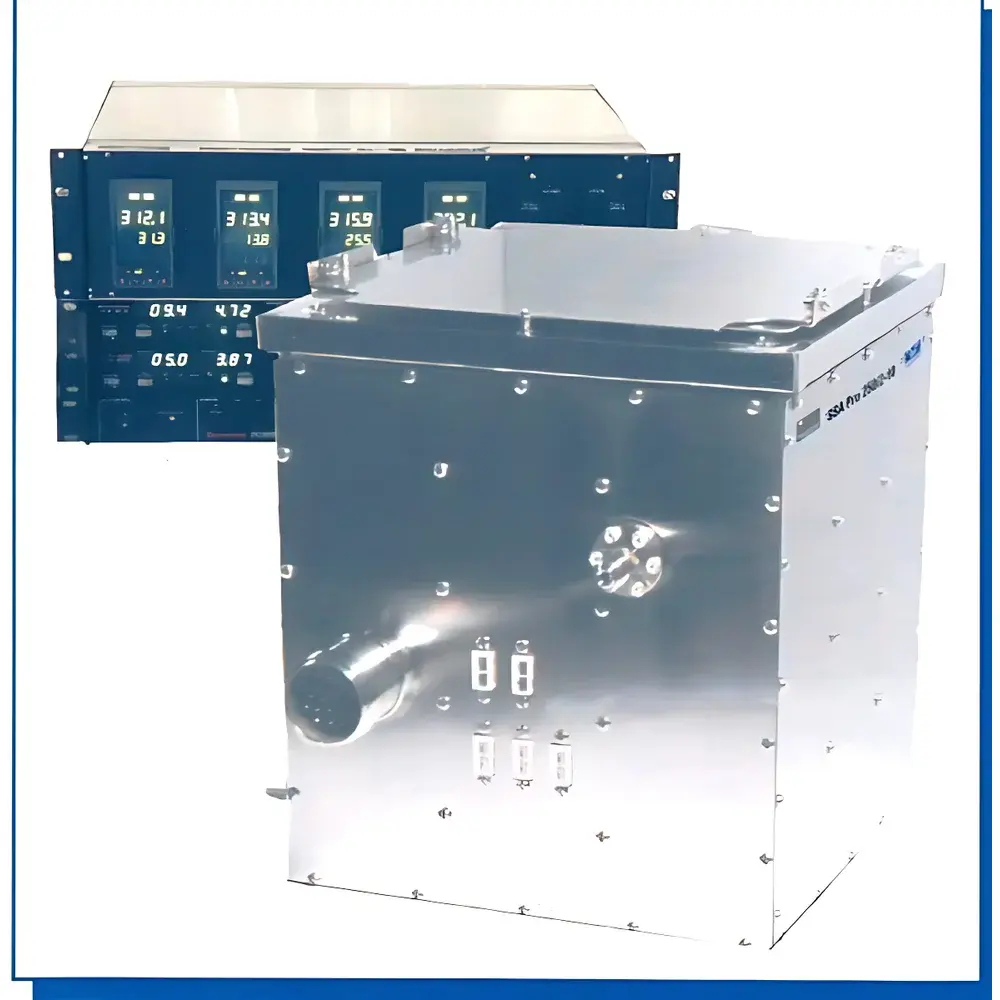
SVT Associates SSA Pro 100/150-25 and SSA Pro 250/200-10 Thermal Evaporation Sources
| Brand | SVT Associates |
|---|---|
| Origin | USA |
| Model | SSA Pro 100/150-25, SSA Pro 250/200-10 |
| Crucible Capacity | 10–100 cc |
| Beam Uniformity | ±1.5% over 100 mm² at 150 mm source-to-substrate distance (SSA Pro 100/150-25) |
| Beam Current Stability | ±1.0% |
| Beam Response Time | ≤250 ms |
| Shutter Actuation Time | <0.5 s |
| Maximum Deposition Rate | >10 Å/s (Alq₃ at 340 °C |
| Substrate Temperature | <40 °C during operation |
Overview
The SVT Associates SSA Pro 100/150-25 and SSA Pro 250/200-10 are high-precision, valve-controlled thermal evaporation sources engineered for large-area organic light-emitting diode (OLED) manufacturing. These systems operate on resistive heating principles, where precisely controlled current through refractory metal filaments or boats vaporizes organic small-molecule materials—such as NPB (N,N′-Di(1-naphthyl)-N,N′-diphenyl-(1,1′-biphenyl)-4,4′-diamine) and Alq₃ (tris(8-hydroxyquinolinato)aluminum)—under high vacuum (typically ≤5×10⁻⁶ Torr). Unlike electron-beam evaporation, thermal sources provide inherently lower kinetic energy deposition, minimizing substrate heating and enabling compatibility with temperature-sensitive organic layers and flexible substrates. The SSA Pro series integrates a pneumatically actuated precision shutter, proportional beam current regulation, and real-time feedback control to ensure reproducible film thickness and compositional uniformity across full-panel substrates up to Gen 6 (1500 × 1850 mm) scale.
Key Features
- Two configuration options optimized for distinct process windows: SSA Pro 100/150-25 targets high-uniformity deposition over 100 mm² at 150 mm source-to-substrate distance (±1.5% variation), while SSA Pro 250/200-10 supports larger-area coverage of 250 mm² at 200 mm distance (±3.0% variation).
- Crucible capacity range of 10–100 cc accommodates both low-volume R&D runs and extended production campaigns without manual reloading.
- Beam current stability maintained within ±1.0% via closed-loop thermocouple feedback and digital PID regulation—critical for maintaining stoichiometric fidelity in multi-layer OLED stacks.
- Sub-millisecond beam response (≤250 ms rise/fall time) enables precise layer-by-layer deposition control, supporting graded heterojunctions and ultra-thin interlayers (<5 Å).
- Shutter actuation time <0.5 s ensures sharp interface definition between sequentially evaporated materials, reducing interdiffusion and preserving device efficiency.
- Passive substrate cooling design maintains substrate surface temperature below 40 °C during continuous operation—essential for preventing thermal degradation of underlying organic charge transport layers.
Sample Compatibility & Compliance
The SSA Pro sources are compatible with a broad spectrum of thermally stable small-molecule organics used in OLED fabrication—including hole transport materials (e.g., TPD, m-MTDATA), emissive dopants (e.g., Ir(ppy)₃), electron transport layers (e.g., TPBi, BCP), and cathode interlayers (e.g., LiF). All wetted components—including crucibles, shields, and feedthroughs—are constructed from high-purity molybdenum, tantalum, or graphite to minimize metallic contamination and outgassing. The system meets U.S. FDA-relevant material biocompatibility guidelines for cleanroom-compatible hardware and complies with SEMI S2-0215 safety standards for vacuum processing equipment. Integration with ISO Class 5–7 cleanroom environments is supported via CF-flanged vacuum interfaces and optional bake-out ports.
Software & Data Management
Each SSA Pro unit communicates via RS-485 or Ethernet/IP to host process control systems (e.g., SECS/GEM, PVCS). Real-time beam current, heater voltage/current, shutter status, and thermocouple readings are logged with millisecond timestamp resolution. Data export adheres to ASTM E2652-20 standard formats for thin-film deposition records. Audit trails comply with FDA 21 CFR Part 11 requirements when deployed with validated SCADA platforms, supporting GLP and GMP traceability for pilot-line qualification and technology transfer.
Applications
- Full-panel RGB pixel patterning in AMOLED backplanes using shadow mask alignment.
- Deposition of uniform HTL/EML/ETL stacks for white OLED lighting panels (≥30 cm × 30 cm).
- R&D-scale co-evaporation of host:dopant blends with independent rate control per source.
- Low-temperature deposition onto PET or PEN flexible substrates without dimensional warping.
- Process development for tandem OLED architectures requiring sub-Å thickness repeatability across >100 deposition cycles.
FAQ
What vacuum level is required for optimal operation of the SSA Pro sources?
A base pressure ≤5×10⁻⁶ Torr is recommended prior to heating; operating pressure during deposition should remain below 1×10⁻⁵ Torr to prevent oxidation and scattering effects.
Can the SSA Pro sources be integrated into multi-chamber cluster tools?
Yes—standard 6-inch or 8-inch CF flanges and modular electrical interfaces support seamless integration with load-lock, PVD, and in-situ metrology modules.
Is remote calibration supported?
Beam current calibration is performed using quartz crystal microbalances (QCMs) mounted on the substrate stage; SVT provides NIST-traceable calibration protocols but does not support automated remote recalibration due to vacuum dependency.
What maintenance intervals are recommended for long-term reliability?
Crucible inspection and shield cleaning are advised every 500 operational hours; filament replacement frequency depends on material reactivity and typically ranges from 1,000–3,000 hours for NPB/Alq₃ processes.
Are custom crucible geometries available?
Yes—SVT offers application-specific crucible designs (e.g., dual-compartment, linear slot, or radial array configurations) under NDA for qualified OEM partners.