
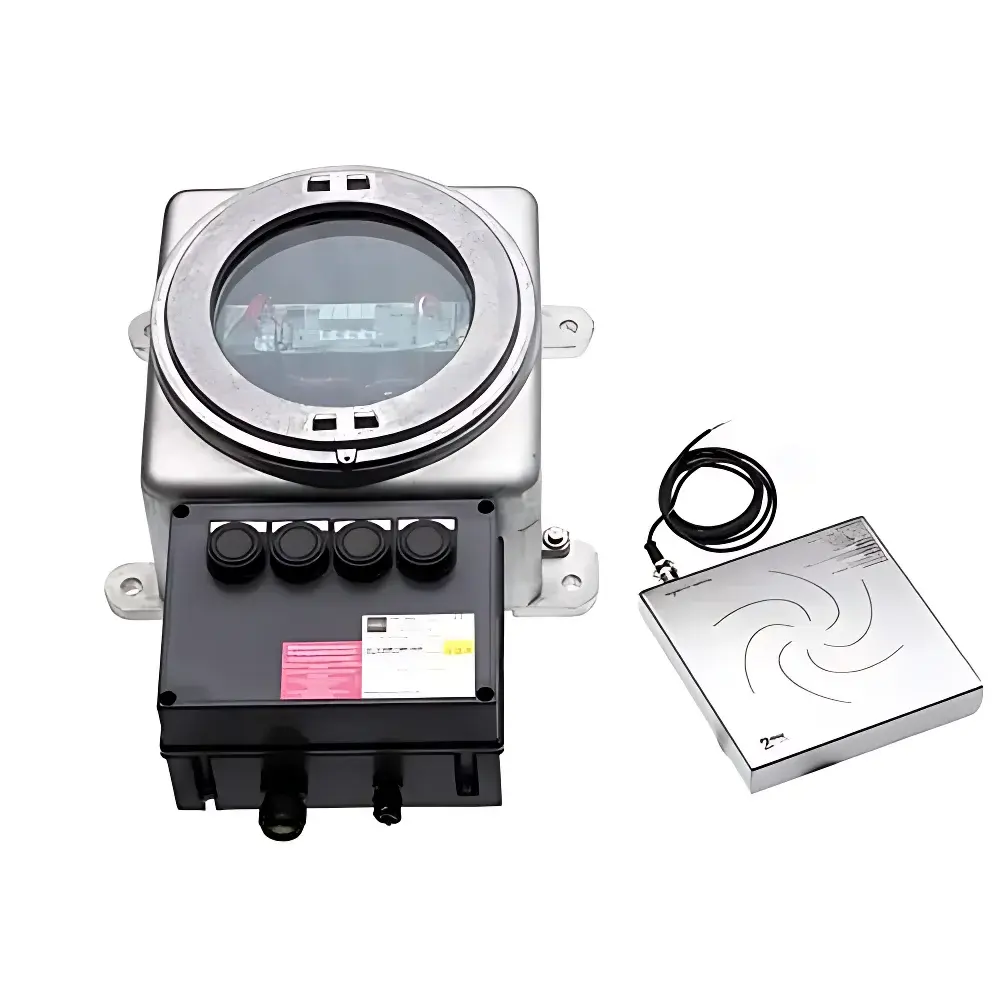
WIGGENS atexMIXcontrol ATEX-Certified Electromagnetic Induction Magnetic Stirrer
| Brand | WIGGENS |
|---|---|
| Origin | Germany |
| Model | atexMIXcontrol / atexMIXcontrol cleanroom |
| Stirrer Type | Electromagnetic Induction Magnetic Stirrer |
| Max. Stirring Volume | 4 L |
| Speed Range | 100–2000 rpm |
| Temperature Control Range | 0–40 °C |
| Power Output Steps | 25/50/75/100% (4-step) |
| Input Power | 100–240 V, 50–60 Hz, 1.5 A |
| Enclosure Material | Anodized Aluminum / Plastic (atexMIXcontrol), Aluminum (atexMIXcontrol cleanroom) |
| Dimensions (W×D×H) | 360 × 460 × 200 mm / 210 × 55 × 30 mm |
| Weight | ~15 kg / 3.6 kg |
| IP Rating | IP65 |
| ATEX Certification | II 2G EEx de IIC T6 (99200) / II 3G Ex nAC IIC T6 (99300) |
| Cert. No. | KEMA 03 ATEX 2045 / EPS 10 ATEX 1246 X |
| Operating Environment | 0–40 °C, ≤80% RH |
Overview
The WIGGENS atexMIXcontrol is an ATEX-certified electromagnetic induction magnetic stirrer engineered for safe, precise, and uninterrupted operation in hazardous and ultra-clean laboratory environments. Unlike conventional permanent-magnet or motor-driven stirrers, this system employs contactless electromagnetic induction to rotate the stir bar—eliminating mechanical wear, sparking risks, and heat generation at the drive interface. Its core principle relies on a high-efficiency, frequency-controlled induction coil array beneath the work surface, generating a rotating magnetic field that couples with ferromagnetic stir elements without physical transmission components. This architecture ensures intrinsic safety in Zone 1 (II 2G) and Zone 2 (II 3G) classified areas per EN 60079-0 and EN 60079-15, making it suitable for handling flammable solvents, volatile organic compounds (VOCs), hydrogen-rich atmospheres, or oxygen-enriched systems. Designed for continuous duty cycles under GLP-compliant workflows, the unit maintains stable rotational torque across its full 100–2000 rpm range—even at low speeds where conventional stirrers exhibit slip or stalling—enabling reproducible mixing of low- to high-viscosity media up to 4 L.
Key Features
- ATEX-certified dual variants: atexMIXcontrol (99200) for explosive gas atmospheres (II 2G EEx de IIC T6); atexMIXcontrol cleanroom (99300) for ISO Class 5–8 cleanrooms (II 3G Ex nAC IIC T6)
- Contactless electromagnetic induction drive—zero electrical arcing, no brush wear, no gearbox lubrication, and no thermal load transfer to sample
- Four-step power output selection (25%, 50%, 75%, 100%) enabling optimized energy delivery for both low-shear long-term agitation and high-torque viscous mixing
- Soft-start function with programmable ramp-up profiles to prevent stir bar ejection and ensure reliable capture—even with asymmetric or heavy-duty PTFE-coated stir bars
- Real-time digital display showing set speed, actual speed (via integrated Hall-effect feedback), and selected power level
- Auto-memory function retaining last-used parameters—including start speed, max speed, and power step—for rapid reconfiguration between experiments
- IP65-rated enclosure with corrosion-resistant anodized aluminum housing (standard model) or compact aluminum chassis (cleanroom variant), facilitating wipe-down decontamination and compatibility with ethanol, isopropanol, and mild alkaline cleaners
Sample Compatibility & Compliance
The atexMIXcontrol supports standard cylindrical, cross-shaped, and oval stir bars (up to 80 mm length, 12 mm diameter) made from PTFE, PTFE/glass composite, or ceramic-coated stainless steel. It accommodates vessels from 10 mL vials to 4 L jacketed reactors, including borosilicate glass, stainless steel, and conductive polymer containers. All models comply with IEC/EN 61000-6-3 (EMC emission) and IEC/EN 61000-6-2 (immunity), and meet essential health and safety requirements under the EU Machinery Directive 2006/42/EC. The 99200 variant carries KEMA 03 ATEX 2045 certification for use in Group IIC gas atmospheres with surface temperature ≤85 °C (T6 classification). The 99300 variant holds EPS 10 ATEX 1246 X approval for non-incendive protection in dust-laden or low-energy ignition scenarios common in pharmaceutical cleanrooms. Both units support integration into FDA 21 CFR Part 11–compliant workflows when paired with optional audit-trail-enabled control software.
Software & Data Management
While standalone operation requires no software, optional digital interfaces—including 0–10 V analog output, 4–20 mA current loop, RS232, USB, and Ethernet—enable remote monitoring and closed-loop control via third-party SCADA or LIMS platforms. WIGGENS offers custom OEM control firmware development for integration into automated reactor systems or parallel synthesis platforms. The optional MIX Watch module adds intelligent stir bar diagnostics: using real-time back-EMF analysis and rotational phase detection, it identifies loss of coupling, vortex collapse, or stir bar ejection and executes automatic corrective action—repositioning the magnetic field and re-accelerating the stir bar without user intervention. Event logs—including fault timestamps, recovery attempts, and operational duration—are timestamped and exportable in CSV format for QA/QC documentation.
Applications
This stirrer serves critical roles in process safety-sensitive R&D and production environments: solvent-based API crystallization under inert atmosphere; catalyst slurry homogenization in hydrogenation reactors; electrolyte blending for battery material synthesis; sterile buffer preparation in aseptic filling suites; and long-duration enzymatic reaction monitoring in explosion-proof fume hoods. Its consistent low-speed stability makes it ideal for gentle cell suspension in bioprocess development, while its high-torque capability supports nanoparticle dispersion in high-viscosity polymer precursors. The cleanroom variant is routinely deployed in ISO 14644-1 Class 5 laminar flow cabinets during lyophilization formulation studies and sterile filtration validation protocols.
FAQ
Is the atexMIXcontrol compatible with glass vessels containing metal mesh or foil linings?
Yes—electromagnetic induction is unaffected by non-ferromagnetic vessel coatings; however, ferromagnetic inserts or metallic gaskets may distort field uniformity and require empirical calibration.
Can the unit maintain set speed under changing viscosity conditions?
Yes—the closed-loop Hall-effect feedback system continuously adjusts coil excitation to compensate for load-induced deceleration, ensuring ±2% speed accuracy across dynamic viscosity shifts.
Does the MIX Watch function require a specific stir bar type?
No—it operates independently of stir bar geometry or coating but achieves optimal detection fidelity with magnetically balanced, symmetrical designs (e.g., WIGGENS 70100 series).
What maintenance is required for long-term ATEX compliance?
Annual verification of enclosure integrity, seal compression, and grounding continuity is recommended; no internal drive-component servicing is needed due to the solid-state induction architecture.
Can the cleanroom variant be autoclaved?
No—the unit is not autoclavable; however, its IP65-rated housing and smooth anodized surfaces support validated VHP (vaporized hydrogen peroxide) or IPA wipe-down sterilization protocols.



