
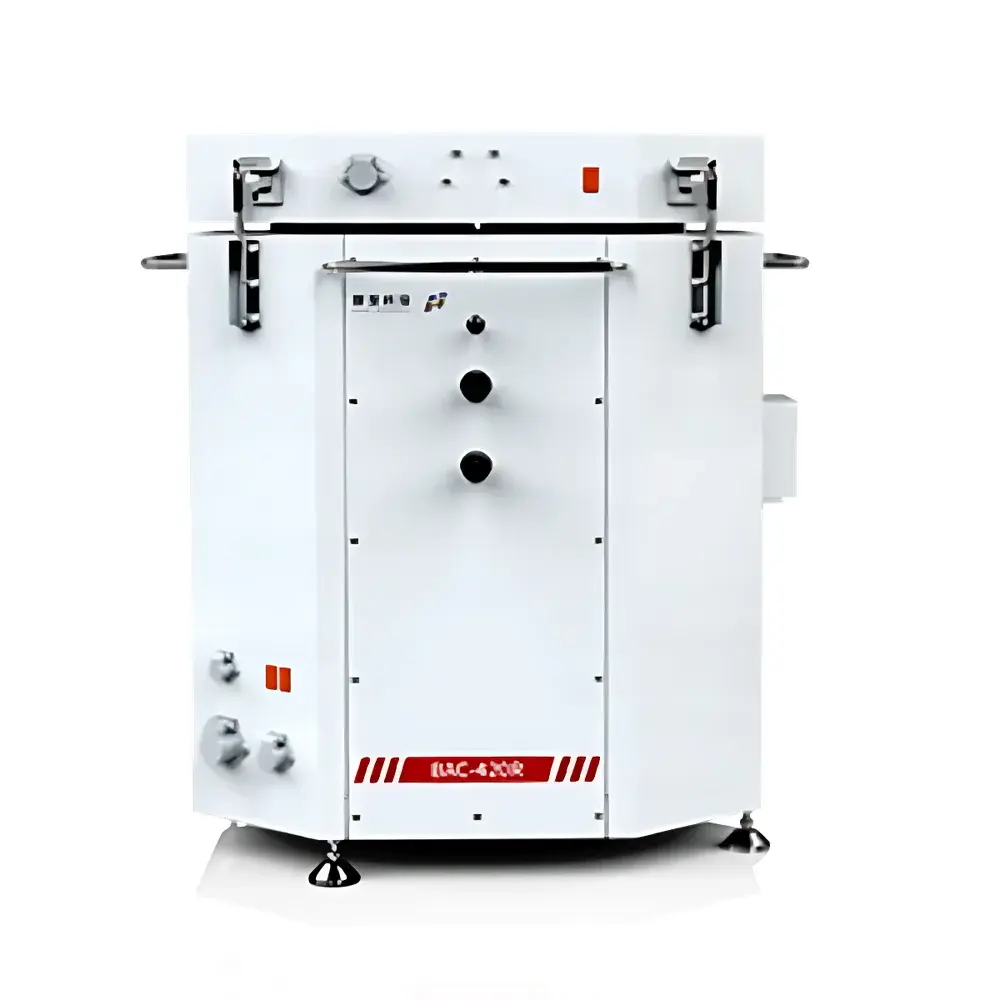
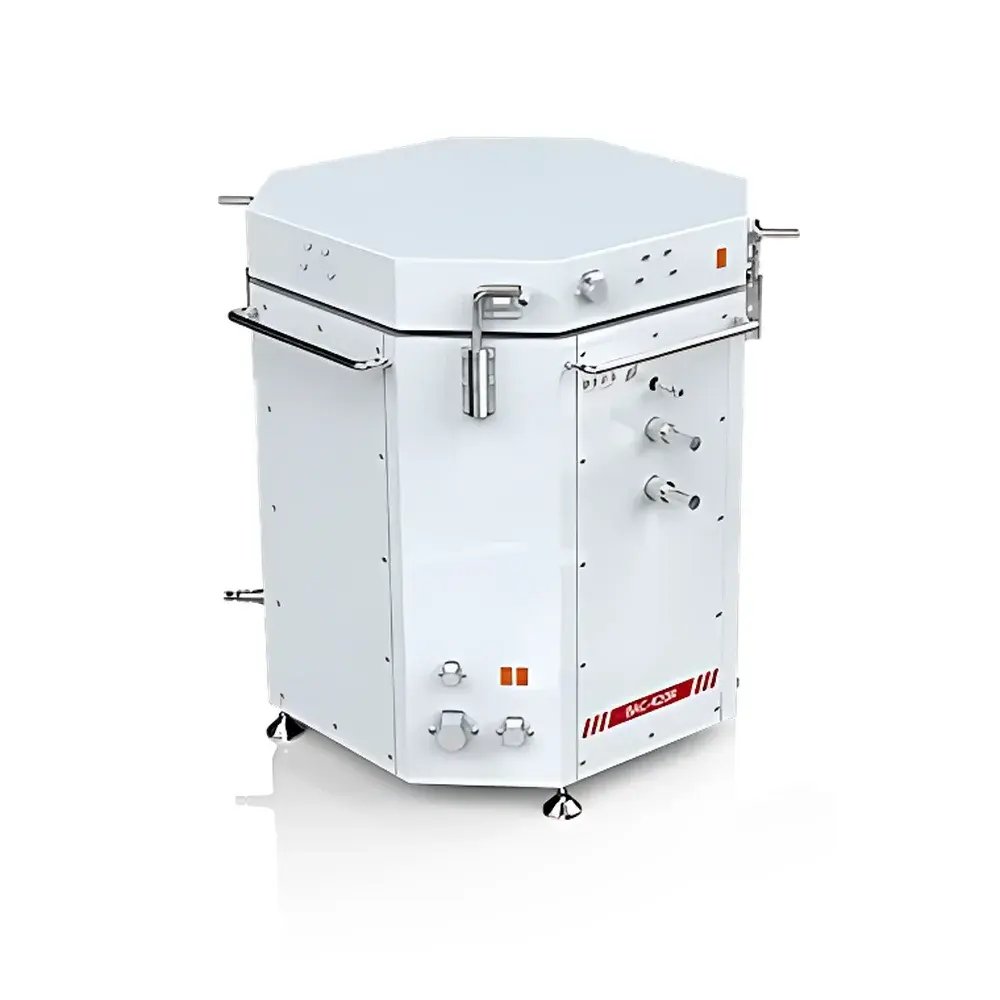
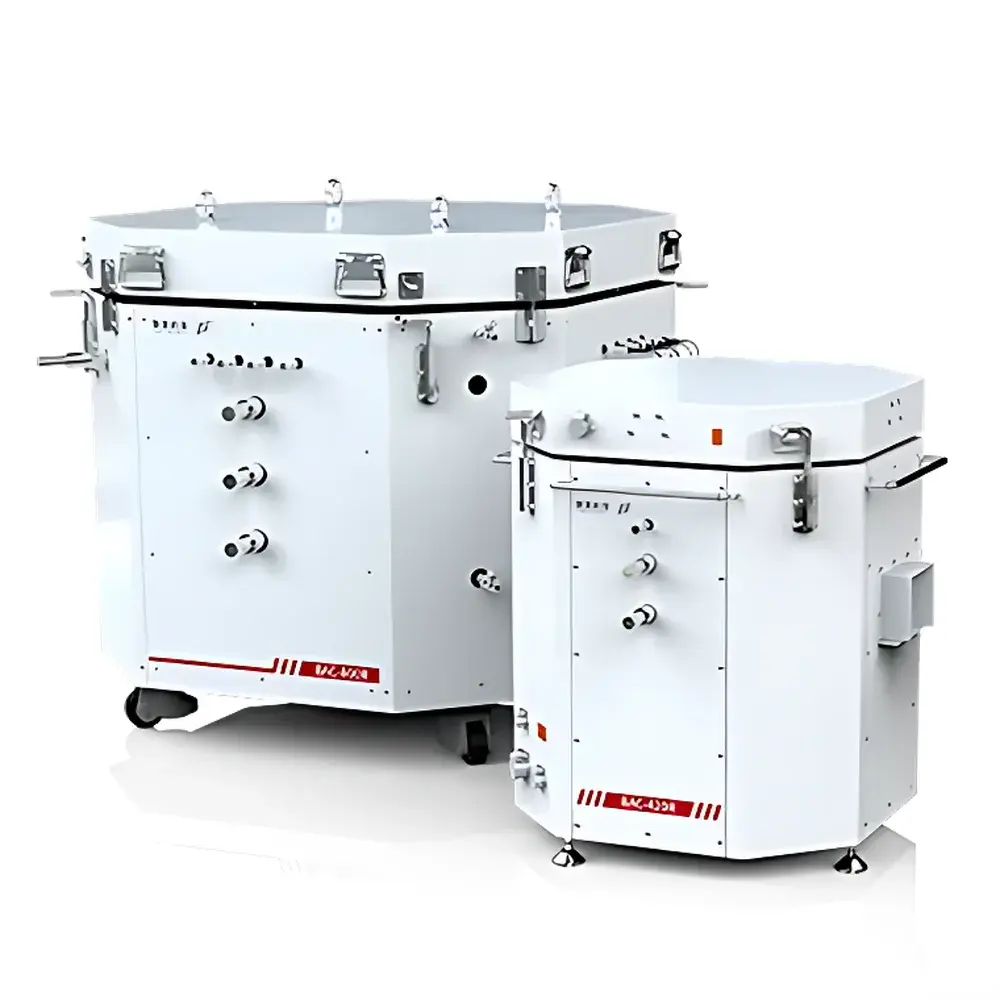
Young Instruments BAC-420R Battery Adiabatic Calorimeter
| Brand | Young Instruments |
|---|---|
| Origin | Zhejiang, China |
| Manufacturer Type | Direct Manufacturer |
| Model | BAC-420R |
| Measurement Mode | Adiabatic Calorimetry |
| Adiabatic Chamber Dimensions | 420 × 520 mm (L × W) |
| Temperature Control Range | RT+5°C to 300°C (optional low-temp module down to −25°C) |
| Temperature Resolution | 0.001°C |
| Chamber Temperature Stability | ±0.05°C |
| Self-Heating Detection Sensitivity | 0.02–0.05°C/min |
| Temperature Tracking Rate | 0.02–13°C/min |
| Wall-to-Sample Temperature Difference (Isothermal Mode) | <0.5°C |
| Max Sample Length | 600 mm |
| Compliance | GB/T 36276-2023, GB 38031-2020, SN/T 3078.1-2012, SAE J2464-2009, SAND2005-3123, UL 9540A-2019, SAND99-0497-1999 |
Overview
The Young Instruments BAC-420R Battery Adiabatic Calorimeter is an engineered solution for quantitative thermal runaway characterization of lithium-ion battery cells under strictly adiabatic conditions. It operates on the principle of active temperature tracking—where the calorimeter’s chamber wall temperature dynamically follows the sample surface temperature in real time, minimizing heat exchange between the cell and its surroundings. This ensures near-zero thermal loss/gain, enabling high-fidelity measurement of exothermic onset, self-heating rate, time-to-thermal-runaway, and total enthalpy release. Designed specifically to fulfill the mandatory test requirements of GB/T 36276-2023 “Lithium-ion Batteries for Electric Energy Storage”, the BAC-420R supports single-cell testing for prismatic, pouch, and cylindrical formats with maximum dimensions up to 600 mm in length—covering the full range of commercial and grid-scale energy storage cells.
Key Features
- High-fidelity adiabatic control: Achieves wall-to-sample temperature differentials below 0.5°C during isothermal operation and maintains chamber stability at ±0.05°C, ensuring minimal parasitic heat transfer.
- Ultra-sensitive self-heating detection: Resolves thermal drift as low as 0.02°C/min—well below the 0.02°C/min threshold specified in GB/T 36276-2023—enabling early-stage decomposition kinetics analysis.
- Modular thermal architecture: Integrates optional low-temperature module (−25°C to 300°C) for extended thermal boundary evaluation, including low-temperature abuse scenarios and SEI layer instability studies.
- Dual-layer safety system: Includes pressure-relief valve integrated into the furnace body and mechanical interlock on the chamber lid—both independently certified to prevent accidental opening during pressurized or high-temperature tests.
- Scalable functionality: Supports seamless integration with the HWS Battery Adiabatic Thermal Runaway Test Module for accelerated abuse simulation (e.g., heating ramp, overcharge, external fire exposure) under synchronized calorimetric monitoring.
Sample Compatibility & Compliance
The BAC-420R accommodates monolithic lithium-ion cells with lengths from 100 mm to 600 mm—fully covering standard cell formats used in stationary energy storage systems (ESS), including LFP, NMC, and LTO chemistries. Its adiabatic cavity (420 × 520 mm footprint) provides ample clearance for auxiliary sensors (e.g., gas sampling probes, voltage/current leads, infrared thermography access). All test protocols and calibration procedures align with internationally recognized standards: GB/T 36276-2023 (primary compliance reference), GB 38031-2020 (electric vehicle battery safety), UL 9540A-2019 (battery energy storage system evaluation), SAE J2464-2009 (electric vehicle battery abuse testing), and legacy Sandia National Laboratories methodologies (SAND2005-3123, SAND99-0497). Instrument validation includes traceable NIST-traceable temperature calibration and adiabatic performance verification per ISO 11357-7 Annex C.
Software & Data Management
The embedded control and acquisition software provides synchronized logging of temperature (sample surface, chamber wall, ambient), voltage, current, pressure, and gas evolution (when interfaced with optional mass spectrometer or FTIR). Data output conforms to ASTM E698-compliant kinetic analysis format and supports direct export to Excel, CSV, and MATLAB-compatible .mat files. Audit trails comply with GLP and GMP requirements: all user actions, parameter changes, and calibration events are timestamped and non-erasable. Software supports automated pass/fail evaluation against GB/T 36276-2023 criteria—including determination of ΔT/Δt ≥ 0.02°C/min onset, time-to-peak temperature, and peak temperature magnitude—with configurable reporting templates for internal QA and third-party certification submissions.
Applications
- Thermal stability assessment of novel cathode/anode materials and electrolyte formulations under adiabatic conditions.
- Quantitative comparison of thermal runaway propagation thresholds across cell designs, packaging configurations, and state-of-charge (SOC) levels.
- Supporting FMEA and safety case development for UL 9540A-compliant ESS qualification.
- Validation of thermal management system (TMS) design margins by correlating adiabatic data with computational fluid dynamics (CFD) simulations.
- Regulatory submission testing for national and international battery certification bodies (e.g., CNAS, TÜV, UL, KEMA).
FAQ
What standards does the BAC-420R directly support?
The instrument is configured and validated for GB/T 36276-2023, GB 38031-2020, UL 9540A-2019, SAE J2464-2009, and Sandia-defined adiabatic calorimetry protocols.
Can the BAC-420R test cylindrical cells?
Yes—it accommodates cylindrical cells up to 600 mm in length when mounted horizontally or vertically with appropriate fixtures; custom mounting kits are available upon request.
Is the system compatible with gas analysis subsystems?
Yes—the chamber includes standardized gas sampling ports (Swagelok 1/8″ VCR) and electrical feedthroughs for integration with FTIR, GC-MS, or electrochemical mass spectrometry systems.
Does the software support 21 CFR Part 11 compliance?
The optional GxP Edition software package includes electronic signatures, role-based access control, and full audit trail functionality aligned with FDA 21 CFR Part 11 requirements.
What is the typical calibration interval?
Annual calibration is recommended; however, users may perform in-house adiabatic performance verification using certified reference cells prior to critical testing campaigns.



