
Stresstech XStress3000 Portable X-ray Residual Stress Analyzer
| Brand | Stresstech Oy |
|---|---|
| Origin | Finland |
| Model | XStress3000 |
| Application | Residual stress measurement via sin²ψ X-ray diffraction method |
| Power Supply | Standard AC mains (100–240 V, 50/60 Hz) |
| Setup Time | ≤10 minutes |
| Operating Environment | Laboratory and field conditions (IP54-rated enclosure) |
| Compliance | CE, RoHS, IEC 61000-6-3/-4, EN 61326-1 |
| Data Interface | USB 2.0, Ethernet, optional Wi-Fi module |
| Embedded Processor | Industrial-grade Microsoft Windows Embedded OS |
Overview
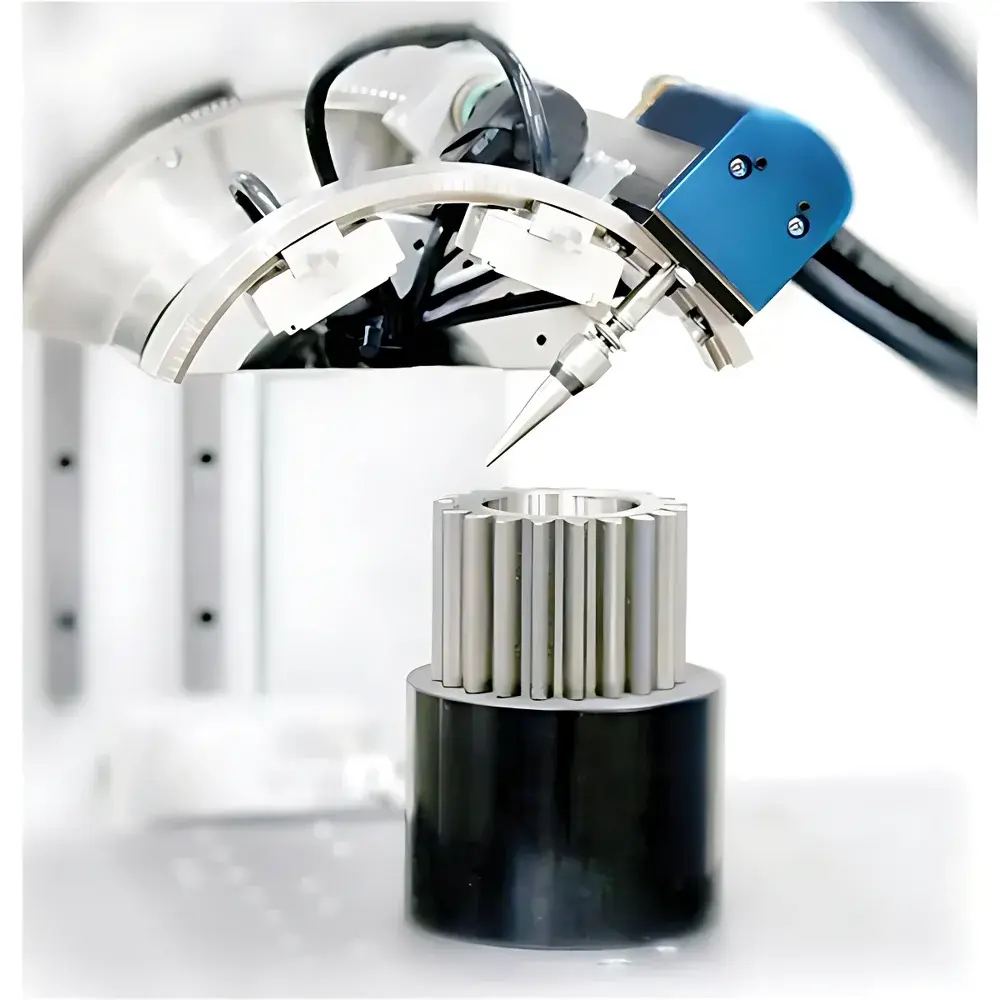
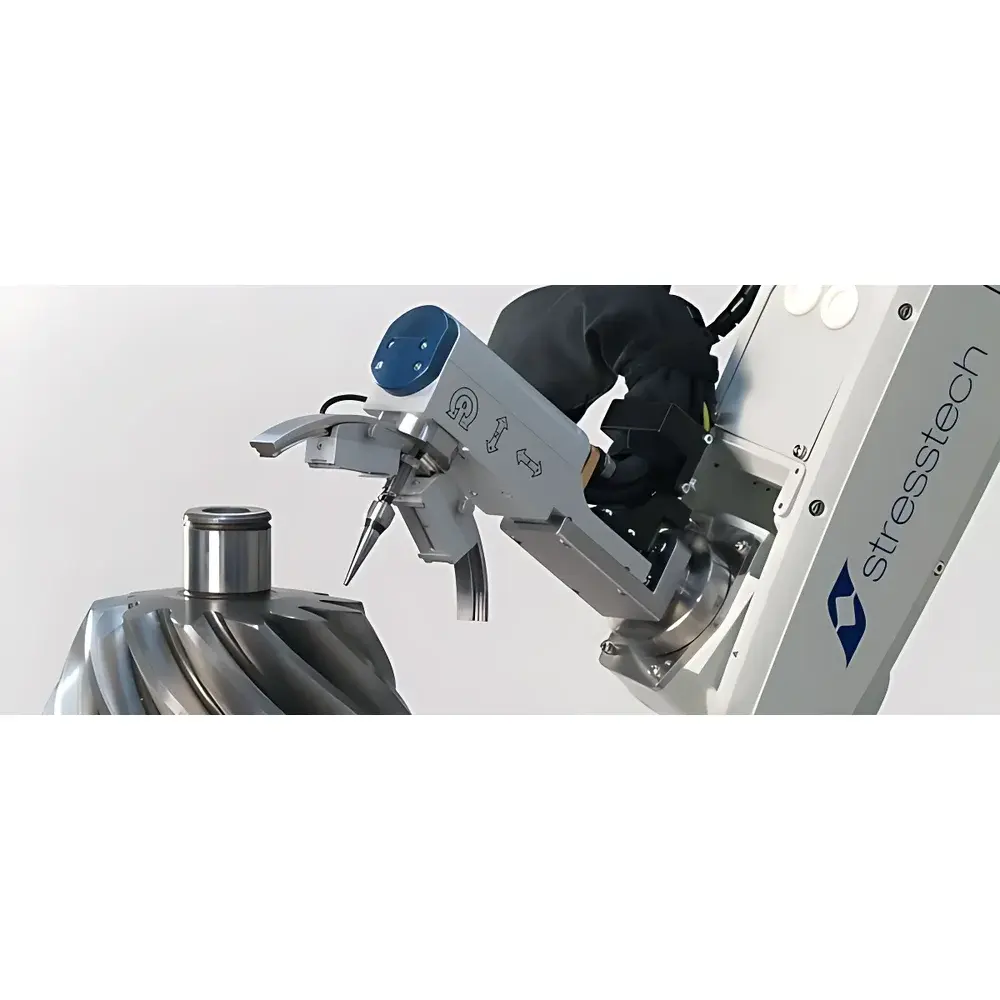
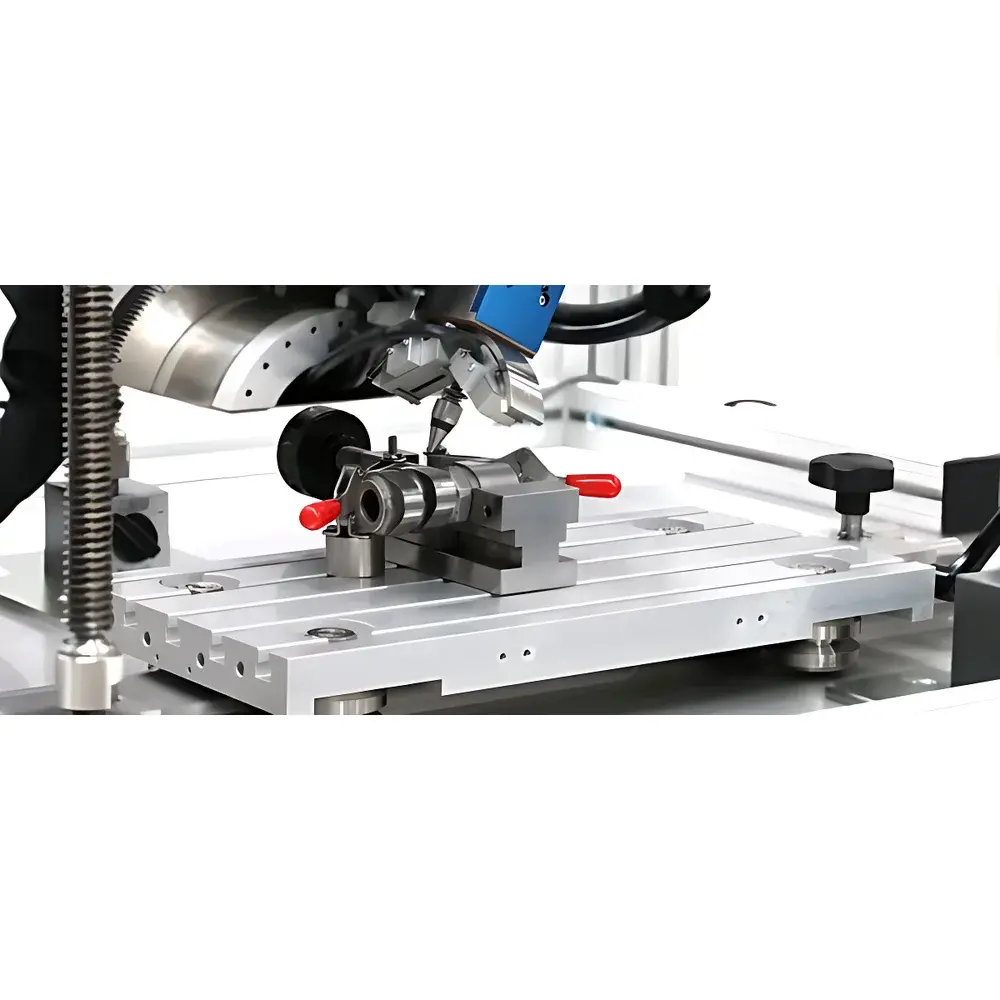
The Stresstech XStress3000 Portable X-ray Residual Stress Analyzer is a field-deployable, non-destructive testing (NDT) instrument engineered for quantitative determination of near-surface residual stresses in polycrystalline metallic components. It operates on the well-established sin²ψ X-ray diffraction (XRD) principle: by measuring lattice strain-induced shifts in Bragg diffraction peak positions across multiple sample tilt angles (ψ), the system calculates principal stress components using Hooke’s law and elastic constants. Unlike laboratory-based XRD systems requiring vacuum chambers or cryogenic stages, the XStress3000 integrates a sealed, air-cooled Cr or Co X-ray tube (selectable anode), high-resolution silicon strip detector, and precision goniometric stage into a single ruggedized chassis—enabling direct in-situ measurements on large, immobile parts without component removal or surface preparation beyond standard metallographic grinding and electropolishing.
Key Features
- True portable architecture: Weighs under 25 kg with integrated battery option; fully operational on standard AC power or external 12–24 V DC supply.
- Automated alignment and calibration: Motorized ψ-tilt stage with <0.01° angular resolution; real-time beam centering and detector positioning via onboard camera-assisted setup.
- Multi-material capability: Preloaded crystallographic databases for common alloys (e.g., AISI 4140, Inconel 718, Ti-6Al-4V, Al 7075); user-definable d₀ values and elastic constants per ASTM E915-22 Annex A2.
- Radiation safety certified: Fully shielded X-ray head meeting IEC 61010-1 and local regulatory requirements; dose rate <1 µSv/h at 5 cm from housing during operation.
- Robust mechanical design: IP54-rated enclosure with shock-absorbing feet; operational temperature range: −10 °C to +50 °C; humidity tolerance up to 90% RH non-condensing.
Sample Compatibility & Compliance
The XStress3000 accommodates flat, curved, or irregularly shaped ferrous and non-ferrous components—including gears, crankshafts, turbine blades, weld seams, and pressure vessel nozzles—with minimum radius of curvature ≥25 mm. Surface roughness should not exceed Ra ≤ 0.8 µm for reliable diffraction signal-to-noise ratio. Measurement depth ranges from 5–30 µm depending on material absorption coefficient and selected X-ray wavelength. The system complies with ISO 21943:2021 (Non-destructive testing — X-ray diffraction methods for residual stress analysis), ASTM E915-22 (Standard Test Method for Verifying the Alignment of X-Ray Diffraction Instrumentation for Residual Stress Measurement), and EU Directive 2013/59/Euratom (Basic Safety Standards for Protection against Ionising Radiation). Full audit trail functionality supports GLP/GMP environments per FDA 21 CFR Part 11 when paired with validated software configuration.
Software & Data Management
Controlled via Stresstech’s proprietary XStress Studio v5.x software running on embedded Windows OS, the system delivers real-time diffraction pattern acquisition, automatic peak fitting (Pseudo-Voigt profile), stress tensor calculation, and uncertainty estimation per GUM (JCGM 100:2019). Raw data (χ, 2θ, intensity) and processed results (.xrd, .csv, .pdf) are stored locally and exportable via USB or network transfer. Software includes batch reporting templates compliant with ASME BPVC Section V, API RP 579, and EN 10204 Type 3.1 documentation standards. Optional cloud synchronization enables remote diagnostics, firmware updates, and multi-site data aggregation for enterprise-level quality assurance workflows.
Applications
- Aerospace: Residual stress mapping on landing gear components pre- and post-shot peening; validation of thermal stress relief in titanium airframe structures.
- Power Generation: In-service assessment of weld residual stresses in steam turbine casings and nuclear reactor piping joints.
- Automotive: Quantitative verification of compressive stress profiles induced by roller burnishing on camshaft lobes and bearing races.
- Heavy Industry: Field verification of stress distribution in cold-rolled steel mill rolls and hydroelectric turbine shafts.
- R&D Laboratories: Correlation studies between machining parameters (cutting speed, feed rate) and subsurface stress states in additively manufactured Inconel 625 specimens.
FAQ
What X-ray tube options are available for the XStress3000?
The standard configuration uses a chromium (Cr Kα = 2.29 Å) anode optimized for ferritic steels and nickel-based superalloys; cobalt (Co Kα = 1.79 Å) and molybdenum (Mo Kα = 0.71 Å) tubes are available as factory-installed options for aluminum, titanium, and thin-film applications.
Does the system require external cooling water or compressed air?
No. The XStress3000 employs passive heat dissipation combined with internal forced-air convection; no auxiliary utilities beyond electrical power are required.
Can measurements be performed on painted or coated surfaces?
No. All coatings—including paint, plating, oxide layers, and thermal barrier coatings—must be mechanically removed from the measurement area prior to analysis to ensure unobstructed X-ray penetration and accurate lattice strain detection.
Is operator certification required to use the instrument?
Yes. Users must complete Stresstech-certified Level II NDT training in X-ray diffraction residual stress analysis, aligned with ISO 9712:2022 requirements, prior to independent operation.
How is measurement repeatability verified in field conditions?
Each measurement sequence includes built-in reference standard checks using a certified Si or Fe foil; deviation thresholds trigger automatic recalibration prompts, ensuring traceability to NIST-traceable artifacts per ISO/IEC 17025 accredited procedures.




